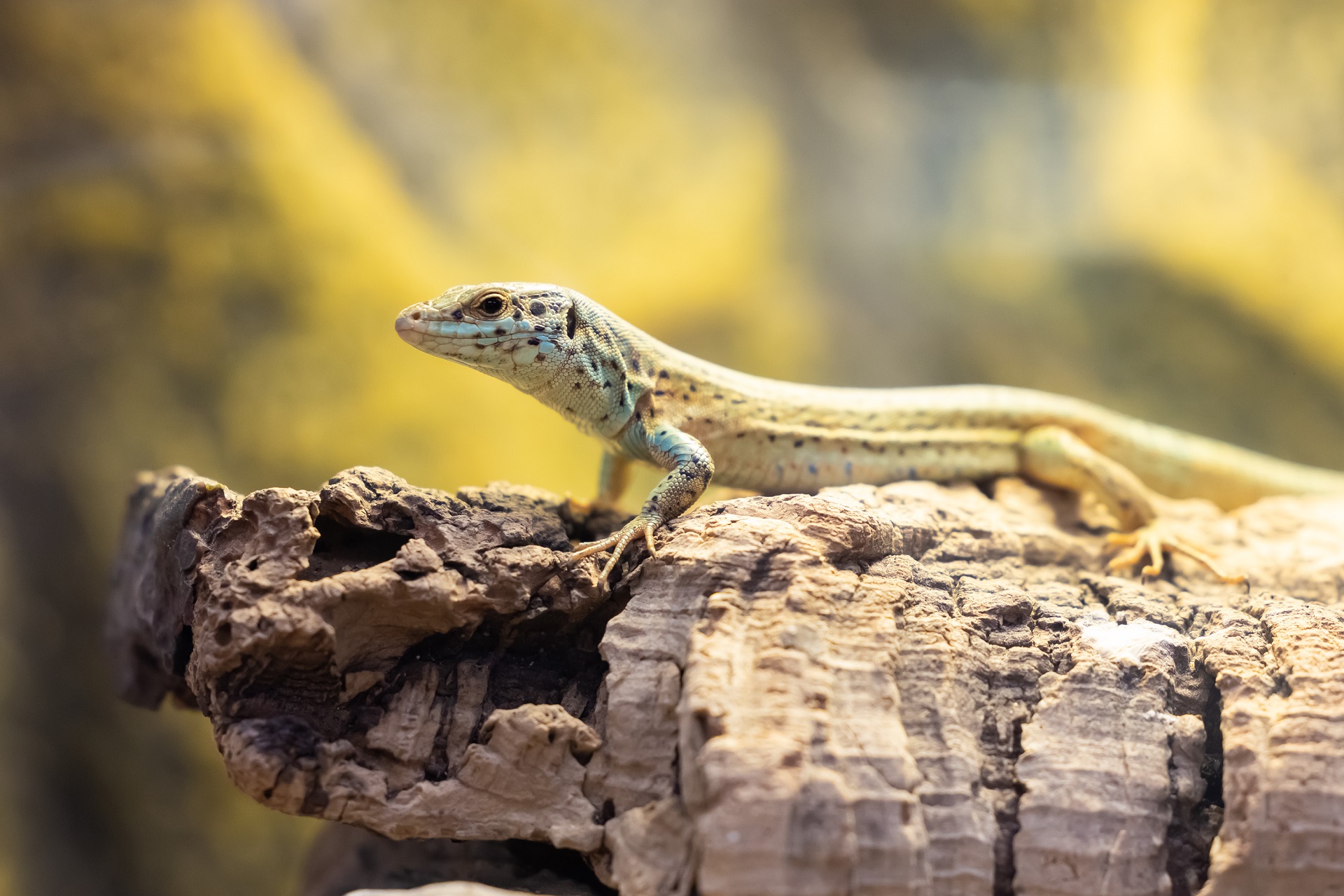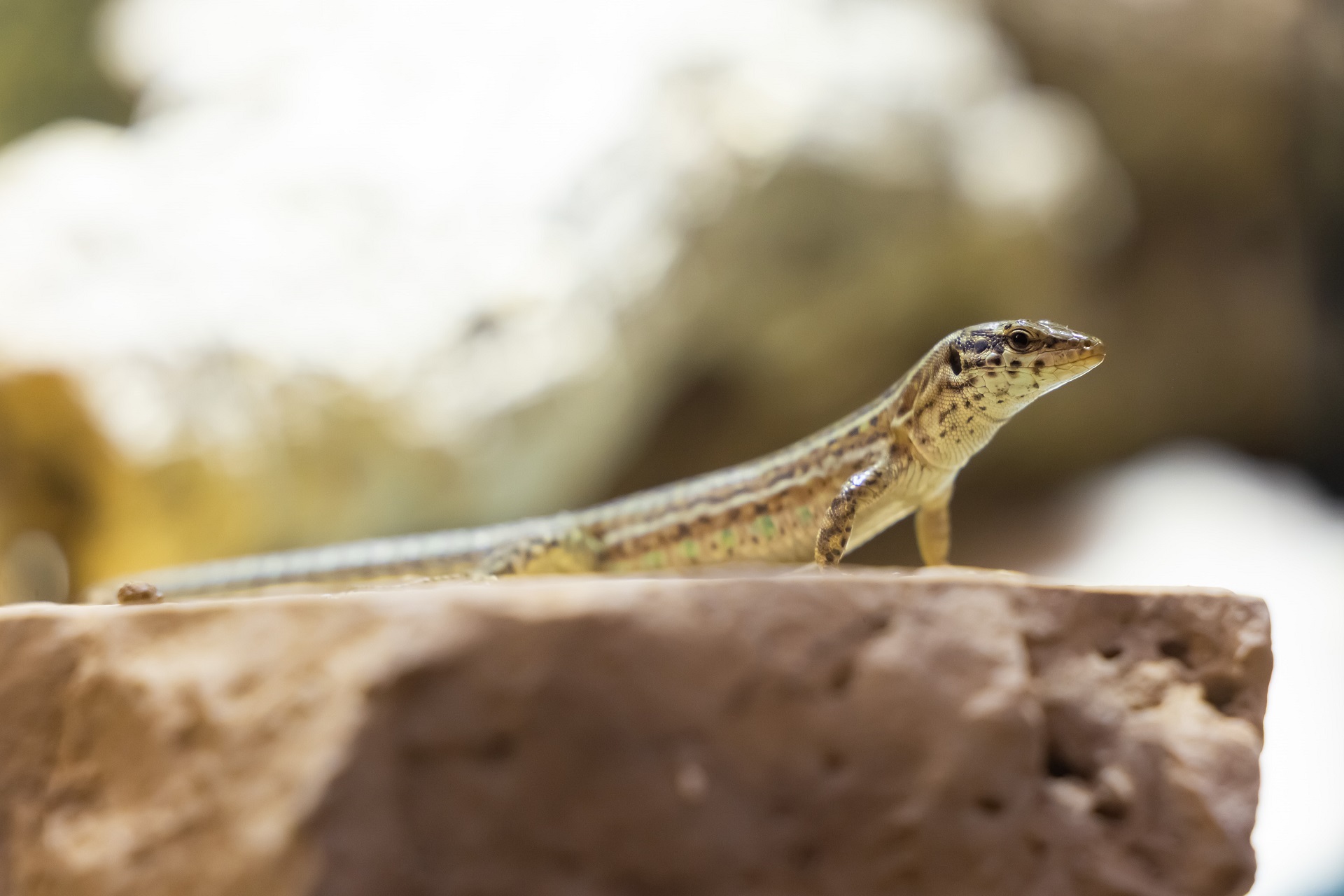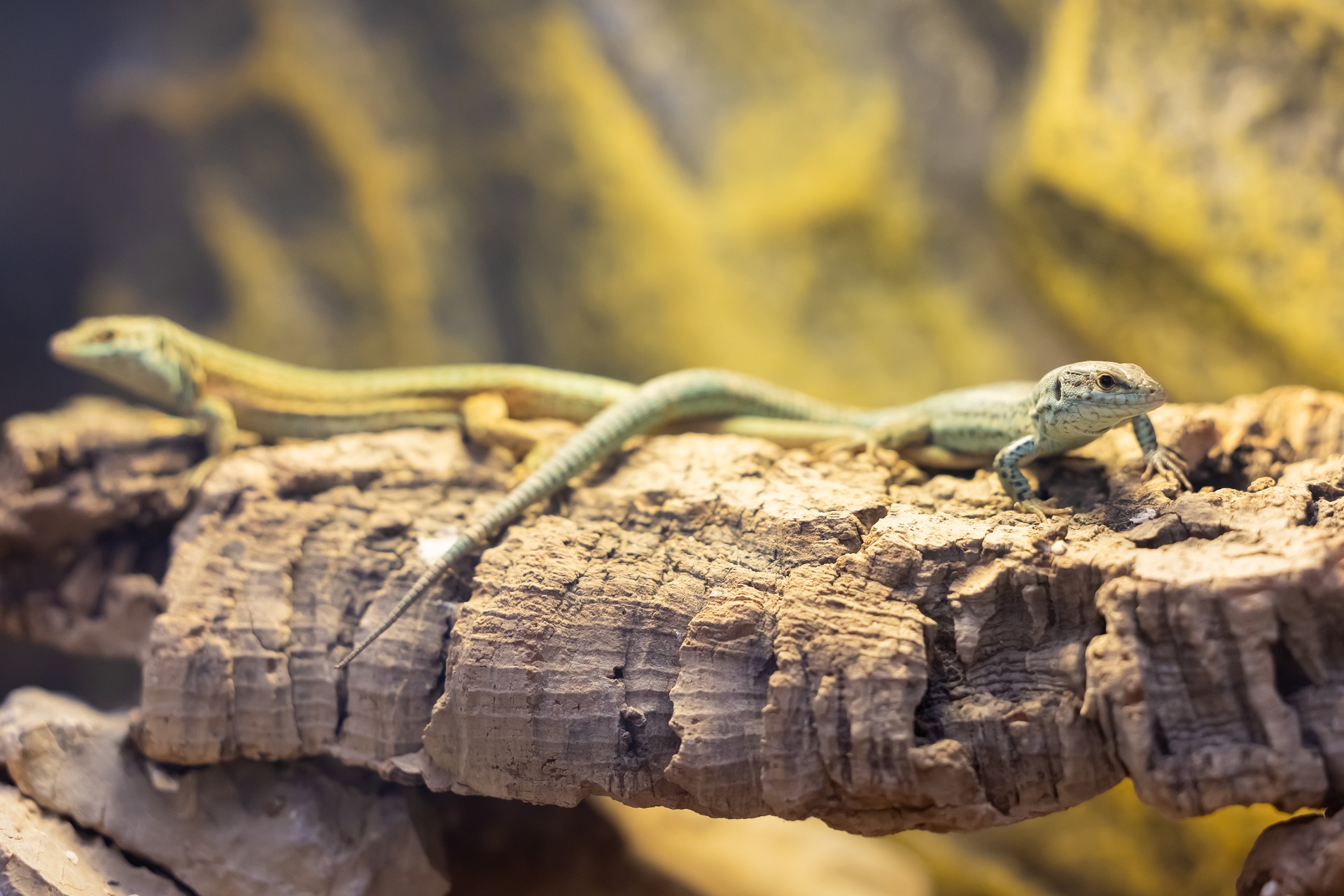


The project involves ex-situ breeding of this endemic and endangered species, as part of the collaboration agreement between the Barcelona Zoo Foundation and the Ministry of Agriculture, Fishing and the Environment of the Balearic Islands Government
Zoo de Barcelona and the Ministry of Agriculture, Fishing and the Environment of the Balearic Islands Government are launching a pilot ex-situ breeding project to preserve the Ibiza wall lizard, one of the Balearic Islands’ most iconic species. The initiative, part of the protected wildlife collaboration agreement between the two institutions, aims to support the conservation of this endemic and endangered species and ensure its long-term survival.
In the first phase, which is already underway, three lizard populations will be established at Zoo de Barcelona. These groups will be formed from a sample of 17 healthy, genetically diverse specimens from Ibiza and Formentera. They will be the first breeders in the ex-situ populations of this species.
In addition, scientific studies will be carried out to explore the species’ ecology, genetics and conservation needs in greater depth, along with an assessment of the viability of reintroducing the species into the natural environment.
For Antoni Alarcon, the Director of Zoo de Barcelona, ‘It is an honour and a great responsibility for Zoo de Barcelona to continue to work alongside the Balearic Islands Government. Projects like this one are essential to our mission of preserving biodiversity, and they strengthen our position as a leader in the conservation of Mediterranean wildlife, which is especially vulnerable to climate change. The Balearic lizard project, like that of the Majorcan midwife toad, is a clear example of Zoo de Barcelona going beyond its boundaries to become directly involved in protecting endemic species in the Mediterranean ecosystem.’
Similarly, Anna Torres, Director General of the Environment and Forest Management within the Balearic Islands Government states, ‘This initiative will help to guarantee the preservation of the Ibiza wall lizard and allow us to assess the viability of reintroducing the species. However, to reverse the current trend, efforts to control invasive snakes must continue. At present, they pose the most serious threat to lizards.’
Also participating in the project, alongside Zoo de Barcelona and the Balearic Islands Government, are the herpetology experts at the Spanish Herpetological Association (AHE) and the Centre for Ecological Research and Forest Applications (CREAF). Technicians from the Species Protection Service, Zoo de Barcelona and the Committee for the Recovery of the Balearic Islands’ Wildlife (COFIB) are also involved.
An endemic species endangered by the introduction of invasive species
The Ibiza wall lizard is one of the most iconic species native to the Pityusic Islands. Today, the introduction of invasive species, such as snakes, which prey on these lizards, threatens their survival. Due to this situation, in 2023, two lizard species found on the Balearic Islands were listed as Vulnerable in the Balearic Catalogue of Endangered Species: the Lilford’s wall lizard (Podarcis lilfordi) and the Ibiza wall lizard (Podarcis pityusensis).
An alliance to preserve the Balearic Islands’ native wildlife
In 2024, the Barcelona Zoo Foundation and the Ministry of Agriculture, Fishing and the Environment of the Balearic Islands Government signed a partnership agreement to ensure the conservation of protected wildlife in the islands. The agreement builds on more than 15 years of collaboration between the two institutions and aims to facilitate ex-situ conservation, as well as the management and breeding of protected species for purposes of repopulation or reintroduction into the wild.
The lizard project now underway follows on from the captive breeding programme for the Majorcan midwife toad (Alytes muletensis), which has been led for years by Zoo de Barcelona in collaboration with the Balearic Government and has made it possible to create new populations in the wild while improving the conservation status of this endemic amphibian, which is classified as endangered.