

The plant incorporates a natural filtration system and has already started treating the water in the hippopotamus area with excellent results
This initiative is part of the 'Water Resource Management in Urban Parks–FIT4USE Water Recirculation Technology' project funded by the European Union through the LIFE programme
Zoo de Barcelona launches a pilot plant for water treatment and reuse as part of the European LIFE project 'Water Resource Management in Urban Parks–FIT4USE Water Recirculation Technology,’ This project, coordinated by the Technical University of Liberec and also involving the University of Barcelona and the University of Girona, with the support of students and young researchers, aims to develop solutions to help zoos optimise the use of water, a vital resource in their daily operations.
The pilot plant is located opposite the Doñana area at Zoo de Barcelona and incorporates a natural filtration system that regenerates water by mimicking the natural processes of wetlands, retaining particles and naturally removing contaminants. Specifically, the water passes through a vertical and horizontal circuit of vegetation and substrate that retains particles and eliminates contaminants and pathogens through the combined action of plants, microorganisms, and filtering materials. Essentially, it is a living and dynamic ecosystem that, over time, increases its capacity to purify water while also creating new habitats for biodiversity.
The first tests to regenerate water began in late February, using water from the artificial lake in Zoo de Barcelona’s hippopotamus enclosure. Since then, between 2 and 3 m3 of water have been treated each week, with very promising results, according to the research group leading the project.
In these initial weeks, reductions exceeding 95% have been observed in water contaminants such as ammonia, suspended solids, and chemical oxygen demand, along with a reduction of more than 99.99% in E.coli bacteria. These outcomes suggest that the treated water could be safely reused to irrigate green spaces, replenish artificial lakes, or clean public areas.

A circular and sustainable water management project
Soon, the plant will also treat water from the tapir and aquatic bird enclosures, among others. The plan is to continue testing for 18 months to develop a model that can extend this circular water management project to other areas of Zoo de Barcelona.
In addition to regenerating water, artificial wetlands like the one currently being tested at Zoo de Barcelona also serve as areas for biodiversity restoration and observation, as well as a tool for environmental education, demonstrating how nature contributes to efficient and sustainable water management.
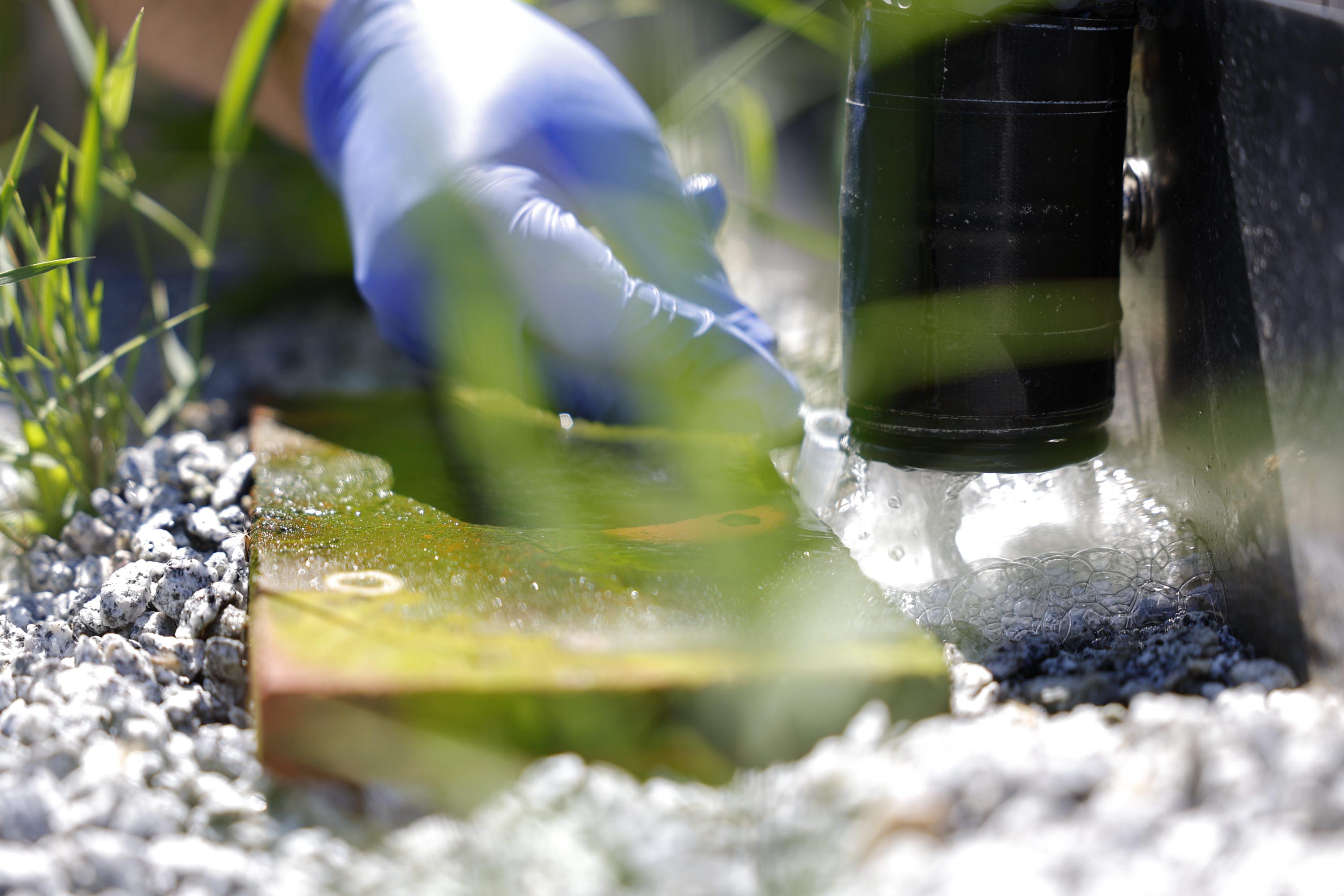
Another meeting of the various institutions involved in the project in Barcelona
The fourth follow-up meeting of the 'Water Resource Management in Urban Parks–FIT4USE Water Recirculation Technology' project took place this week. Representatives from the different institutions involved in the initiative met in Girona and Barcelona and visited the pilot plant at Zoo de Barcelona.
In addition to Zoo de Barcelona and the Technical University of Liberec, the project also involves the University of Barcelona Solidarity Foundation; the University of Girona, through the Environmental Chemical Engineering Laboratory (Lequia) research group; Liberec Zoo; Photon Water Technology; and a group of experts, including representatives from Bioparc Valencia and Cabárceno Nature Park, among others.