

In 2026, the plan to expand the service will be complete with 36 new stations, 11 of which will be located in hillside neighbourhoods to strengthen the service in these areas of the city
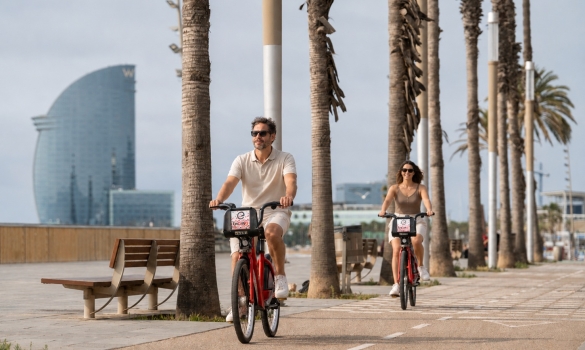
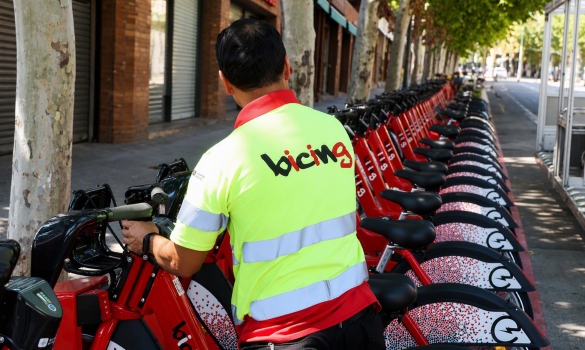
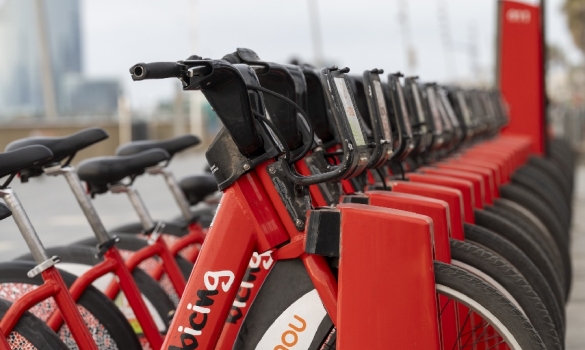
Barcelona has made cycling an everyday form of transport, mainly thanks to Bicing. With over 166,000 active users, a network of 557 stations and a fleet of 8,000 bikes (5,000 electric, 3,000 mechanical) this public bike sharing service managed by BSM has become a key part of the city’s sustainable mobility ecosystem.
Since the new Bicing was launched in early 2019, the service has seen steady growth, with a 68.2% increase in users and more than 100 million journeys. But the service had a new goal for 2025: reach 20 million annual journeys (5% up on last year), in order to position itself as an essential service that promotes a healthier, better-connected Barcelona.
An expanding network that strengthens links between neighbourhoods
With a view to improving coverage across the city and guaranteeing fairer mobility, this year, Bicing has installed 30 new stations, eight of which are in hillside neighbourhoods such as Sarrià – Sant Gervasi and Horta – Guinardó. Thanks to this expansion, nearly 10% of the network is found in these areas.
We are now entering the final phase of the expansion, which will be completed in 2026, with the incorporation of 36 additional stations located strategically in all of the city’s districts. Out of the total, 11 will be installed in hillside neighbourhoods, thus strengthening the service’s expansion in these areas, prioritising connection between neighbourhoods and bringing the service to parts of the city with the highest demand.
With these installations, which will mark the completion of the announced plan to open 74 new stations, Bicing will have achieved one of its most ambitious expansions. Overall, 31% of the new stations will be in hillside neighbourhoods, in a clear effort to balance the service’s distribution across the city and facilitate day-to-day mobility in historically less well-connected areas.
The budget for this initiative, along with the expansion of the electric fleet carried out between 2024 and 2025, is 2.8 million euros, partly funded by the Next Generation EU programme.
‘Bicing is now an essential infrastructure resource for thousands of Barcelona residents’ day-to-day mobility,’ says First Deputy Mayor and the head of BSM, Laia Bonet. ‘As well as growing in terms of user and journey numbers, the service is expanding throughout the city in order to guarantee fairer mobility. We’re establishing a healthier, more sustainable, better-connected city model. We will continue to strive to make Bicing an increasingly accessible, unifying service that can address future urban mobility challenges.’
A driving force for day-to-day mobility in the city
Bicing usage patterns paint a picture of a city that cycles to work, to school and for leisure. More specifically, 76% of journeys take place on weekdays, with peak times early in the morning and in the evening. Meanwhile, leisure journeys are more popular on weekends, which speaks to the service’s flexibility and recreational value.
E-bikes have emerged as Bicing users’ favourite option and the mainstay of the service. Currently, 8 out of 10 journeys are made on an e-bike, which reflects their functionality and suitability for urban mobility. Journeys on e-bike are also significantly longer: the average distance per journey is 2.63 km, compared to the 1.84 km covered on average by a mechanical bike. This difference shows that, as well as facilitating mobility in hilly districts, e-bikes expand the service’s coverage and better meet users’ real needs in their daily journeys.