

The station’s renovation is based on the steady growth in bus and coach travel, key means of transport because of their regional capillarity with an almost 50% rise in passengers since 2019 and projections to continue growing up to 30% more by 2030
All the services in the new station are concentrated on the same floor, with a single passenger entrance on Carrer Nàpols to help to optimise user flow, safety and intermodality with other means of transport
With this transformation, and with more than 3 million passengers per year, the facility is becoming the city’s main arrival and departure hub for domestic and international buses and coaches
The station’s renovation is part of Barcelona’s strategy to better organise and improve around twenty interurban bus and coach stops to improve the service for users
The Estació d'autobusos Barcelona Nord has completed its comprehensive transformation after a renovation project that has fully modernised the spaces and will improve travellers’ experience. With a total investment of 14 million euros, 4.8 million of which come from European Next Generation funds as part of the Pla de Sostenibilitat Turística en Destinació Barcelona (PSTD), the initiative is boosting the facility’s strategic role as the city’s main hub of domestic and international buses and coaches.
This transformation is framed within a context of growth in coach mobility and interurban buses in general, a means of transport with extraordinary regional capillarity that enables the city centre to be connected with a wide range of destinations and towns. This ability explains the steady growth in demand in recent years: since 2019, the station has logged almost 50% growth in the number of travellers, with forecasts that show it continuing to rise by up to 30% by 2030.
A total of 7,000 interurban buses and coaches enter and leave the city every day, a figure that has been on the rise in recent years. Given this situation, the station’s renovation is part of Ajuntament de Barcelona’s strategy to better organise and improve around twenty bus and coach stops to improve the service for users. In addition to the Estació d'autobusos Barcelona Nord, projects are also planned in the Sants and Fabra i Puig stations along with around twenty stops in public spaces located along the four corridors leading into the city. Barcelona Nord is reinforcing its role as a key infrastructure to absorb this increasing demand. The station is thus becoming the leading hub of departures and arrivals of buses and coaches between the city and domestic and international destinations, while also contributing to more organised bus mobility with more efficient, safe and structured flow management.
This new plan also highlights buses and coaches as competitive mobility options that offer users a comfortable, accessible alternative.
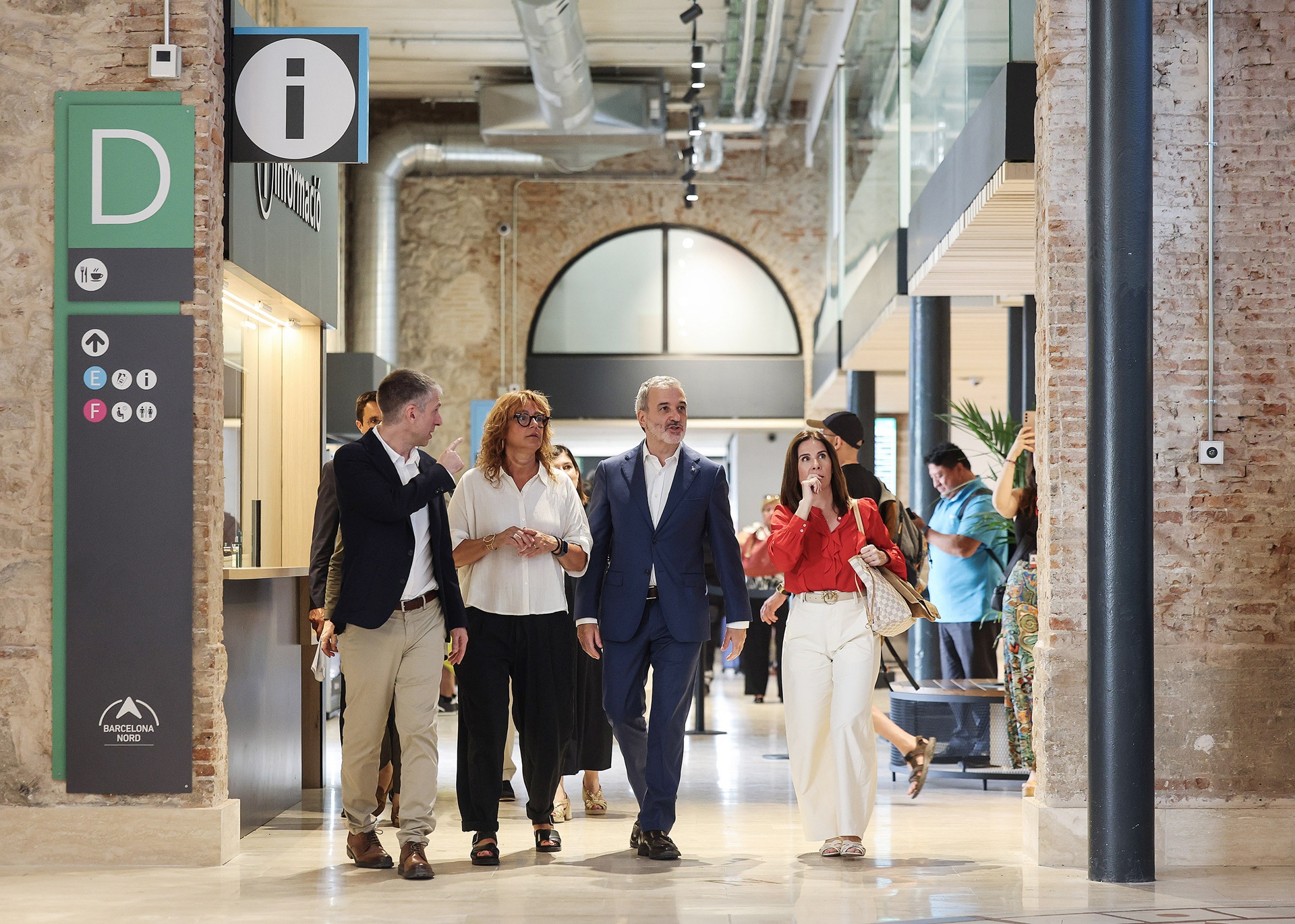
At the launch, the mayor of Barcelona, Jaume Collboni, noted that, ‘The renovation of the Estació d'autobusos Barcelona Nord seeks two goals: first, to improve users’ experience and offer a more updated service aligned with the facility’s role in the city, and second, to reinforce a key infrastructure with more than three million passengers per year that has been adapted to absorb an increasing demand and contribute to more orderly mobility in the city.’
New layout on a single floor that optimises flows, comfort and safety
Spearheaded by the municipal company BSM, the transformation focused on improving the experience of both travellers and operating companies by focusing on a more functional, accessible and efficient design.
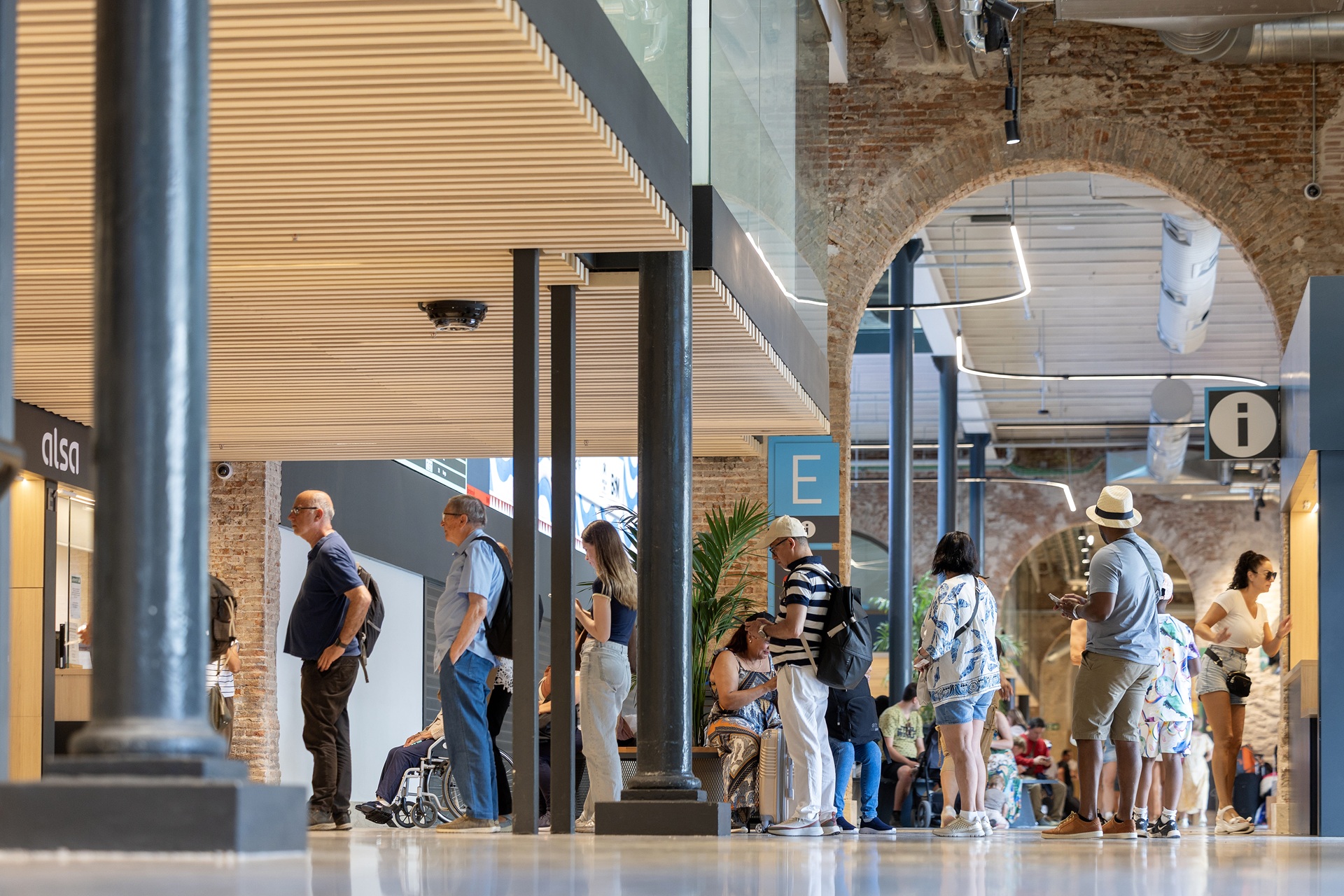
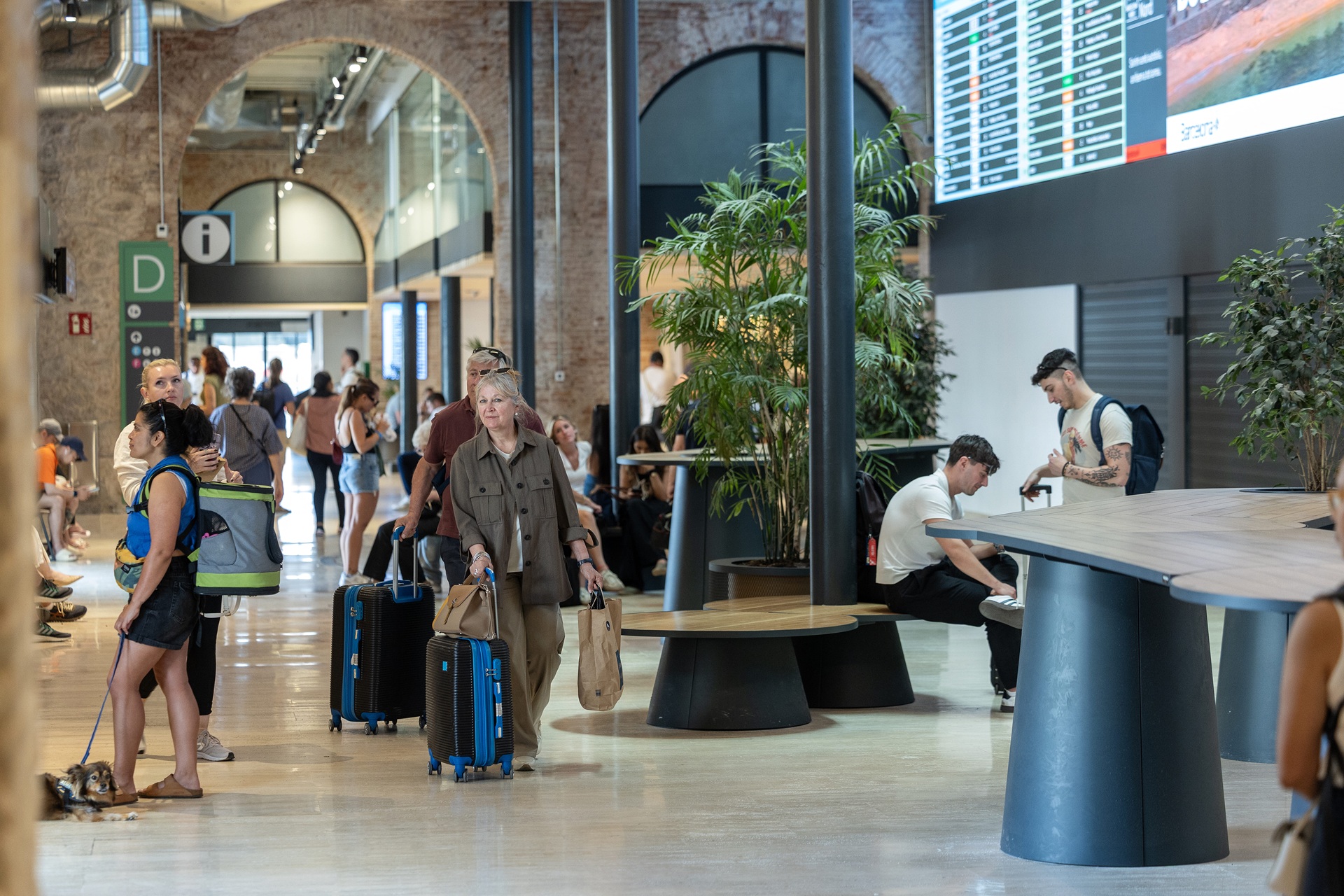
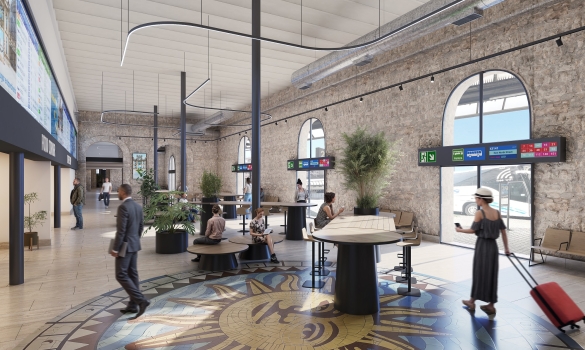
One of the project’s key features is the concentration of all the services on a single floor, a layout that results in an interior space measuring 1,500 m2 that simplifies routes, optimises internal flows and facilitates more fluid circulation inside the station. The new layout also includes a single entrance and exit for travellers on Carrer Nàpols, a measure that contributes to better organisation of entry points, enhances security and allows for more controlled management of the influx of passengers. With this new layout, the station has clearer, more orderly and more comfortable spaces, with all the essential services housed on the ground floor.
As part of this same goal of improving the experience, the project also entailed the renovation of the dining options. The station is opening with a new cafeteria located in the center and updated vending machines. In the future, it will also have a restaurant located in the pedestrian entrance to the station.
The waiting areas have also been renovated, bearing in mind that travellers spend an average of 60 minutes there before boarding their bus or coach. The adaptation of these spaces has made them more comfortable and functional, as they offer users a more pleasant environment during the time they spend at the station. A control and payment system to use the bathrooms has also been installed, a solution that will help to guarantee quality standards.
Accessible digital information in real time to guide travellers
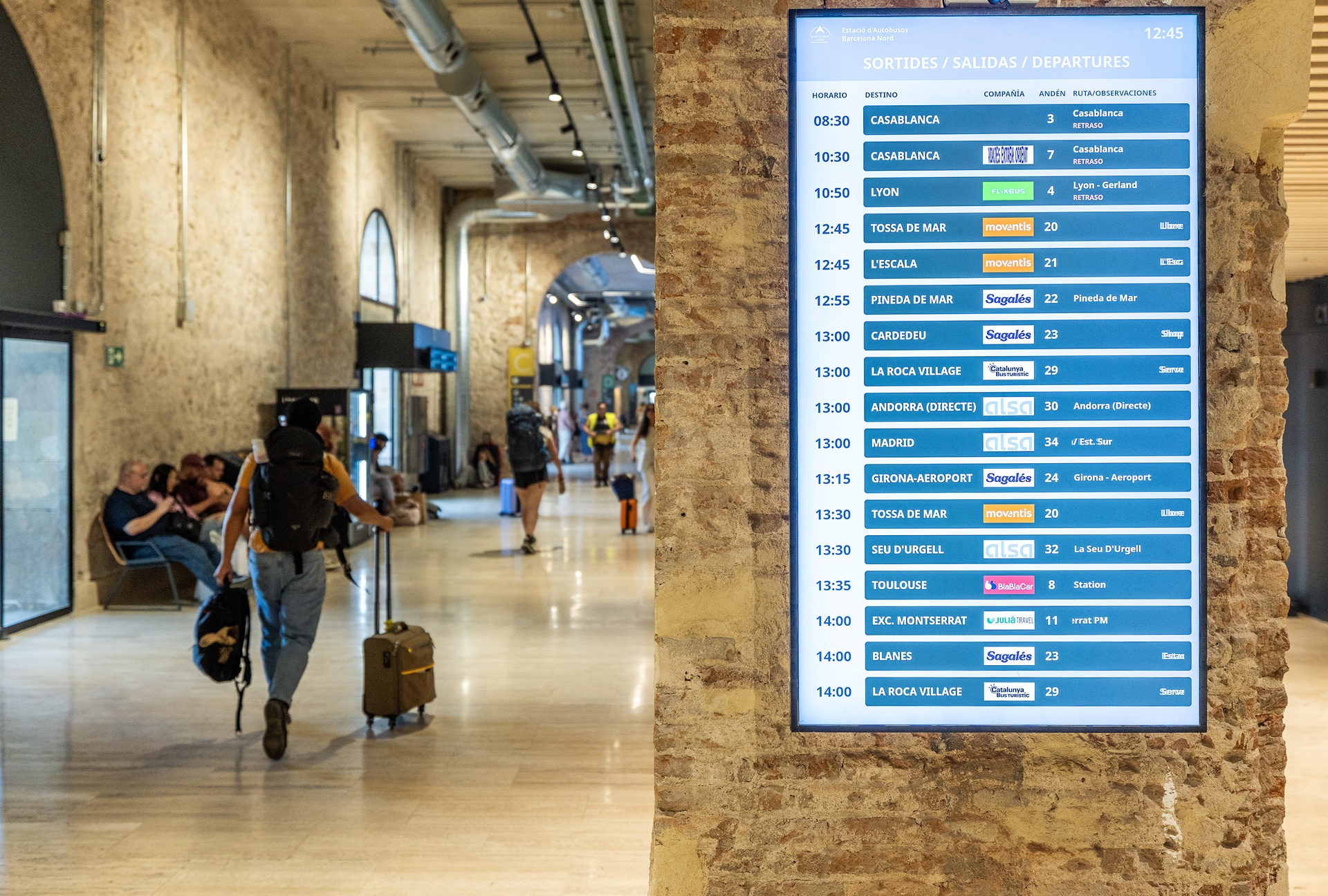
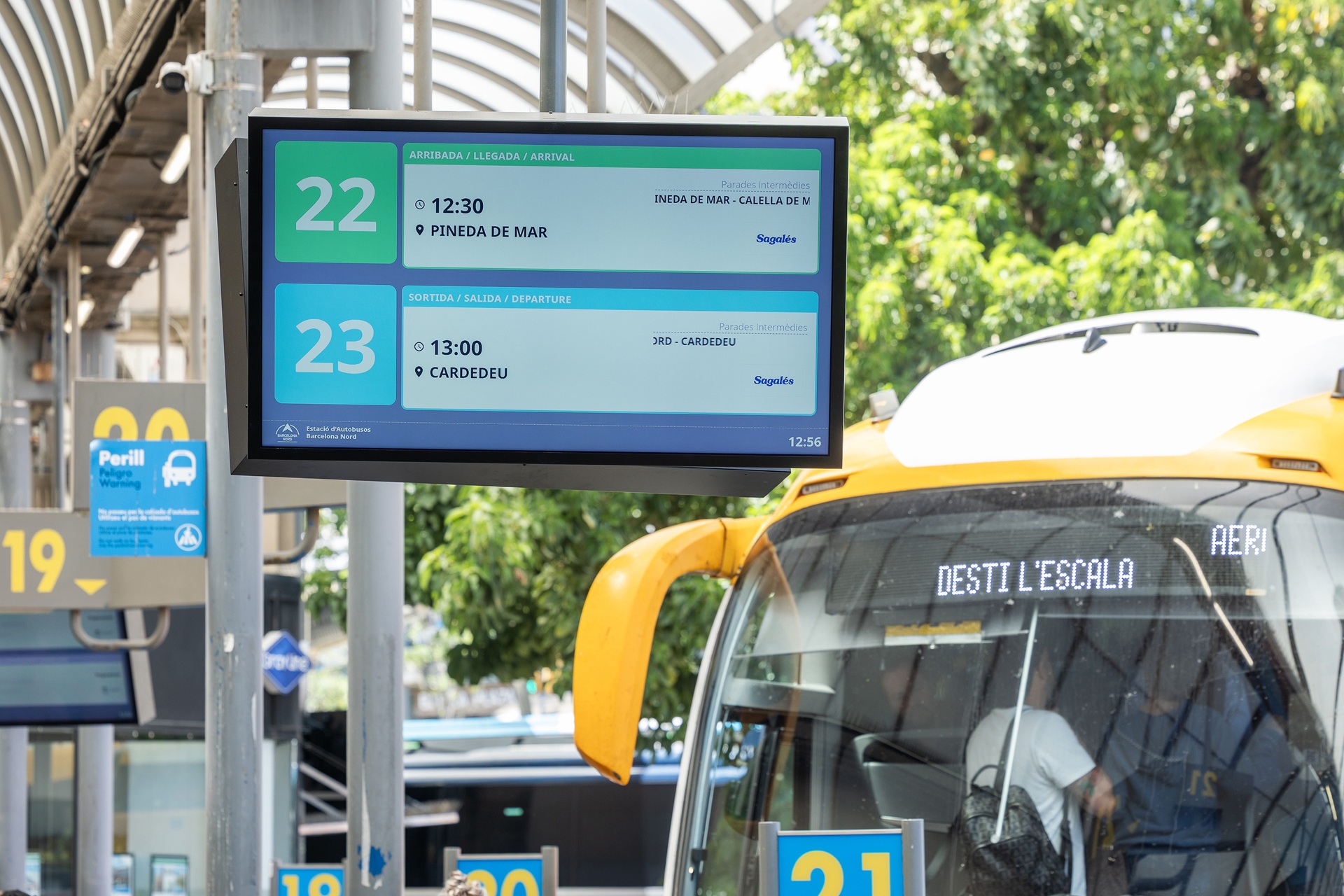
In order to make the information on bus or coach arrivals and departures more understandable and to offer travellers a quicker, clearer and more intuitive experience, large digital screens have been installed at the entrance and central lobby. These screens allow them to check timetables and platform assignments in real time. This information can also be found on the different screens scattered throughout the entire facility and the digital signage installed at the entrances to all the platforms.
The station has also boosted its in-person information to users with an accessible information point and a Barcelona Turisme information point. The facility also has fifteen ticket counters for its operators, which have been fully renovated and are found throughout the station. These spaces are reference points for getting questions answered and dealing with services and routes, and are currently operated by prominent companies such as Alsa, Moventis, FlixBus, Sagalés, Julià and Castlexperience.
A safer intermodal space
The station’s new internal layout, designed to make it more comfortable and safer, is complemented by the installation of new smart security systems that constantly monitor the activity inside the facility and on the platforms, improving the prevention and response capacity in the event of possible incidents.
This new layout also improves the station’s intermodality, particularly with the Arc de Triomf station, where the metro and local trains (Rodalies) converge, in order to allow for more fluid, continuous commutes towards the city centre and metropolitan area.
The transformation also contributes to improving the facility’s urban integration, as it creates a more accessible, integrated and better connected space.
A more comfortable, sustainable and efficient historical facility
The measures taken respect the uniqueness of the building, which is listed as a cultural asset of local interest, and have enabled improvements in lighting, finishes, accessibility and acoustic comfort. To this end, the installation of different soundproofing solutions will contribute to creating a quieter and more pleasant atmosphere, significantly improving the overall quality of the time spent at the station.
The removal of the old central staircase has made it possible to restore the Helios i les fases lunars [Helios and the Phases of the Moon] mosaic by the artist Armand Olivè Milian, which had been partially concealed and was restored in line with conservation standards that respect the original technique.
From an environmental perspective, and in line with BSM’s commitment to sustainability and decarbonisation, the station will also feature a photovoltaic installation on the roof to cover part of the building’s energy consumption.