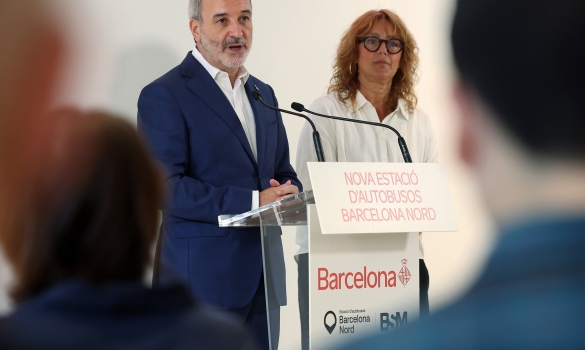


Further progress in the transformation of the bus station: all services will be concentrated on the same floor, with a single passenger entrance on Carrer Nàpols helping to improve the flow of users and connections with other means of transport
The station will remain fully operational during the work, which should take around one year
With over 2.6 million passengers and nearly 150,000 tickets issued a year, Barcelona Nord is the main centre for bus and coach departures and arrivals connecting with national and international destinations
Barcelona City Council has given its preliminary approval to the executive project for the renovation of the spaces and services at the Barcelona Nord bus station. Led and managed by Barcelona de Serveis Municipals (BSM), the project will bring a new stage of work to revamp the bus station, the goal being to continue guaranteeing the best experience for passengers and the transport companies that use the facility.
The project plans to concentrate all the services at the station on the same floor and establish a single passenger entrance on Carrer Nàpols. These two changes will help improve the flow of passengers inside the terminal, offer a better user experience and support intermodality by strengthening the connection with the Arc de Triomf metro station and Rodalies (local trains) station.
This new stage of work has a budget of 10 million euros, 4.8 million coming from European Next Generation funds as part of the Destination Barcelona Sustainable Tourism Plan (PSTDB).
Work is expected to get under way at the end of the year and conclude in 2026. The bus station will remain fully operational while the work is carried out.
The project continues the transformation of Barcelona Nord started in 2021, which allowed some tourist trip services previously making stops on public streets to be relocated to the bus station, helping to improve mobility in the city.
“This new stage in the transformation of Barcelona Nord means better services for the bus station and a more streamlined experience for users, while at the same time benefiting connectivity with the Arc de Triomf station”, said First Deputy Mayor and chair of BSM, Laia Bonet. “With over 2.6 million passengers and nearly 150,000 tickets issued a year, the Barcelona Nord bus station is the city’s main centre for bus and coach departures and arrivals connecting with national and international destinations, and we’re working for it to be well equipped and offer a service as a mobility hub of the highest order”.
All the services at the bus station will be located on the ground floor, which will have a single passenger entrance
On a structural level, the most significant change in the new stage of work on Barcelona Nord will see all services concentrated on the same floor.
The floor will also be a more open-plan area, favouring the flow of people. This will be achieved by opening up new indoor walkways throughout the terminal and the creation of new waiting areas and eatery spaces.
The other notable change is that the bus station with have a single entrance and exit for passengers. The entrance will be located on Carrer Nàpols and help optimise the flow of passengers and improve accessibility and connectivity with the Arc de Triomf metro and Rodalies (local trains) station.
Eating options at the bus station will also be redefined, with new eateries to suit users’ preferences. The terminal will offer a wide range of eating options throughout the day to cater for the different needs of passengers. These will be complemented by other eating options outside the façade of the building, opening up the bus station to the city.
The whole project around the bus station will respect the unique features of the building, listed as a cultural asset of local interest. The building will get more modern finishes, warm and welcoming new lighting, vegetation and new elements to improve sound levels at the station. Passenger information systems will also be adapted to make them more inclusive.
From an environmental perspective, and in line with BSM’s aim of contributing to sustainability and decarbonisation, the station will also have solar panelling to cover part of the building’s energy consumption. This will be installed on the roof of the building.