

An access point will be created on Carrer de Wellington, providing a link between Ciutat Vella, Vila Olímpica and Passeig dels Til·lers, as well as the facilities of the future Ciutadella of Knowledge
This initiative will transform Parc de la Ciutadella into a more accessible, walkable, and permeable space
The new entrance will further open up the Zoo and integrate it into the city, making it the heart of the Ciutadella of Knowledge aimed at children
The project is part of the Ciutadella of Knowledge Strategy, aimed at transforming the park and its surroundings into a leading hub for knowledge, outreach, research, and innovation in Europe
A step forward in the process of improving Parc de la Ciutadella to make it more accessible, walkable, and permeable. A new access point will link Carrer de Wellington with Passeig de Picasso and Passeig dels Til·lers within the park itself. The project addresses the city's need to connect the Ciutat Vella with the Víla Olímpica/Nova Icària neighbourhood, providing the latter with direct access to the main green space in the city centre, benefiting thousands of residents who currently lack easy access. It will also help reinforce the Carbonera-Ciutadella-Avinguda Icària axis as a civic, cultural, and scientific connector between Ciutat Vella and Sant Martí, creating an alternative inland route to the seafront one.
This initiative will also connect and link the various facilities that are part of the Ciutadella of Knowledge scientific ecosystem, transforming the park and its surroundings into one of Europe’s leading knowledge, outreach, research, and innovation hubs.
The new access will be an avenue within the park, stretching from the intersection of Carrer de Wellington and Carrer de Villena to Passeig de Picasso. This will result in an avenue that completes the park's internal circulation network, running vertically from the mountain to the sea via Passeig dels Til·lers, and horizontally from Llobregat to Besòs, linking Passeig de Picasso with Carrer de Wellington. In total, 26,000 m2 of gravel and other permeable materials already found in Parc de la Ciutadella. It will be at least 20 metres wide, preserving and showcasing the existing monumental trees.
The access will provide a green link between the five key strategic projects that form the Ciutadella of Knowledge, connecting the Ciutadella and Carles I parks. It will also improve connectivity between the Vila Olímpica and Poblenou neighbourhoods, and those of Sant Pere, Santa Caterina and La Ribera. In addition, it will make it possible for the Ciutadella-Vila Olímpica metro station and the tramway to be included as public transport access options to the park.
Mayor Jaume Collboni stressed the importance of a project that will enable “the creation of a biodiversity avenue that will transform Ciutadella and the relationship between the neighbourhoods and facilities on either side of the park. With the new avenue, we will achieve a more permeable, walkable, and accessible Ciutadella, as well as a Zoo that is more open to the city and better integrated into the surrounding park”. Collboni also highlighted the significance of the project, stating that it will “connect and link the various facilities that are part of the Ciutadella of Knowledge scientific ecosystem, transforming the park and its surroundings into a knowledge, outreach, research, and innovation hub”.
The intervention is outlined in the Ciutadella Master Plan drawn up by Barcelona City Council in 2023, which is expected to have a very positive impact on enhancing accessibility to the park and its buildings.
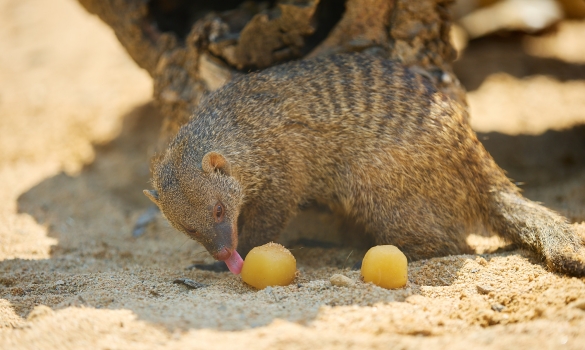
The new access will further open up the Zoo and integrate it into the city. Covering an area of 13 hectares, Zoo de Barcelona is the strategic project of the Ciutadella of Knowledge aimed at children.
The Zoo is undergoing a profound transformation that takes into account the effects of climate change and the loss of biodiversity on a global scale. Guided by animal welfare and sustainability criteria, the Zoo is working to become a space where both children and adults can connect with nature through educational, playful, and enjoyable experiences, while also getting involved in biodiversity conservation. This goal complements the Zoo's role as a driver of global partnerships for the restoration of habitats and the protection of endangered species.
In this context, the Zoo also aims to highlight its role as a park and green space within the city. It is, and will increasingly be, a vibrant space for children's activities; as well as a place for leisurely walks, outdoors, in a privileged natural setting.
The project consists of two areas. The first area (depicted in dark blue on the attached map) pertains to the Zoo and includes the new access from Carrer de Wellington, covering an area of 16,469 m2. The second area (depicted in light blue on the map) covers the pathway connecting the Av. Marquès d'Argentera access to Plaça Joan Fiveller. It spans 9,218 m2 and includes the gradual reduction of street-level parking spaces. The solution involves removing the existing paving to improve permeability and complete the water cycle. Additionally, the lighting will be improved, and tree planting will be intensified in this area.
The new access on Carrer Wellington and the associated avenue will involve a total investment of 13 million euros. The first phase, corresponding to the city level, will involve an investment of around 9 million euros.
According to the planned timeline, the drafting of the final project will begin this January, with the goal of tendering the works next autumn and starting construction in the first quarter of 2026. The works are expected to last approximately one year.
Recovery of a historic access
This new access is a long-awaited and necessary urban intervention, with several proposed projects over the past years, the latest one dating back to 2013. The Carrer de Wellington access was, in fact, included in the original park project design by Josep Fontseré and served as a key structural element and a transversal connector in the various changes made to the park from its completion until the 1950s. During Mayor Porcioles' tenure, this access was removed and repurposed as the entrance to the Zoo. Therefore, a historic access to Ciutadella Park is being restored.
Guaranteed mobility within the Zoo de Barcelona while the Wellington entrance is being revamped
The new access includes an underground passage within the Zoo, fully naturalised, which will blend with the rest of the Zoo through a series of ramps, stairs, and green embankments. These will integrate the existing trees and new vegetation, ensuring continuity and enhancing the visitor experience.
Renovation of Parc de la Ciutadella
This new access is part of the ongoing improvement and renovation works at Parc de la Ciutadella, which have a budget of 8.9 million euros and will continue throughout 2025. These works will improve drainage, paving, tree pits, curbs, the irrigation system and also the fountains in the park. They will be carried out in four areas:
- Passeig Joaquim Renart, which runs parallel to Passeig de Pujades.
- Josep Fontseré Gardens and access points, located just behind the Umbracle shade house, parallel to Passeig de Picasso.
- Passeig dels Til·lers, the section of the access from Av. Marquès de l'Argentera leading to Plaça Joan Fiveller.
- Central sector of the park. Once these works are completed, by 2026, the structural rehabilitation of the Umbracle shade house will commence. This building, listed as a Cultural Asset of Local Interest, forms part of the museum and scientific programme designed by Josep Fontseré i Mestres, alongside the Hivernacle greenhouse and the Martorell Exhibition Centre. This new intervention is in addition to those already carried out on the buildings of the Martorell Exhibition Centre, the Hivernacle, the façade of the secondary school Institut Verdaguer, and the Plaça d'Armes, all completed in recent years.
Ciutadella of Knowledge
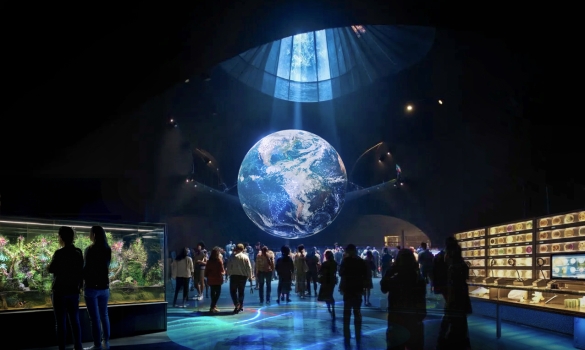
This new step will also serve to connect the various facilities that form part of the Ciutadella of Knowledge, which includes five strategic projects with a total associated investment of €290 million. This includes the new research complex at the old fish market, Mercat del Peix, featuring three buildings currently under construction; the development of a CSIC Centre for Biosciences; the establishment of an axis comprising four facilities of significant heritage and scientific value (the Hivernacle greenhouse, the Martorell Exhibition Centre, the Umbracle shade house, and the Three Dragons Castle); the construction of Barcelona’s Central Urban Library; and the promotion and expansion of scientific and educational activities at Zoo de Barcelona.
By the end of this term, 80% of the project is expected to be completed, and within the next 10 years, the Ciutadella of Knowledge will become an internationally significant reality, bringing together nearly 2,000 researchers.
The aim is to promote scientific knowledge and research in areas such as precision medicine, biodiversity and evolutionary biology, planetary welfare, molecular biology, biomedicine, the diversity and evolution of the natural world, animal welfare and indigenous wildlife management.
The Ciutadella of Knowledge is a project led by Barcelona City Council in collaboration with the Catalan Government, the Spanish Ministry of Science, Innovation and Universities, Pompeu Fabra University, the Autonomous University of Barcelona, the University of Barcelona, the Spanish National Research Council, the Pasqual Maragall Foundation, the Barcelona Institute of Science and Technology, and the Barcelona Biomedical Research Park.