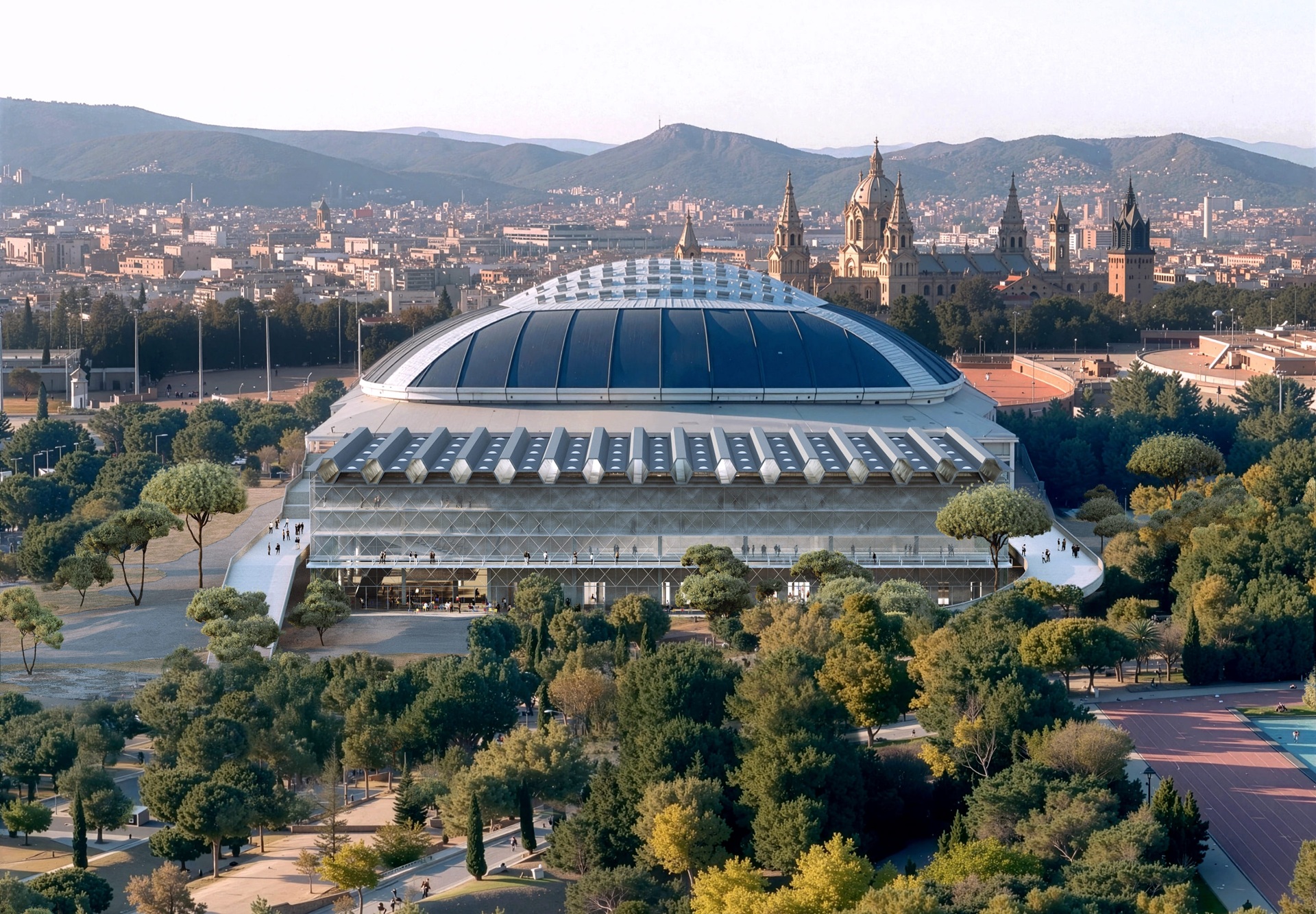


The winning proposal, submitted by Paris-based studio Bruther and Barcelona-based Jorge Vidal Studio, was selected through the international architectural design competition organised by BSM
Scheduled for 2029, the new Sant Jordi Club will play a key role in the strategy to take the live music and events experience across the Anella Olímpica one step further, with a versatile, accessible and sustainable venue offering high-quality acoustics
With a flexible capacity of up to 9,000 spectators and an investment of €70 million, the new Sant Jordi Club will be an open, transparent venue directly connected to the mountain and the city, designed to enhance the experience of audiences, artists and promoters
Download the graphic materials here
Transforming the Anella Olímpica into a venue for major events
The transformation of the Anella Olímpica is moving forward with the selection of the architectural design for the new Sant Jordi Club, Spain’s first major venue purpose-designed to deliver the best possible live music experience.
This strategic initiative led by BSM reinforces the ambition to establish the Anella Olímpica as one of Europe’s leading music and cultural hubs. The transformation is structured around four main priorities:
- Improving the experience of audiences, artists and promoters before, during and after events.
- Strengthening technical and production capabilities to meet the demands of the most complex shows.
- Advancing sustainability and energy efficiency, enabling high-quality events to be held with a lower environmental impact.
- Ensuring universal, clear and inclusive accessibility tailored to major events.
This vision puts people at the heart of the project and conceives the Anella Olímpica as a place designed for experiencing events from start to finish: before, during and after concerts.
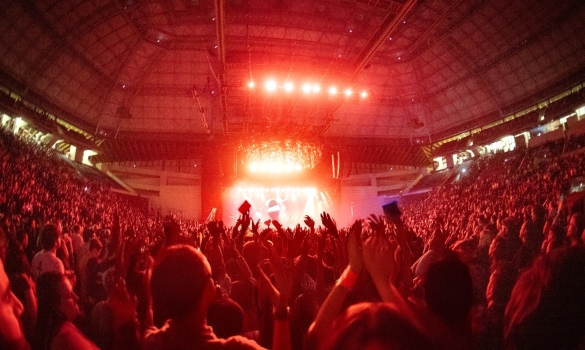
With 198 events and more than 2.4 million spectators in 2025, the Anella Olímpica has confirmed its status as an essential stop on major national and international tours. This programme has particularly strong links with local audiences: in recent years, more than 80% of those attending its events have come from Barcelona, the metropolitan area and the rest of Catalonia, demonstrating both its strong local roots and its international reach.
A new Sant Jordi Club to take the live music experience to the next level
The proposal submitted by Paris-based studio Bruther and Barcelona-based Jorge Vidal Studio has been selected as the winner of the international design competition organised by BSM.
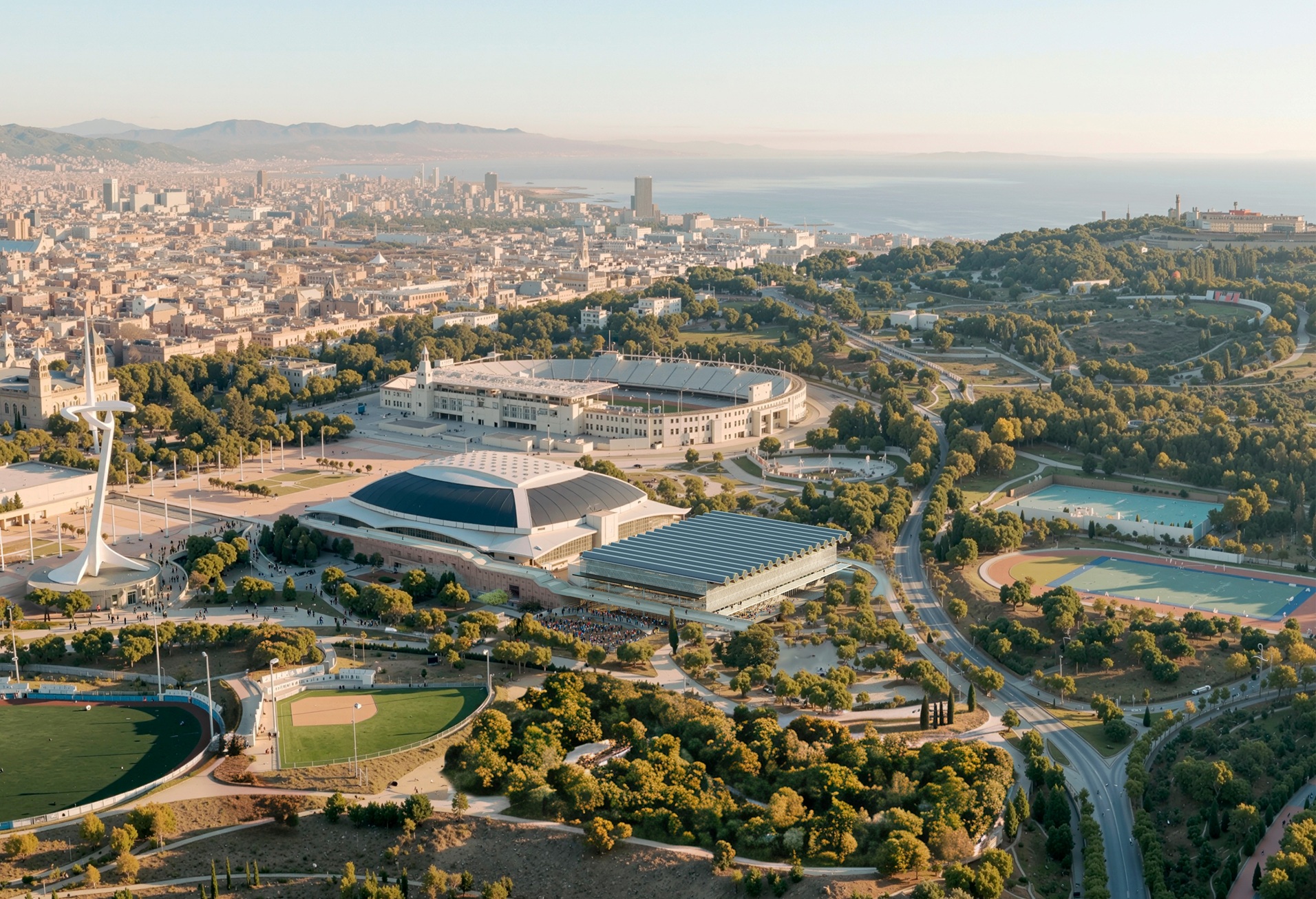
Scheduled to open in 2029, the new venue will complete a unique ecosystem comprising three major venues in a single location—Estadi Olímpic Lluís Companys, Palau Sant Jordi and Sant Jordi Club—capable of hosting a rich and diverse programme throughout the year, attracting leading national and international tours and promoting local talent. An ecosystem that also consolidates Barcelona’s position as one of the world’s great cultural capitals.
In this context, the new Sant Jordi Club will play a key role in taking the live music experience across the Anella Olímpica to the next level. Its opening will expand and complement the Olympic complex’s current offering with a versatile, sustainable venue of outstanding technical and acoustic quality, equipped to meet the sector’s evolving needs and provide a more comfortable and memorable experience.
It will be a place designed not only for listening to music, but for feeling, sharing and experiencing it in the best possible conditions, from arrival and the welcome areas to the services, the time spent at the venue and the post-concert experience. It will offer unique, high-quality experiences in a flexible venue equipped for increasingly complex productions.
Mayor Jaume Collboni has placed the new Sant Jordi Club within the transformation of the Nou Montjuïc, including the redevelopment of Fira de Barcelona and the Anella Olímpica: ‘The Anella Olímpica is a publicly owned space with three major arenas, and as part of this reclaiming of Montjuïc, we want to modernise its facilities and, in the case of the Sant Jordi Club, equip it with the latest technology. Barcelona has excelled in its ability to attract major international concerts and provide opportunities for local artists, and the public-sector commitment is to maintain this.’ ‘We want the Sant Jordi Club to be a venue in its own right, designed primarily for live music, with a scalable capacity of between 3,000 and 9,000 spectators,’ he added, ‘so that we can offer capacities ranging from 3,000 to 54,000 spectators in one location, with a design that connects with its surroundings and considers not only what happens inside, but also how people get there and what it is like to spend time there.’
1 - Architecture that takes the concert experience to the next level
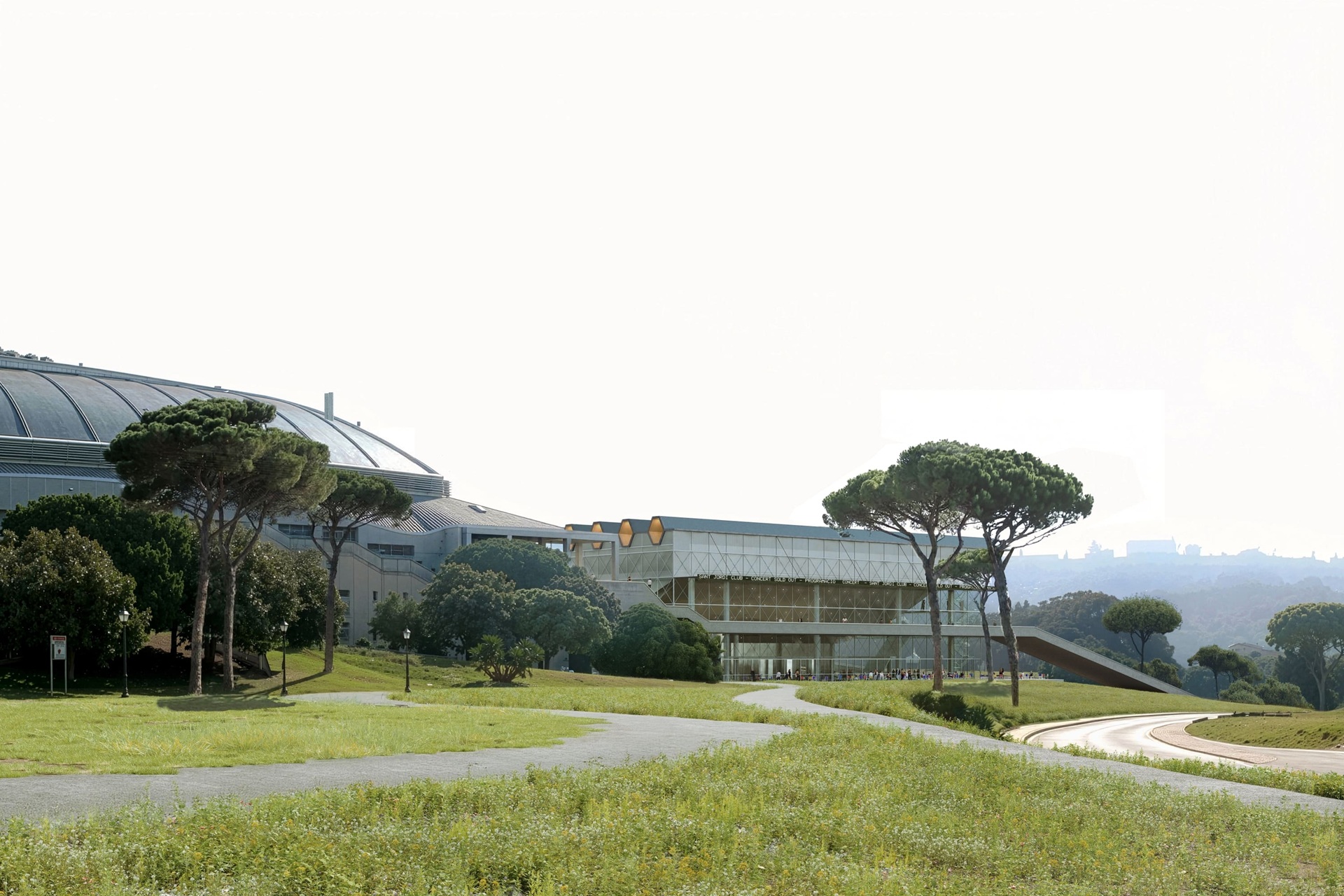
The proposal by Bruther and Jorge Vidal Studio presents the new Sant Jordi Club as a distinctive building that is also respectful of Palau Sant Jordi, designed by Arata Isozaki. With a floor area of 17,000 m2, the project consists of a rectangular building approximately 25 metres high, with two underground floors, which blends naturally into the Montjuïc landscape and preserves Palau Sant Jordi’s prominence within the Olympic complex.
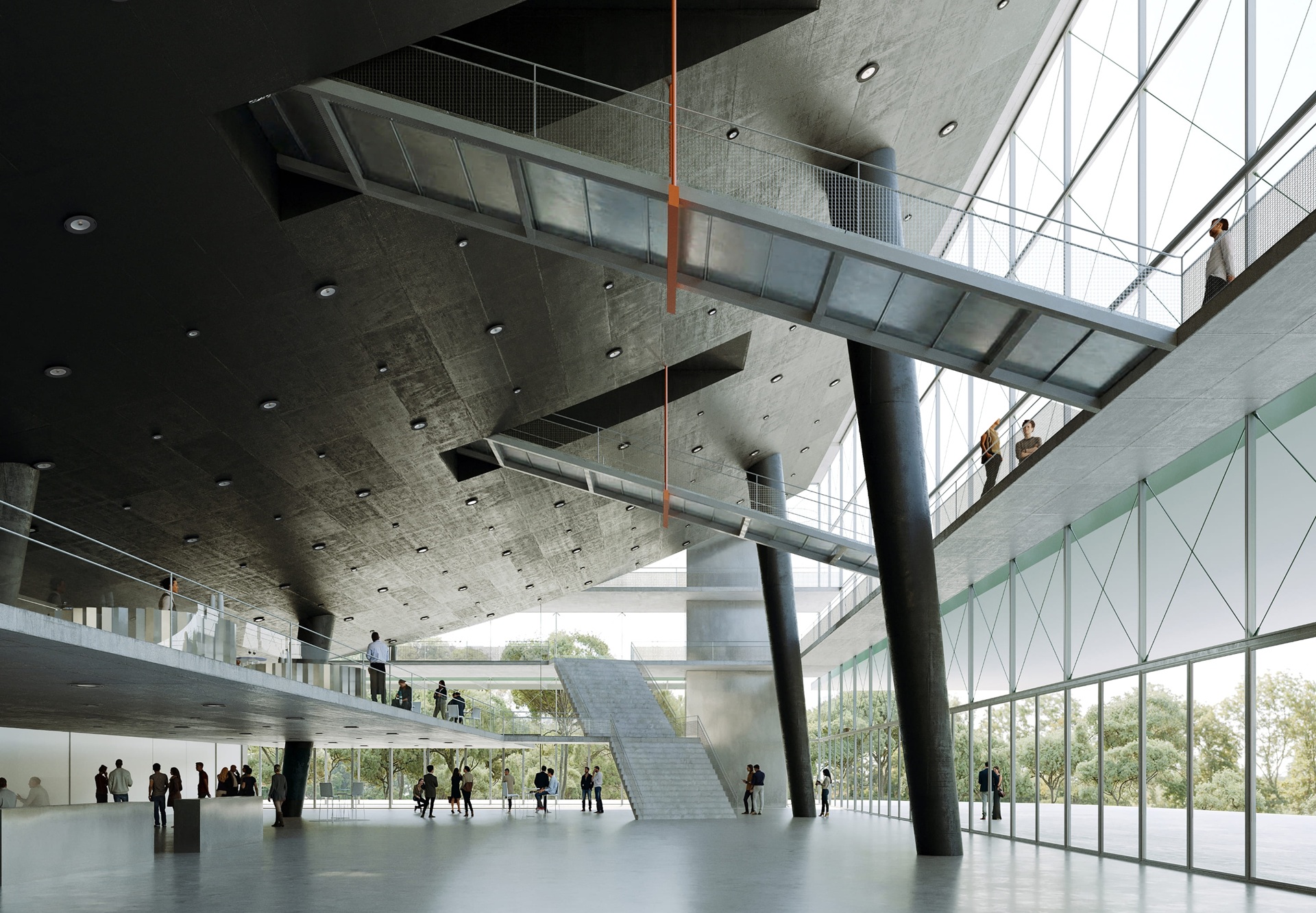
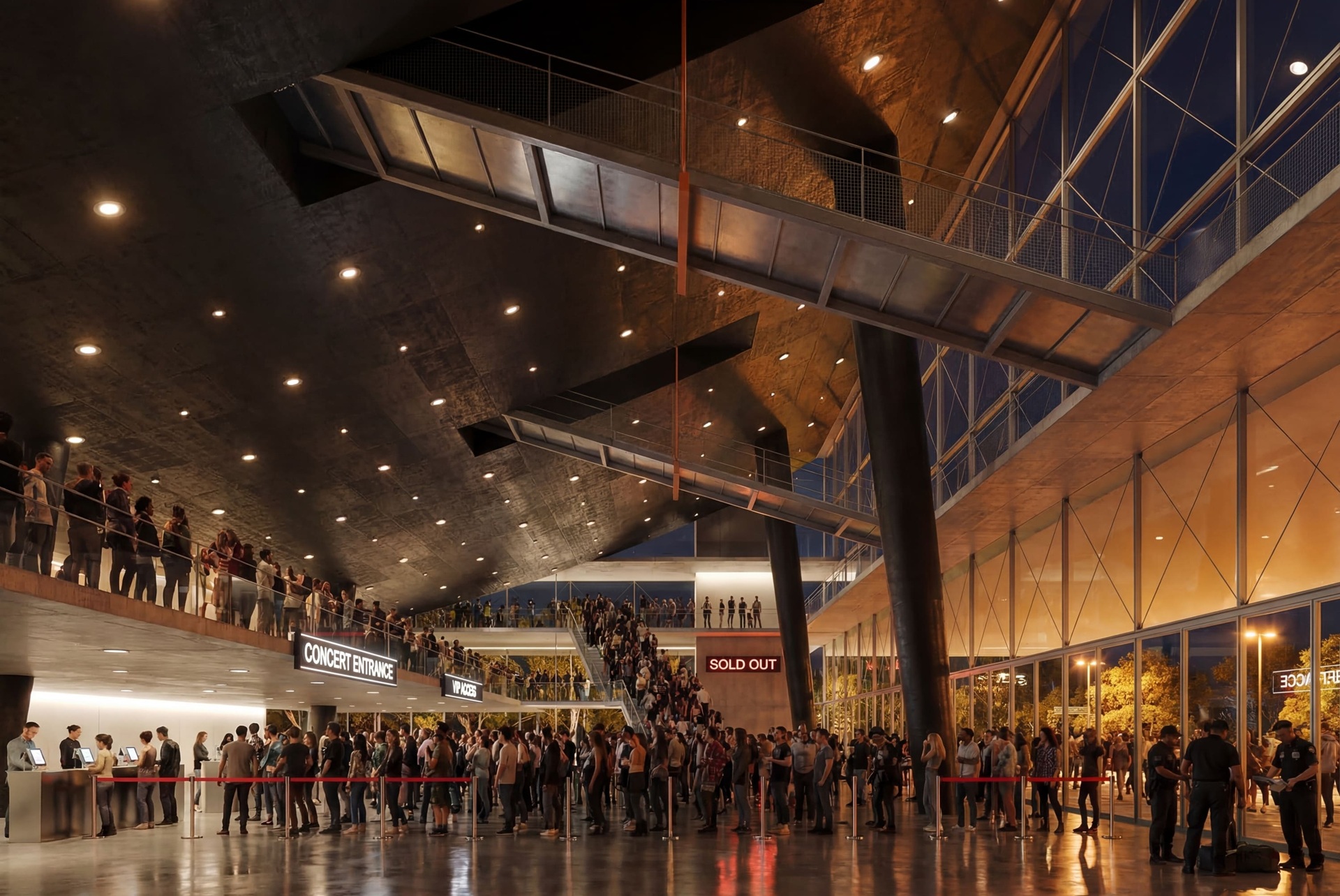
The architectural proposal also focuses on the quality of the experience from start to finish. The project will create a large entrance plaza on the western façade, connected to the Esplanada Olímpica, which will serve as the new venue’s main entrance and outdoor foyer. This space will host services and activities so that visitors can enjoy the experience from the moment they arrive.
The plaza will connect to a large indoor foyer, designed as the main arrival and welcome area of the new Sant Jordi Club. The foyer will include a range of food, drink and merchandise outlets and direct visitors along the different routes into the auditorium.
Outside, there will also be a second plaza designed to allow audiences to leave smoothly and in an orderly manner, and a third plaza for the venue’s logistical, technical and operational activities. This layout will improve circulation, separate the different uses and make both the audience experience and operations for artists, promoters and technical teams more comfortable.
2 - A flexible auditorium with outstanding acoustics, technically equipped for the most demanding productions
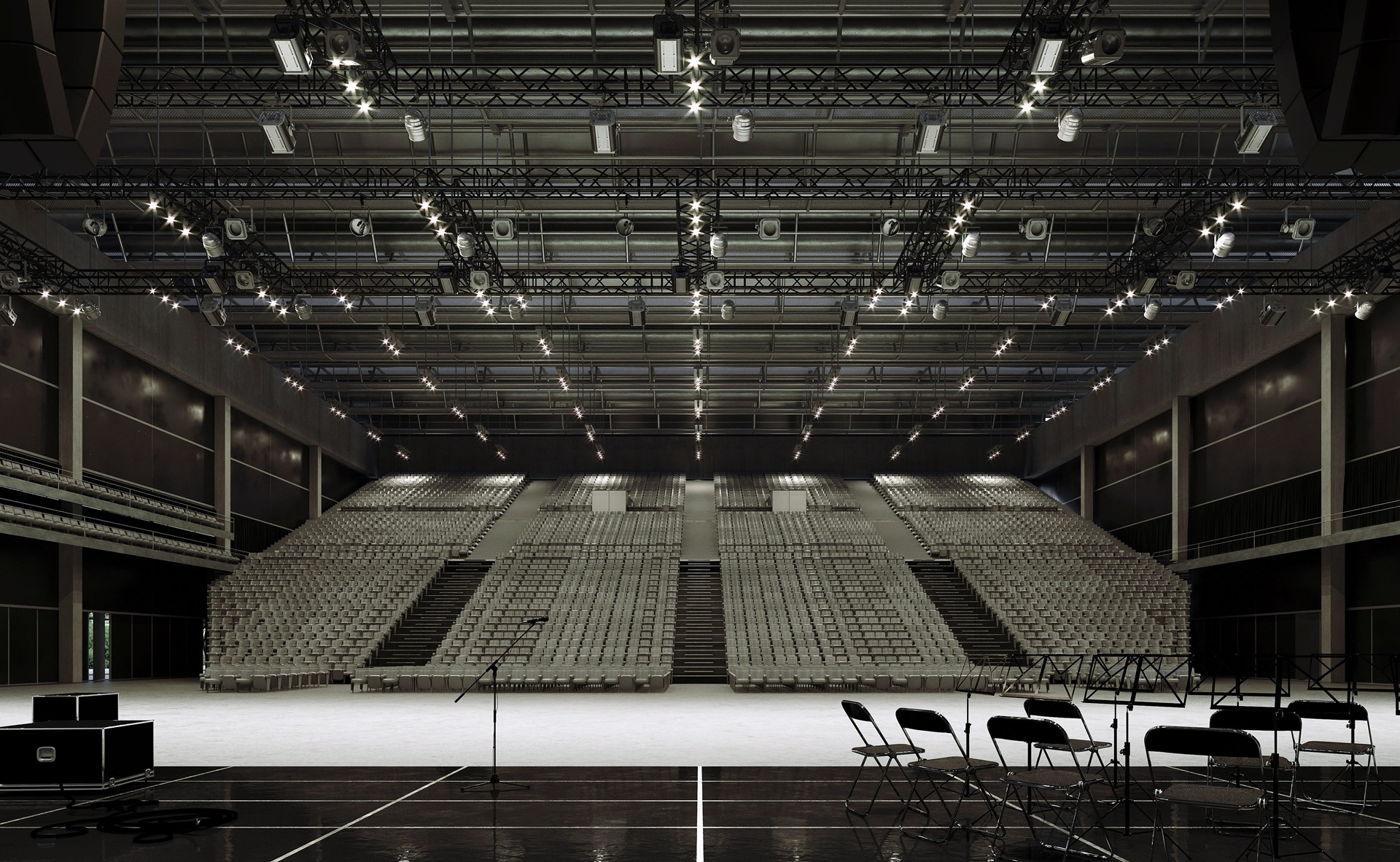
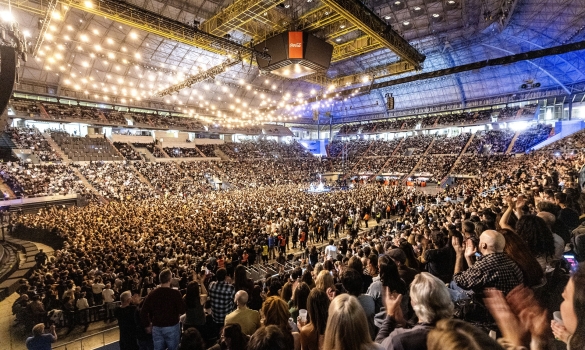
The new Sant Jordi Club will be purpose-designed for live music and mid-sized shows, with flexible capacities ranging from 3,500 to 9,000 people. The auditorium will be adaptable to different concert and production configurations, with seated or standing audiences, fixed and retractable seating, movable chairs and spaces equipped to meet the needs of each event.
Acoustic quality will be a key element of the project. The auditorium will be designed to provide a high-quality sound experience for different concert and performance formats, with sound-absorbing materials on the walls, acoustically treated seating and a ‘box within a box’ soundproofing system. These measures will allow the new Sant Jordi Club to operate alongside Palau Sant Jordi. The auditorium will also feature first-class multimedia and audiovisual technology designed to meet the current demands of concerts and major productions, including lighting, sound, video and streaming systems.
This combination of flexibility, capacity and top-quality technical features will cover a key segment of the live music circuit for audiences of up to 9,000, providing a venue for mid-sized concerts and shows that is currently unavailable in Barcelona.
3 - An accessible venue designed for everyone to enjoy
Accessibility will be a key element in ensuring that the experience at the new Sant Jordi Club is unique and inclusive from arrival to departure. The project will improve access to its spaces, services and routes, with solutions designed to make it easier for everyone to find their way around, move through and use the venue. In this way, the Anella Olímpica strengthens its commitment to providing an accessible experience on equal terms for all attendees.
4 - A sustainable strategy to make the new Sant Jordi Club a European benchmark for major events
The winning proposal incorporates sustainability as a cross-cutting principle. The project will be developed in accordance with the BREEAM New Construction certification criteria and includes measures to reduce energy consumption, limit its carbon footprint and improve user comfort.
The main measures planned include generating renewable energy through photovoltaic panels, air-source heat pump technology, rainwater harvesting, the use of low-carbon and recycled materials, and the application of circular economy principles during construction.
The landscaping scheme will promote biodiversity, soil permeability and natural water management, while also helping to reduce the urban heat island effect and improve the environmental quality of the Anella Olímpica’s outdoor spaces.
With this project, Barcelona reinforces its ambition to be a major cultural capital and consolidates the Anella Olímpica as a leading space where emotion, culture and the city come together.
Bruther
Founded in Paris in 2007 by Stéphanie Bru and Alexandre Thériot, Bruther sees architecture as an adaptable, multidisciplinary tool that reconciles different fields of knowledge. Its practice is distinguished by innovative projects for public institutions, such as the Saint-Blaise Cultural and Sports Centre in Paris and the New Generation Research Centre in Caen. The studio has received the Swiss Architectural Award (2020) and the Brussels Architecture Prize (2025) for its contribution to the urban environment.
Jorge Vidal Studio
Founded in Barcelona in 2015 by Jorge Vidal, the studio seeks to improve people’s quality of life and the spaces we inhabit by aligning architecture with contemporary life through new forms of expression, flexible systems, resource optimisation and pragmatic design that respects its setting. Its work has been recognised with awards including the FAD Award (2023) and distinctions at the 16th Spanish Biennial of Architecture and Urbanism. The studio is currently working on projects including Torre Cívica Jordi Solé Tura and the refurbishment of Mercat d’Horta, both in Barcelona. Since 2021, Vidal has also headed the SUUN Unit for Sustainability and Climate Design at ETSALS.