Imagen destacada
Imatge
Cuerpo

Forced break-in at the Doñana aviary that houses 63 birds of different species, and scaring off twelve birds 

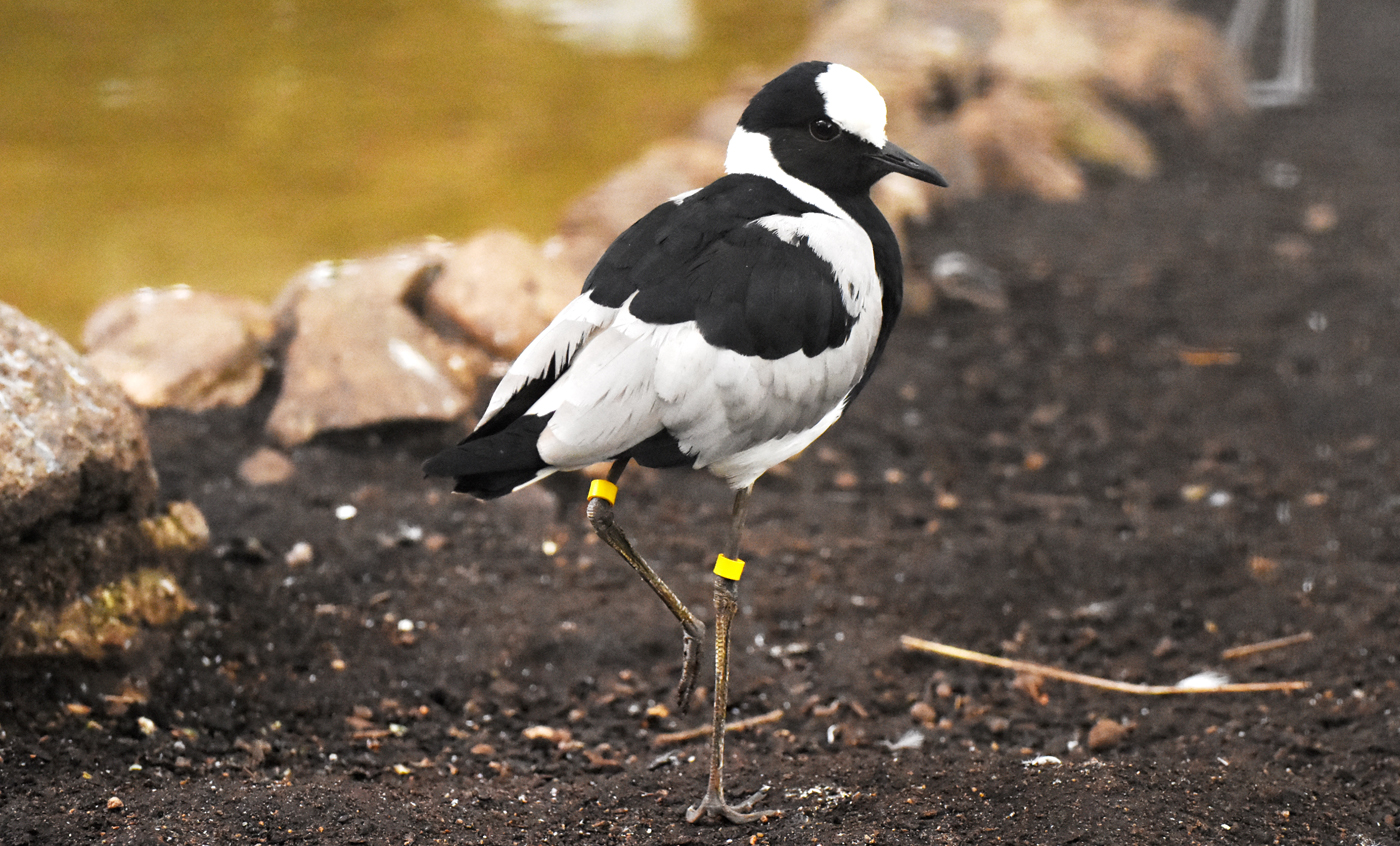
On the evening of Wednesday 2 August at 9.35pm there was a break-in at the Doñana aviary in the northern part of the Park, where a total of 63 birds of different species are housed. The break-in led to some of the birds that live in this famous facility - which reproduces the habitats of wetland areas - flying away. According to statements made by the Zoo’s director, Sito Alarcón: "This facility is very important to us because several birds from here have been reintroduced back into the wild".  The Zoo staff went out that same night to recover some of the birds. According to the Zoo’s director "Our protocols worked correctly which meant that we were able to get on-site rapidly to start recovering the escaped birds. At the same time, local police forces Mossos d'Esquadra and Guardia Urbana started work on investigating the break-in".   This morning our count of the birds confirms that 12 are missing: 2 blacksmith lapwings (Anitibyx armatus), 5 Eurasian spoonbills (Platalea leucordia), 3 glossy ibis (Plegadis falcinellus) and 2 scarlet ibis (Eudocimus ruber). Many of these could return voluntarily to the vicinity of the facility, at which point they would be recovered. The lost birds represent no risk to people at all.  The team at the Zoo is currently working around the park’s surrounding areas trying to locate and recover the lost birds.  If you would like to read the statements made by Zoo's Director, Sito Alarcón, in regard to the incident that took place at the Doñana facilities, please click here
Break-in at the Doñana facility at Barcelona Zoo
Read the note
Fecha de publicación
News or press release?
Press release
Imagen destacada
Imatge
Cuerpo

The ApparkB app features a new short-term parking space availability prediction system in Blue Zones 
The AreaDUM app is improved with a parking space availability prediction system in Urban Freight Distribution (DUM) areas

In July 2017 Barcelona de Serveis Municipals, SA (B:SM) will publish new updates for its applications ApparkB and AreaDUM, with the objective to continue increasing its value and its services for users.
New features of the ApparkB app: User Information System (UIS)
This July an update will be launched for the ApparkB app, which has added improvements and new services for its users.  The most important improvement is the User Information System (UIS), a new help tool for users that let them display the availability of parking spaces in Barcelona, immediately and on their mobile phones. 
The User Information System (UIS) can be used in two ways: the browser mode, which reports on available spaces while users are driving to their destinations, and predictive mode, which lets users consult the normal availability of spaces at a concrete destination at a specific time. Both usage types of the User Information System (UIS) provide data that is extremely useful for users, given that it helps them find parking more quickly or plan out where they will park in advance. This improvement directly contributes to reducing the time spent searching for parking spaces in the city that, in turn, means that traffic and traffic jams will be reduced due to driving around, as well as reducing the impact of pollution in the city of Barcelona. 
To use this new function, you just need to download the app for free, then enter the address of the destination where you are going and select your planned arrival time. According to the parameters entered, users will see the forecast availability of parking spaces in Blue Zones at the location entered, on their mobile phone screens, signalled by an easily understandable colour code: green (high probability), orange (medium probability) or red (low probability). After parking, users pay via the app, in the same way it is done now.  Today, there are more than 8,600 regulated surface parking spaces in Barcelona, which are the Blue Zones, logging some 12 million operations each year. There are also nearly 40,000 Green spaces in service, with over four million operations each year. To improve the management of these parking spaces, in 2013 the ApparkB app was launched, which has been loaded over 254,000 times. With this free optional mobile app, users pay for the exact time they use the short-term parking spaces in Blue or resident Green Zones in Barcelona.
More new features of the ApparkB app: Push messaging and multiple languages
This new version also employs push messaging, which increases service communications with users in real time. This type of messaging lets us report on possible service incidents, new items related to using parking in regulated areas and alerts of interest to users, such as environmental pollution warnings, alerts for emergencies, etc.
Finally, two new languages have been added to the user interface. The languages previously available were Spanish and Catalan, and now the app will also be available in English and French. The payment system via ApparkB offers users top usage guarantees, given that Catcert certifies the time counting process and payment with card is secure and done via the PCI DSS standard. The ApparkB app is available for Android and iOS mobiles.
New features of the AreaDUM app: User Information System (UIS) This July, an update of the AreaDUM app is also being launched, adding improvements and new services for users of the Urban Freight Distribution areas (DUM per its Catalan acronym).
This update also adds the User Information System to the AreaDUM app, which will help users by immediately displaying the availability of parking spaces in Urban Freight Distribution areas. With this new functions, DUM area users can plan their distribution routes according to the availability of spaces, reducing time searching for parking spaces and contributing to easing traffic and reducing the city’s pollution. To use this new function, you just need to download or update the app for free, then enter the address of the destination where you are going and select your planned arrival time. Users will see the forecast availability of parking spaces at the location entered, on their mobile phone screens, signalled by an easily understandable colour code: green (high probability), orange (medium probability) or red (low probability). After parking the vehicle, users start the 30 minute parking period via the app, as it is currently done. 
More new features of the AreaDUM app: Push messaging
The application also includes push messaging, for real time information on service incidents, new features or news and alerts for environmental pollution, emergencies or other alerts of interest to users. Finally, the possibility has been added to add the DUM Zone code on the vertical sign manually, and the Long Press button, so that users can view the map more quickly. In 2015 the AreaDUM app was launched. It is free and used for the smart management of parking spaces in the Urban Freight Distribution areas (DUM), and replaced the former parking disk system. There are some 8,500 spaces allocated to regulated loading and unloading activities in the city, with over 45,000 parking operations each day in these zones. There have been over 113,000 downloads logged of the AreaDUM app and nearly 15 million digital tickets have been issued since it was started. 
B:SM launches new updates of the ApparkB and AreaDUM applications
Read the note
Fecha de publicación
News or press release?
Press release
Imagen destacada
Imatge
Cuerpo

The car park is located on Carrer Castillejos number 158, under the Encants-Bellcaire Market  

The Encants car park, located on Carrer Castillejos 158, under the market itself, has an area of 8,042 m2 on a single floor, and has 277 spaces for cars, including four handicapped spaces, 79 spaces for motorbikes and 10 for bicycles. This car park is owned by the municipality and since June has been part of the network of 43 car parks managed by the company Barcelona de Serveis Municipals. Encants is the fourth car park at Barcelona’s outside markets managed by B:SM, which also includes the car parks at Sagrada Família, La Boqueria and Guinardó. The car park at the Sant Antoni Market will soon be added as well. B:SM plans to implement some improvements, such as electric vehicle charging points, spaces for electric cars and motorbikes and free lockers.  The Encants car park will be used by market workers and stall owners, the neighbours of El Fort Pienc area of the Eixample district, as well as by people visiting the market and the cultural venues nearby. Users can opt between the different payment methods that B:SM offers for sedans, such as full 24 hour parking, daytime or evening parking, or temporary with prepaid cards (for 25, 50 and 100 hours), multiple day cards (1, 3, 5 and 7 days) and hourly tokens for the businesses in the area. Likewise, 24 hour payment plans will be offered for motorbikes and bicycles. Management of this car park was entrusted to B:SM by the Barcelona City Council, via the agreement made by the Government Committee in its ordinary meeting of 25 May 2017.
Encants car park added to the B:SM network
Read the note
Fecha de publicación
News or press release?
Press release
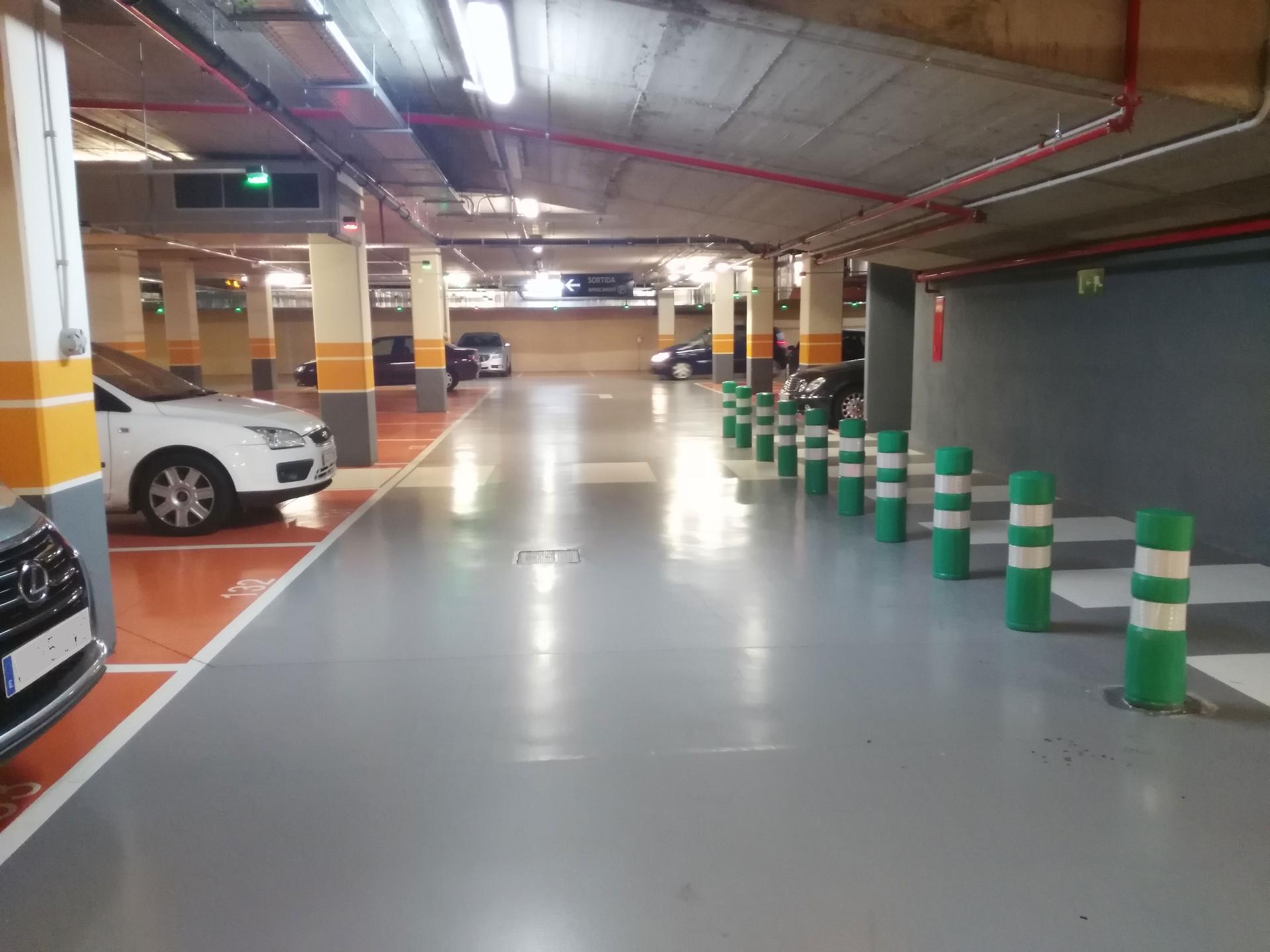
Imagen destacada
Imatge
Cuerpo

The LIFE Montseny brook newt project will be developed until December 2020, with the aim of improving the conservation status of this amphibian (Calotriton arnoldi), native to Montseny and its riverbank habitat

Among the different communication actions planned to publicise and disseminate the LIFE Montseny brook newt project, a website has been created [lifetritomontseny.eu] that—among other information of interest—will include a summary of all actions done throughout the 2016-2020 period, the time the project will be running. The website is for scientists, experts and professionals in the field of conservation of natural space, but is also for students, volunteers and aficionados who are interested in learning and being up-to-date on the evolution of the project and new news and happenings. On the page, you can read about the project’s background, objectives, actions and results, as well as seeing its evolution during the years the project is operational. Other contents include sections on collecting information that appears in the media, both in digital press and on television and radio, as well as a photo gallery that will be regularly enriched with new contributions. There will also be information on the partners participating on the initiative, as well as the organisations, companies, administrations and individuals that provide some type of support. Their involvement and help is key to obtaining the project’s objectives and executing its actions.  There is a link on the website to the Youtube channel for Life Montseny Newt, as well as monitoring on twitter at the hashtag #LifeMontsenyNewt.  First steps in the LIFE project The Montseny brook newt (Calotriton arnoldi), endemic to this natural park and considered the most endangered amphibian in Western Europe, was discovered in 2005. Since that time, the management body of the Montseny Natural Park and Biosphere Reserve, via its experts and guards, as well as outside researchers, have invested both human and financial efforts in learning about this little amphibian, to determine its precise habitat, its populations, its environmental needs and primary threats. In 2015, a commitment was made to enact a guaranteed action plan to improve the conservation of the habitats of this native species and ensure its survival. With the collaboration of four partners (Girona Provincial Council, the Catalan Autonomous Government, Barcelona Zoo and Forestal Catalana), and after a series of meetings, park management suggested submitting the project to the EU LIFE calls for proposals. After being awarded the project, it will now be developed between October 2016 and December 2020, via diverse actions all aimed at improving this amphibian’s conservation status and riverbank habitat, as well as increasing water quality and the flow of the streams where it lives, eliminating or reducing the threats it currently faces to its habitat, assuring the species genetic conservation and expanding its area of distribution. The project also wants to establish greater legal coverage by approving a species conservation plan, increasing scientific knowledge and ecological requirements, as well as seeking the involvement and commitment of different territorial agents, both people and administrations and organisations, in conserving riverbank habitats and especially their biodiversity. Contact Montseny Natural Park and Biosphere Reserve Masia Mariona Natural Park Office,   Ctra. 5119, Km 2.5 (Mosqueroles) 08479 Fogars de Montclús Tel. 938 475 102 / 934 022 222 ext. 37341 Email: lifetrito@diba.cat
The LIFE project to protect the Montseny brook newt has created a website to monitor its actions
Read the note
Fecha de publicación
News or press release?
Press release
Imagen destacada
Imatge
Cuerpo

In homage to the 25th anniversary of the 1992 Barcelona Olympic Games, the horse Olympic will be at the Tibidabo Fun Fair until 16 July 

Olympic was the name given to the horse commemorating the 92 Barcelona Olympic Games, which is starting its tour through the city at the Tibidabo Fun Fair. This fibreglass sculpture can be visited until 16 July at the entrance to the park. The horse was a creative idea by the student body at the Virolai Grimm School in Barcelona and represents the living image of the 1992 Barcelona Olympic Games, in the framework of celebrating its 25th anniversary. The horse sports the Olympic rings in the colours for the games, along with a mosaic inspired by Antoni Gaudí’s trencadís style works. The golden, silver and bronze colour of its mane and tail represent the Olympic Game medals. All visitors who come to the Tibidabo Fun Fair can enter this new space free for everybody at the Interactive Water Fountains with light, sound and colour effects, as well as a walk to view the recently restored Airplane ride at the Park. A new feature this year is that holders of the tarjeta rosa (pensioners’ pink card) can enter for free.  In the entertainment programming, two new rides have been launched: the Txu Txu Tren and the Mini Hurakan. Two new four-dimension films are also premiering-–which have enjoyed great success at the Park’s Dididado Cinema—and new opening and street shows like Tibicabaret, new characters like Boccato di Cardinale and the new performance on the adventures of Tibidabo mascots, TI, BI, DA and BO.  In our charity solidarity area, one new feature that merits mention is that free entry has been granted to the Park since the end of the school year for groups and centres with special needs.  Further, some dozen charity parties are planned, some of them a long standing tradition. In the last 10 years the Park has hosted over 70 charity solidarity days and has collaborated with some 550 beneficiary social organisations.
The horse named Olympic starts to ride at Tibidabo
Read the note
Fecha de publicación
News or press release?
Press release
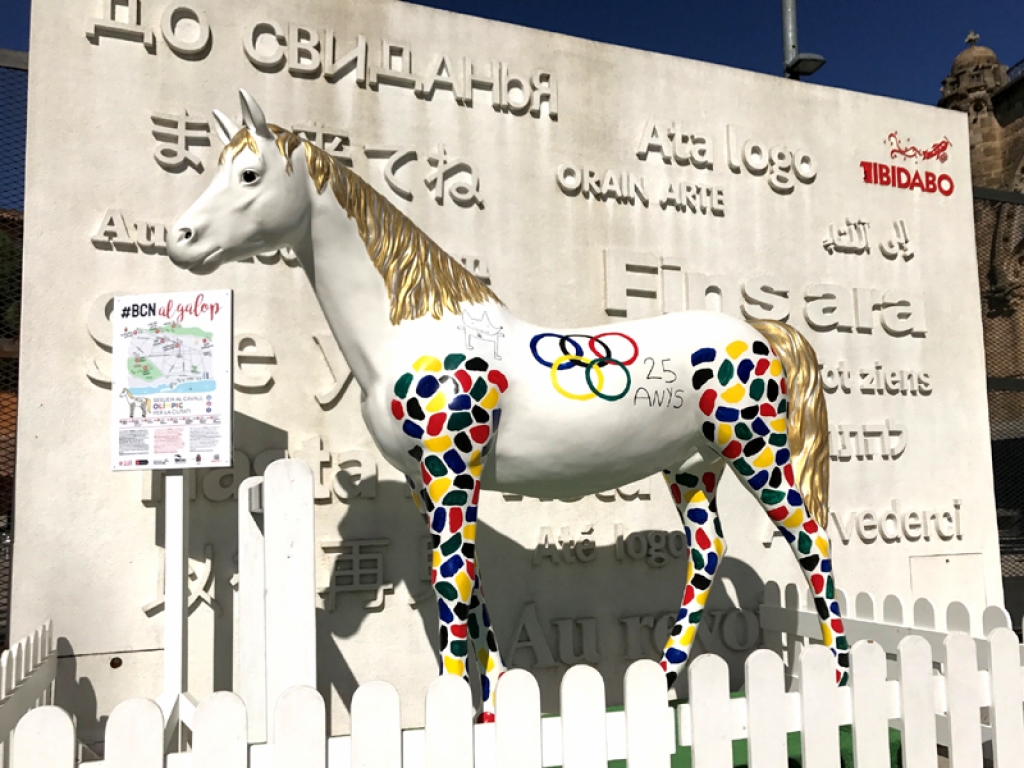
Imagen destacada
Imatge
Cuerpo

Motto-hashtag for this action: Because our Zoo and what the dictionary says are not the same, #WeAreChangingTheDefinitionOfZoo

As part of the advertising campaign designed for 2017 under the motto-hashtag #WeAreChangingTheDefinitionOfZoo, the Barcelona Zoo is launching its proposal today to change the definition of ‘zoo’ to adapt it to the reality of the tasks done by modern zoos, which are based on education, research and conservation. The regular definition of zoo is limited to describing them as places where exotic animals are exhibited to the public. All of us at the Barcelona Zoo believe this description is simply not enough to describe its purpose and work, as it leaves out essential issues such as participation in conservation projects and projects to reintroduce endangered species into their natural habitats, research related to biodiversity both at the Zoo and in habitats, and educational actions to foster respect for nature. To help communicate the basic idea that the Zoo is much more than a viewing ground located in a park and that dictionaries should change their definitions, the initiative is supported by a video that will be shown starting today on the Zoo’s social networks, on its website and via radio spots. This action is part of the Zoo’s advertising campaign for 2017 that, within the framework of celebrating the Zoo’s 125th anniversary, aims to bring the new zoo model presented by the Barcelona City Council in recent months to citizens. It is based on deepening the basic mainstays of the activities of a modern-day zoo—education, conservation and research—with the challenge of making the Barcelona Zoo a foremost ally for biodiversity.  The communication campaign, which was created by the prestigious agency Saatchi&Saatchi, focuses on the motto ‘We are Zoo because we love and value animals and We are Logical because there is a project behind every animal’ (#WeAreZooWeAreLogical).  Following the idea of this forceful statement, the campaign presents a series of specific and verifiable data expressed very logically and intelligibly, so that citizens understand the message that the Zoo has a mission to complete and a raison d’être.     You can download the video here To see more photos, click here
The Barcelona Zoo promotes a campaign to change the dictionary definition of ‘zoo’
Read the note
Fecha de publicación
News or press release?
Press release

Imagen destacada
Imatge
Cuerpo

Barcelona is the first city in Spain to approve recognition of the authority of parking enforcement officers

Parking metre enforcement officers will be considered authorities for legal defence purposes. This status will be applied in criminal jurisdiction when the process is due to them performing their functions. The City Council modified the Traffic Ordinance for Pedestrians and Vehicles, due to recognising this status, with the aim of clearly contributing to improving the social consideration of this group and guaranteeing them greater protection while doing their daily tasks.  This is a response to the claim this work group has demanded for years. Specifically, the modification of article 31.3 of the ordinance, reads that ‘under the terms of current legislation in force, control of the suitable use of stopped and parked vehicles on the public roadway and traffic tickets for conduct that violates the rules that regulate their use can be provided by auxiliary personnel, who shall hold the status of officers of the authority, for the purposes of their legal defence before the law’.  Deputy mayor Jaume Collboni congratulated these workers for the tasks they have done over the years, remarking that ‘everybody in the city should know that these people are officers working for the authority, with full legal recognition, and that in the event of incidents and if lawsuits occur, their opinion will always take priority over that of another person and they will have special protection from a criminal viewpoint. We are the first city in Spain to approve this recognition; we believe that it was justice to do so. Part of the City Council’s nature is to provide maximum coverage and protection to its employees’. The president of the B:SM Works Committee, Juan Antonio Sánchez, has stressed that ‘this is the day we have been waiting for, for many years’ and remarked that ‘it is a pioneering step for the entire state and our work as unions is to keep fighting so that this protection is extended to the rest of our colleagues in other cities’.  Barcelona is the first city in Spain that has recognised parking enforcement officers as agents with authority. The measure will enter into force on 1 July. Over 18 million uses of parking areas In Barcelona, there are 290 parking enforcement officers working in public spaces (blue, green and loading and unloading areas), assuring compliance with parking regulations, citizen care and the control of public spaces, thus contributing in a notable way to mobility and management of public spaces.  The city has 700 kilometres of parking areas with surveillance, of which 100 km are blue spaces, 500 km are green spaces, and 100 km are loading and unloading spaces. These figures translate into 9000 blue spaces, 40,500 green spaces, 3500 resident only spaces, 8500 DUM loading and unloading, and 50,000 motorbike and scooter spaces. Overall, throughout 2016, there were 18,215,257 uses of the different types of parking areas.  During 2016, parking enforcement officers provided 495.000 hours of service, during which 116 incidents occurred, of which 20 led to police reports. This represents a rate of 0.2 incidents per 1000 hours of service. The City Council wants to see continued decreases in the number of incidents that occur and, in this respect, changing the regulation should contribute to this goal.
Parking metre enforcement officers will be considered authorities for legal defence purposes
Read the note
Fecha de publicación
News or press release?
Press release
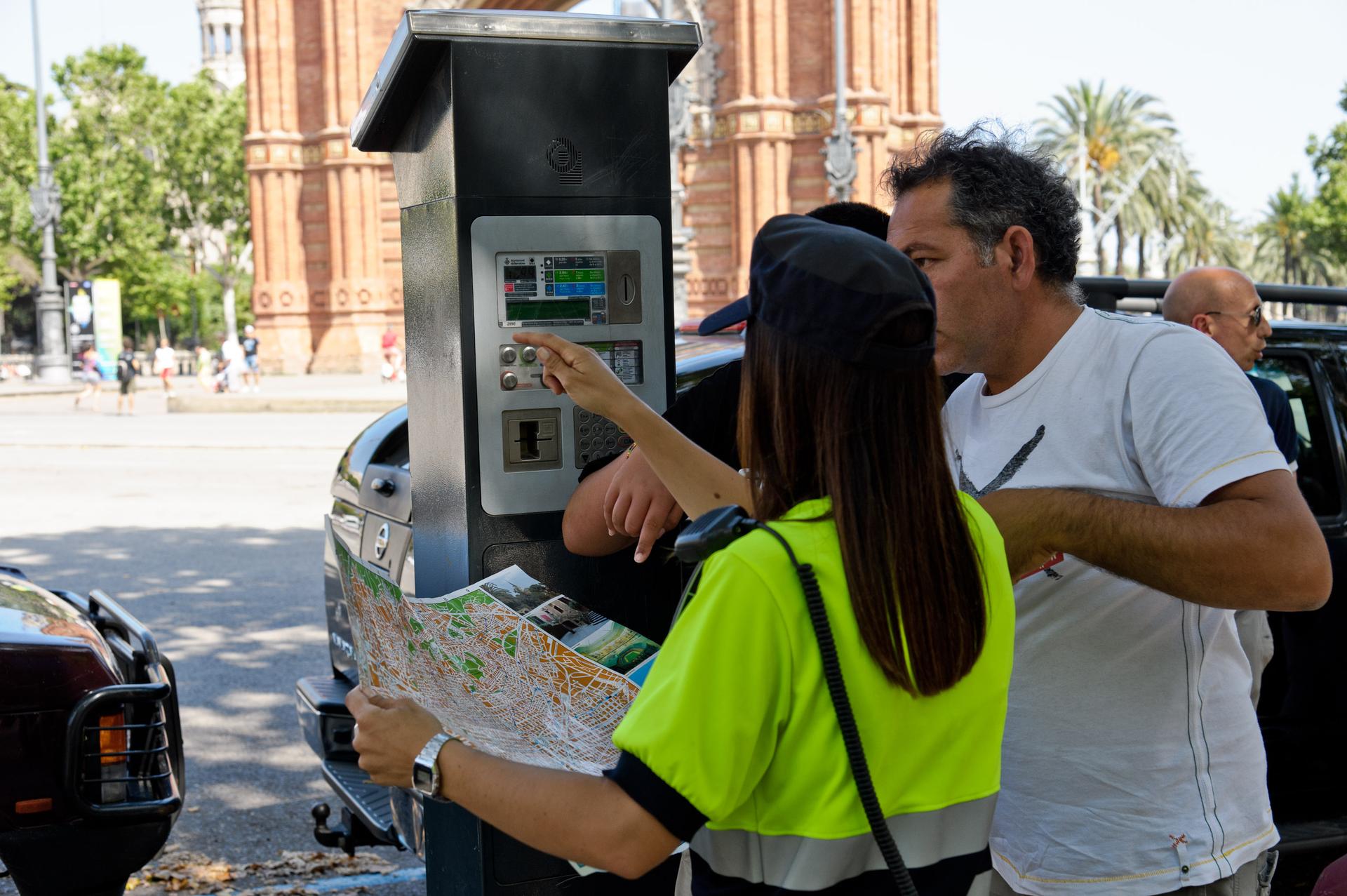
Imagen destacada
Imatge
Cuerpo

A squad of 14 civic officers has been activated from June to September, which will regulate the flow of visitors when there are shows at the Montjuïc Fountains, assisting with access at pedestrian crossings, escalators and on footbridges, in parallel with notifying and preventing uncivil behaviour around this city icon that received 2.5 million visitors last year
Two agents are also assigned to the Anti-aircraft Battery on Rovira Hill and entries from the streets Labernia, Maria Labernia and Mühlberg, especially to oversee and ensure responsible use of the space
These 14 officers complement the 73 civic officers that the city already has, in the districts of Sagrada Família, Barceloneta, Park Güell (Carrer Olot), Montjuïc, Trinitat Vella and—starting this month—also at the Boqueria Market, with tasks to improve mobility and civic behaviour surrounding the areas of high tourist flows

Since June, Barcelona has allocated 14 new civic officers to watch over mobility and civic behaviour around the Magic Fountains and the Montjuïc Fountains. The service has been started up now in order to improve the mobility of people visiting the site, especially during the times where the light, sound and colour shows are running.  
From June to September, a total of 14 officers will be assigned to this site from Wednesday to Sunday from 9 to 11 pm, show times at the Magic Fountains. Their task will primarily be to provide support for people’s mobility in the area and, therefore, to regulate the flows of visitors, assisting at crosswalks, on escalators and footbridges, as well as notifying and preventing uncivil behaviour at these entry points and surrounding this city icon. They will also notify tourist coaches of the available nearby parking areas. 
These officers wear black uniforms with an orange identifying armband bearing the official logo of the Civic Officers. 
According to City Council figures, the Montjuïc Fountains received 2.5 million visitors last year. During the summer, over 200 moving coaches have been counted, especially concentrated during the times of the shows.
During the rest of the year, also coinciding with the times of the shows at the Magic Fountains, the service will be adapted, with 10 civic officers in April, May and October from 8.30 to 10.30 pm, and with 5 officers from November to March, working from 7.30 to 9.30 pm. 
Two civic officers at Turó de la Rovira will ensure that the space is used responsibly 
This June there will also be new civic officer service at the Anti-aircraft Battery on Turó de la Rovira, with a purpose more centred on fostering civic-minded behaviour and raising visitors awareness on the responsible and respectful use of the space. 
From June to September, there will be one team allocated there from 5 pm to midnight Friday and Saturday and eves of public holidays, and from 5 to 10 pm on Sunday, to patrol the general area of the Anti-aircraft Battery on Rovira Hill and the access points on the streets Labernia, Maria Labernia and Mühlberg. In the winter, except for January and February, they will work from 3 to 10 pm. 
These new officers complement the 73 civic officers that the city already has, in the districts of Sagrada Família, Barceloneta, Park Güell (Carrer Olot), Trinitat Vella and Montjuïc, with tasks to improve mobility and civic-minded behaviour surrounding the areas of high tourist flows.
At present, there are also civic officers that patrol new spaces such as the Citizen Information and Service Offices (OACs per the Catalan acronym) to manage queues, and at Boqueria Market to advise visitors, prevent them from touching the products, prevent obstructions in the main corridors and ensure that people follow the passageways in the market. 
A body of 89 civic officers deployed throughout the city
During this mandate, a new bolster has been given to the figure of the civic officer, strengthening their presence in the majority of tourist attractions in the city, endowing them with a new profile beyond just mobility, and adding them to new areas. The work of the civic officers has gradually been increased, increasing from 25 officers when the service was started in 2015, to 89 now throughout the city. 
Thus, the original concept for this figure has been exceeded, which was initially created more as support personnel for mobility primarily, to now having staff trained for the different tasks related to civic-mindedness, preserving harmonious coexistence in public spaces, supporting the city police force (Guàrdia Urbana) in issues of mobility, regulating tourist flows, support and mediation at the OACs, always with a mission of citizen services, on the street. 
This year there will be another step forward with increased resources, funded largely by the tourist tax. Being able to allocate resources from this tax to these officers is an effective way of also ensuring a positive return in benefits to citizens, especially in the neighbourhoods with the most pressure, and that will be used to increase resources to improve management of public spaces. 
The 89 civic officers will also inform on bad practices on Bicing, such as vandalism offences to the bicycles (painting, abandoning them on the street, returning them to stands without checking in with the card...)  or when a minor is riding one or there are two people on a single bike. They also work with the Municipal Tow Service, reporting on vehicles that are parked wrong and are a disturbance to the city, and performing control and support tasks for the Bus Zone, such as the service to pre-book coaches and support for loading and unloading passengers. They will also provide information to drivers when information campaigns are done.
A unit created in 2015
The Civic Officer Unit was formed in 2015, and is managed by B:SM. In 2016, the staff was expanded and new functions were assigned to it, such as information and promoting civic-minded behaviour. 
Last year, the city’s 73 civic officers (47 men and 26 women) conducted a total of 297.769 actions throughout the city, during over 66,000 hours of annual service, of which the majority was in Sagrada Família (156,902 actions) and Barceloneta (89,271 actions). 
Barcelona launches the civic officers service at the Montjuïc Fountains and at Turó de la Rovira
Read the note
Fecha de publicación
News or press release?
Press release
Imagen destacada
Imatge
Cuerpo

The iconic Airplane at the Tibidabo Theme Park is flying high again, after five months of restoration

The Tibidabo Airplane returned today to the theme park after five months of a thorough restoration process. The nearly centenary attraction—engraved into the collective imagination of several generations of Barcelona and Catalan citizens—is back to fly high over Barcelona once again.  In a festive ambience enlivened by different personalities who have enjoyed the airplane over the course of its history, the inaugural event also saw the attendance of members of the Tibiclub, Tibidabo partners and characters closely linked to the park’s history, such as the descendants and relatives of park developer, Dr Salvador Andreu and airplane engineer and builder Marià Rubió i Bellver.  After several months, the emblem of the theme park and irrefutable feature of the skyline both of Tibidabo Mountain and of Barcelona, today made its inaugural flight with deputy mayor and B:SM president, Jaume Collboni, on board. Today, Jaume Collboni said that ‘the City Council and the Park had an obligation to revive the airplane, its essence and everything that connects the city’s past and future'. Collboni recalled the importance of the Tibidabo Theme Park to the city, which ‘fulfils several functions, of family fun and entertainment, and as a public service and park, which provides multiple benefits to the city and returns them this airplane, or returns services via scholarships for boys and girls from families with difficulties who can come free this summer, or which is free for pensioners holding the tarjeta rosa (‘pink card’ for pensioners or people with disabilities). Game area and interactive water fountains After firing the starting shot for the first inaugural voyage of the Airplane, Collboni visited the recently opened game area with interactive fountains at the theme park. This space has some 50 water jets that alternate with different lighting and sound effects. The aim of the new interactive fountain game space is to inject new energy into the environment, offering visitors new activities and responding to visitors' requests.  The restoration project of a ride from 1928 On 23 September 1928, the Tibidabo Airplane—an exact replica of the first machine that made flew the route between Barcelona and Madrid—made its first flight. An avant-garde and almost centenary ride, which best represents the era in which it was created, when science and technology came together for the first time in the service of entertaining citizens.  The restoration project, awarded to architect Dani Freixas, was precisely based on reviving the original character of the airplane that was launched in 1928.  Interior restoration that recreates the era of its construction Following these concepts, the existing elements have been restored as much as possible, only adding the new parts required and that help to best recreate the era in which it was constructed.  Thus, the chairs were re-upholstered and wood parts like the windows were polished and varnished.  The course direction indicator was also repaired, the brass lights on the ceiling and the finishes of the toilet that is inside. An outside the recovers the original design With regard to the outside, and with the mission of reproducing an airplane from this era as faithfully as possible, like what Dr Salvador Andreu did, the rivets have been restored on the sheet metal panels that covered it.  With respect to the graphic elements, the original design was restored, with a large T1 on the side, adding a number under the wing that represents the ride’s inauguration date: 23•9•28, and on the front of the two sides, the name TIBIDABO, simulating the official airline for the original flying machine. The colours of the flag were also added to the back aileron, just like all period planes had, and as is still done today.  The aim is for the attraction to be clearly identified with the park, and therefore with the city, and also with its status as an indispensable part of the skyline of Tibidabo Mountain.  The colours used are red and yellow, and the font the same one used on planes of this same model or similar by Rohrbach Roland in that period.  The outside lighting changes to give the machine greater prominence. The overall effect makes the airplane clearly visible from the park, when you are in the boarding area, and also in its journey flying over the top of the city, where one can see it in contrast to the night sky, over the illuminated city. Queuing area  In the queuing area to the Airplane, a series of actions have been done so that visitors can learn about the history of the Park’s most iconic ride before boarding. Thus, in the waiting area to get on the ride, information and illustrative panels have been installed that explain the trivia and interesting facts of the first flight simulator in history, a summary of the personalities who have visited it, and the different themes it has had over the course of the years, as well as other information.
The Tibidabo Airplane flies high over Barcelona again
Read the note
Fecha de publicación
News or press release?
Press release
Imagen destacada
Imatge
Cuerpo

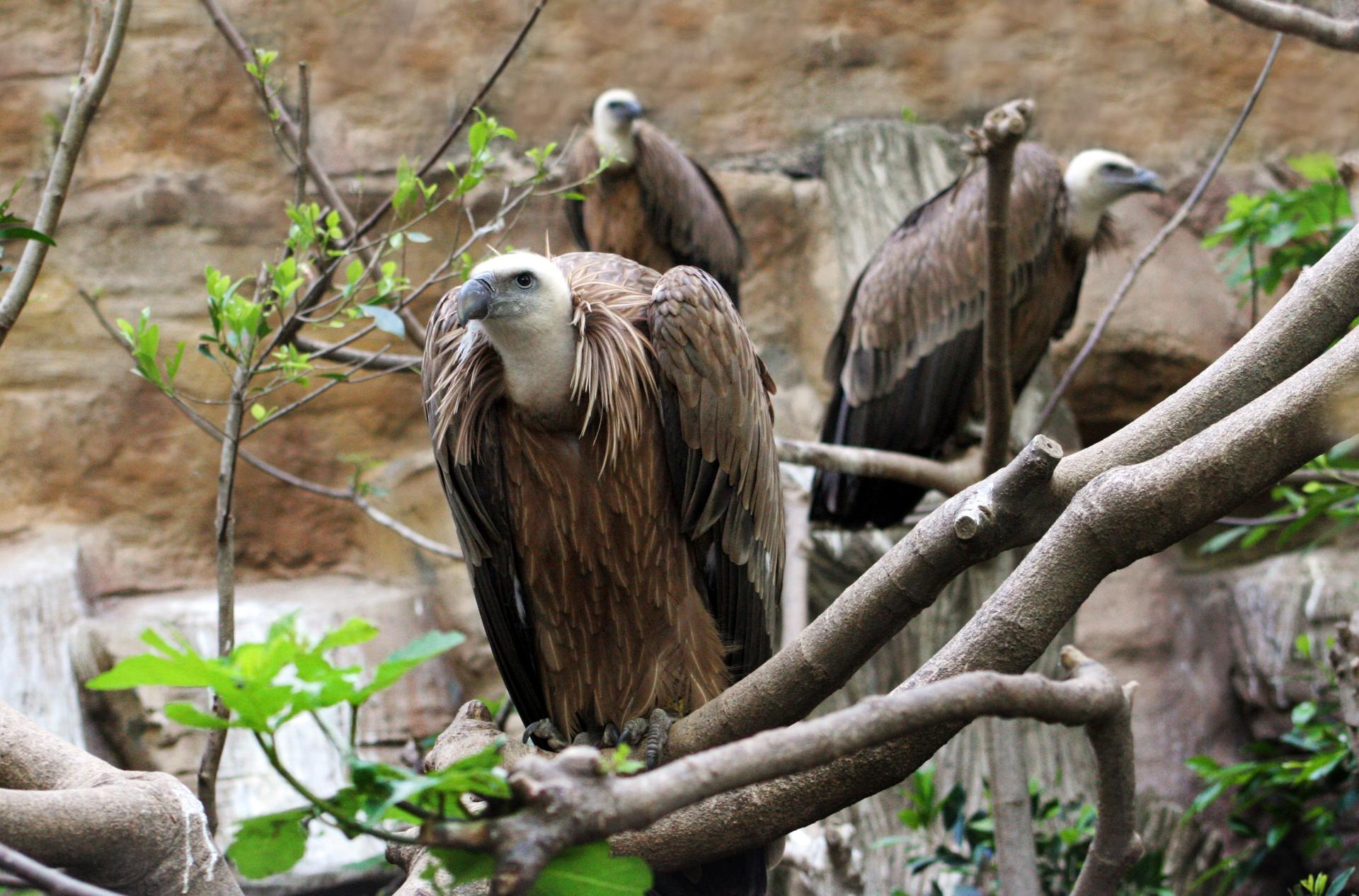
Three Griffin vultures born at the Barcelona Zoo are sent to Bulgaria for their reintroduction

The Barcelona Zoo has extensive experience in breeding birds in captivity and has always devoted time and energy to preserving endangered species, particularly the conservation of necrophagous birds  In line with their mission and interest in reintroducing the Griffin vulture (Gyps fulvus) and following the recommendations of the coordinator of the European Breeding Programme for this species, some time ago the Zoo contacted the Vulture Conservation Foundation (VCF). The fruit of this work was the transfer last Thursday of three males to Bulgaria, where a reintroduction project was started in 2009, within the European Union’s Life Programme. During this period, over 200 birds have been released, 10% of which come from European zoos. The project has been a success, and some of the birds released have even reproduced in a region in which this species has been extinct for some 100 years. The three birds sent to Bulgaria were born at the Barcelona Zoo in 2014 and 2015. The current colony of Griffin vultures at the Barcelona Zoo is made up of 12 individuals: eight males, three females and a chick born in 2017. Three of them are from a rescue centre and are part of today's breeding group. When they arrived at their destination, safe and sound, the three individuals were marked on the wings so they can be identified, either in charnels or in the countryside. The birds will remain at the rescue centre Green Balkans in Bulgaria for a while to acclimatise to their new home and accept it as their territory. Their release will be done by following the soft release method, which consists of opening the aviary doors where they are living so that they can leave whenever they feel ready. Normally, releases are done between the months of April and October.    Characteristics and status of species: The Griffin vulture (Gyps fulvus) is a scavenger bird that occupies mountainous regions in southern Europe and North Africa to central Asia. They form large breeding colonies on cliffs. At the beginning of the year, between the end of January and beginning of March, they lay a single white egg that is incubated by both parents for 50-58 days. Each pair raises only a single chick each season, which will remain in the nest for 110-130 days. Farming and livestock transformations in the countryside, the use of poisons and hunting all decreased their populations in the mid-20th century. It merits mention that over 80% of the European population currently lives on the Iberian Peninsula, where their populations have been recovering in recent years. Conversely, in other places in Europe, this species’ populations have suffered a significant drop, the case on the Balkan Peninsula: Bulgaria, Slovenia and Greece. The European Association of Zoos and Aquariums (EAZA) has a European Studbook Programme (ESB) for this species, coordinated by the Jerez de la Frontera Zoo.  The Barcelona Zoo has been working for a long time now to protect vultures: In the beginning of the 70s, it developed the first initiative to create artificial birdfeeders for vultures, as they were quite endangered in our lands at that time. And a few years later, in 1991, five Griffin vultures (Gyps fulvus) were sent to the Groupe de Recherche et d’Information Sur les Vertebrés in Montpellier, for a reintroduction project at Les Cevenes National Park. To see more photos and watch a video, click here
The Barcelona Zoo reintroduces three Griffin vultures
Read the note
Fecha de publicación
News or press release?
Press release