Imagen destacada
Imatge
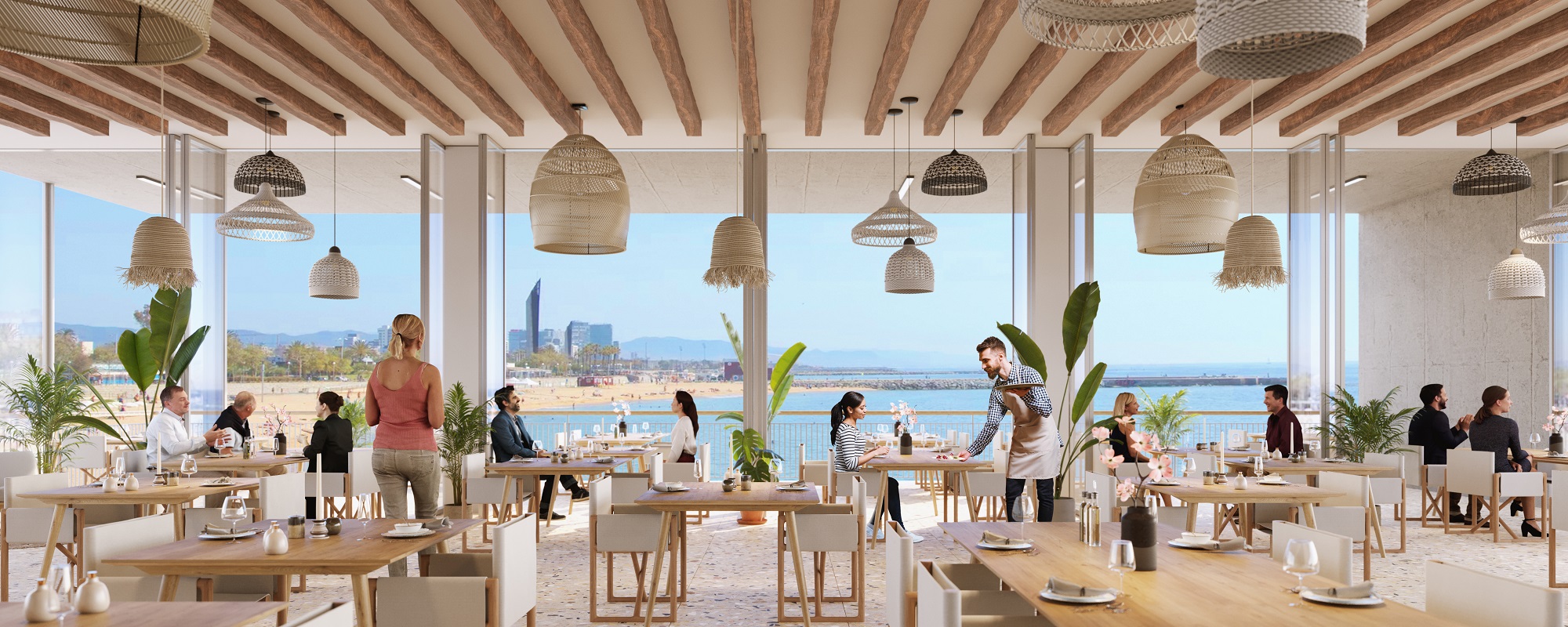
Interior of the Port Olímpic restaurant
Cuerpo

 The project, which entails an investment of €15.9 million, plans to convert the Moll de Gregal into one of the most unique restaurant areas in the city, covering a surface area of 24,000 m2.

 The work will begin in early 2023 and will be completed in the summer of 2024, coinciding with the America's Cup sailing competition.

Diversity, quality and a quintessentially Barcelona spirit are the main attributes of this new restaurant model, which will be home to 14 different culinary proposals ranging from market to avant-garde cuisine 

The Gastronomic Balcony will be a vast sustainable walkway which is environmentally-friendly and open to the sea and the Nova Icària beach, to which there will be a new access point.

High-quality and diverse cuisine with a quintessentially Barcelona spirit, which can be enjoyed in an incomparable setting. These are the main attributes that will define the Gastronomic Balcony, the restaurant space that will be opened in Port Olímpic in late summer 2024. Barcelona City Council, through Barcelona de Serveis Municipals (B:SM), is due to invest €15.9 million in the complete renovation of the Moll de Gregal, where the new restaurant area will be located. 

In total, work is planned for an area spanning more than 24,000 m2. The work is ahead of schedule and is due to start early next year. It is hoped that the works will be completed by the summer of 2024, coinciding with the America's Cup sailing competition in the city. 

Eleven restaurants and three gourmet spaces will make the Port Olímpic a new benchmark for the city’s gastronomy, forming a unique restaurant hub which is designed to bring Barcelona’s people closer to the sea. 

The new restaurant model is based on establishments that are committed to healthy and sustainable food and that offer complementary proposals, ranging from market cuisine to avant-garde gastronomy with the aim of reaching a local public with a broad and diverse profile. All of this will make Port Olímpic a new emblematic location designed to allow citizens to enjoy Barcelona’s coastline through a representative sample of its finest gastronomy. 

The choice of future restaurateurs, which will be made through a competition to be launched after the summer, will take into account issues such as the quality and style of cuisine and product, the design and ambience of the premises and the restaurant's sustainability measures, among others.

A gastronomic promenade overlooking the sea 

The Gastronomic Balcony is more than the sum of its fourteen gastronomic venues. It will be a singular, unique and coherent space. The Port is set to undergo a complete redesign which will see it further integrated into the space, offering an innovative experience through its modern architecture and transmitting a sense of dynamism and safety.    

Light and transparency will be two key elements in its interior spaces, where materials such as glass will facilitate visual communication with the sea and port activity. In addition, the premises on the upper level will be located on a cantilever over the sea which overlooks the Nova Icària beach, further increasing the feeling of openness and proximity to the coastline.

The renovation of the outside space will follow a fundamental premise: to create an unobstructed setting that allows citizens to stroll comfortably to the shores of the Mediterranean. To this end, various works are scheduled that will improve connectivity between Port Olímpic, the beach and the city. The new gastronomic centre will lead directly to the Nova Icària beach, while three vertical axes equipped with stairs and lifts will improve accessibility to the city from all parts of the Port. 

Sitting areas and viewpoints will also be built along the promenade, giving citizens an opportunity to take a break, relax and enjoy the views.

The concessions of the current restaurateurs ended on 3 April 2020. Since then, they have had temporary contracts, the termination of which corresponds to the start of work on the new spaces, which will begin in early 2023. The coming months will also see the tendering process that should guarantee competition in the sector, while ensuring the continuity of existing jobs.

Until the inauguration of the new gastronomic spaces, the employees who are guaranteed a job, regardless of the new contract holders, will have access to Barcelona Activa’s professional guidance services and a complete training plan that includes different pathways within the hotel and catering sector. The aim is to promote the professional development of these individuals and to facilitate the updating of their knowledge in accordance with current market needs in positions such as waiters, kitchen assistants or head chefs. Language skills, customer service, purchasing management, barista techniques and culinary innovation are just some of the disciplines included in the 1000 hours of training. 

A sustainable space committed to the people of Barcelona 

Sustainability is one of the strategic axes of the Port Olímpic transformation project. So much so that, in order to boost the energy savings of the future facilities of Port Olímpic’s Gastronomic Balcony and adapt them to the climate emergency, four large photovoltaic pergolas will be installed. Besides generating energy from renewable sources, these will also provide shaded areas that will improve the wellbeing of visitors to the area.

Specifically, more than 1,600 photovoltaic modules will be installed with an output of 650 kW and the capacity to generate 890,000 kW of electricity per year. This is equivalent to the annual electricity consumption of 250 households. The electricity generated by these four large photovoltaic panels will be used by the Port Olímpic and could, in the future, supply other consumers in the surrounding area. 

In line with this sustainable approach, the four restaurants on the upper level of the Moll will have green roofs. Besides naturalising the environment and enhancing biodiversity, these bioclimatic elements will provide thermal and acoustic insulation to the premises. 

A Port Olímpic committed to the city and the generation of activity in the field of sailing, the blue economy and the restaurant industry 

Barcelona de Serveis Municipals (B:SM) has been promoting, on behalf of Barcelona City Council, the transformation of Port Olímpic since March 2020. 

In this new era, Port Olímpic aims to be a space committed to the public in which, under criteria of sustainability, nautical activities co-exist with the generation of economic activity, mainly linked to the sea, the blue economy and restaurants.

Change management is already underway. Among other actions, the reinforcement and consolidation of the Dic de Recer breakwater has already been completed and work is currently underway on the opening of a new access point to the Moll de Mestral wharf, which will connect the facilities with the Vila Olímpica neighbourhood. In parallel, at the end of the summer, work will begin on the configuration of the first blue economy centre in Barcelona: a project that will be located on the Moll de Mestral wharf and in the premises under the Dic de Recer breakwater, a space that will become a new viewpoint looking out to sea. 

You can find the video of the presentation here
Creation of the ‘Port Olímpic Gastronomic Balcony’: a new restaurant area that will bring Barcelona's citizens closer to the sea
Read the note
Fecha de publicación
News or press release?
Press release
Imagen de cabecera
Imagen destacada
Imatge
  Fartet reintroduction in the Llobregat Delta
Cuerpo

The collaboration between the two organisations has made it possible to release a selected group of Spanish toothcarp, a Mediterranean species of fish declared in danger of extinction, into the Llobregat Delta, bringing the total number of individuals reintroduced this year to 239 

The project is being developed as part of the agreement signed by the two organisations to protect and preserve biodiversity 

The Barcelona Zoo Foundation and Damm are collaborating on a new project to conserve endangered species. The initiative, which is part of the educational programme “Let’s save the Spanish toothcarp”, has allowed a selected group of toothcarp to be released into the Llobregat Delta, bringing the total number of individuals reintroduced this year to 239. This species, native to Mediterranean waters and an indicator of the biodiversity of the area, was declared a threatened endemic species as population numbers had fallen considerably over recent years. 

This action is part of the agreement signed last May between the two organisations to boost, promote and take part in actions that support the protection of biodiversity, and especially of the native fauna in the areas where the company operates. Vital support is also provided to the initiative by the Consortium for the Protection and Management of Delta de Llobregat Natural Spaces.

Commitment to the environment and its ecosystems 

Within the efforts to achieve the 2030 Agenda Sustainable Development Goals, the Barcelona Zoo Foundation and Damm previously collaborated on important initiatives promoting the preservation of species in danger of extinction. The efforts of the two organisations have already achieved the reintroduction of two species in danger of disappearing from their natural habitats: the Majorcan midwife toad, an amphibian native to the Majorca’s Serra de Tramuntana, and the Spanish toothcarp, a species of fish common in the waters of the Mediterranean Sea. The projects have managed to stabilise the populations of these species, preventing their extinction.

Ten years of commitment to the reintroduction of the Spanish toothcarp 

The Barcelona Zoo Foundation has now been committed to the reintroduction of the Spanish toothcarp into its natural habitat for a decade, since 2018 in collaboration with the Consortium for the Protection and Management of Delta de Llobregat Natural Spaces. Since 2021, the project has also had the support of Damm.

The objective of the plan to recover the Spanish toothcarp in the Llobregat Delta focuses on the creation of new population nuclei in different wetland areas, ensuring the long-term viability of the species. To this effect, the Barcelona Zoo Foundation and the Consortium promote the breeding of the species in captivity, implementing initiatives to improve its habitat, and studying its evolution over time.

In February 2019, the first initiative aimed at improving the natural habitat of this species was carried out with the excavation of a 200 m2 pond in the Can Camins pine grove in the town of El Prat de Llobregat. Given the good results obtained, two more similar ponds will be created, one this year and one next.
 

The Barcelona Zoo Foundation and Damm reintroduce the Spanish toothcarp to its natural habitat
Read the note
Fecha de publicación
News or press release?
Press release
Imagen de cabecera
Imagen destacada
Imatge
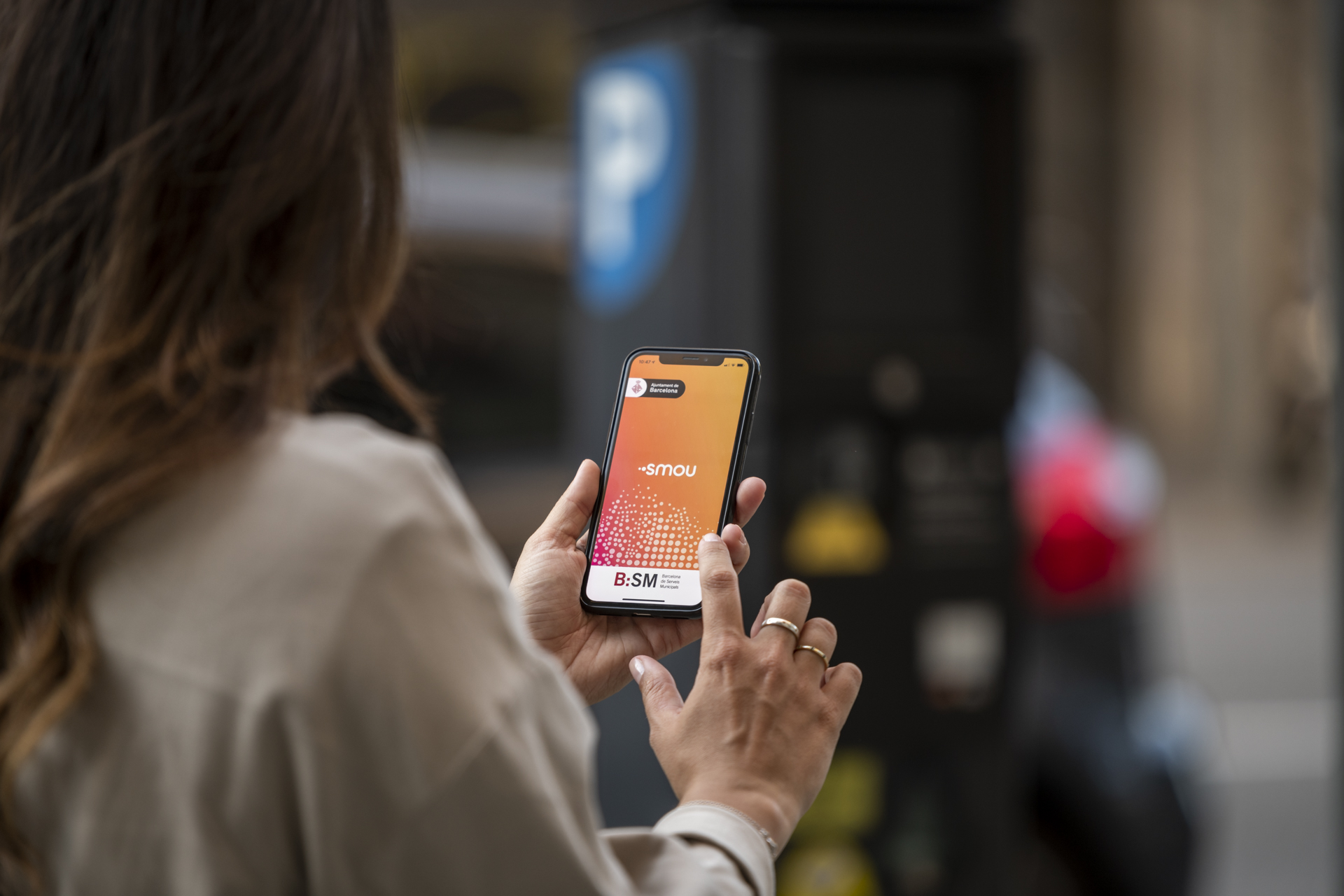
First plan of a woman using the SMOU application on her cell phone
Cuerpo

Barcelona’s personal mobility services app now lets users consult timetables, stops and stations for the metro, bus, tram, FGC train and Rodalies de Catalunya train networks

This way, SMOU users can use the application for both public and private transport journeys, thus contributing to a more sustainable mobility model 

From September, SMOU will also offer a feature where users can search for routes to a destination using the various means of transport available in Barcelona and its metropolitan area   

Barcelona’s personal mobility services app, SMOU, now displays real-time public transport information. This latest update, now available on Android and iOS, incorporates a new feature containing all public transport information for the city of Barcelona and its metropolitan area. 

In the new version, users of the SMOU app can consult timetables, stops and stations for the metro, bus, tram, Ferrocarrils de la Generalitat (FGC) train and Rodalies de Catalunya train networks. Having this information to hand in real time enables users to plan their journeys in Barcelona and the surrounding area better. 

The First Deputy Mayor and president of BSM, Jaume Collboni, has stated, “With the integration of public transport into SMOU, we are taking another step in the transition to more sustainable, digital, smart mobility in the city. Our vision is to make this app the hub for all mobility apps in the Barcelona Metropolitan Area and an everyday essential for the city’s residents, who now have access to an indispensable tool for planning their personal journeys”.

The map shows stops, stations and wait times 

In an effort to continue to offer an easy, intuitive experience to SMOU users, the public transport information is displayed in the app following the same design and usability criteria as the other services available: parking via app, parking meter, Bicing, Endolla Barcelona vehicle charging, scooter sharing, bike sharing, car sharing and more. 

From now on, on the menu at the bottom of the screen, users will find a “public transport” icon. When selected, the metro, bus, tram, FGC and Rodalies de Catalunya stops and stations will be displayed. Information on lines, timetables and wait times for the next departures can be found by clicking on each stop or station. What is more, for easier viewing, information can be filtered according to line, so that users only see the timetables that are relevant to them. The app can also be used to consult the daily timetable for a specific stop or station. 

SMOU app users can still configure the icons that appear on the menu at the bottom of the screen by clicking on “More” and then “Edit”. 

Rutes: a new tool for city residents to plan their journeys 

In line with these efforts to improve the way SMOU users can plan their journeys in the city and between cities in the Barcelona Metropolitan Area, from September, the app will offer a route planner. 

This new function, called Rutes, will allow the user to search for the different public or private transport routes between one place and another within the city of Barcelona and its metropolitan area. SMOU users can personalise each search by selecting the means of transport they wish to use: public transport, Bicing, their own bike, car, scooter/motorbike or walking. 

Once the start and end points are chosen, the app will show different route options on the map, indicating the distance and time for each of them. If the chosen option is private car or scooter/motorbike, the app will also display the parking options available at the destination. 

SMOU: the app that brings together all means of transport 

With more than 600,000 users and 1,500,000 operations per month, SMOU is the app that brings together all means of transport on one convenient platform, thus helping people to plan their journeys in the city and between cities in the Barcelona Metropolitan Area. With its user-friendly, simple, intuitive design, SMOU covers all the different public and private means of transport available, so that there is no need to download various apps. 


This is a project financed with funds from the Recovery, Transformation and Resilience Plan, financed by European Union – NextGenerationEU.

Logos Next Generation


SMOU introduces real-time public transport information and a route planner
Read the note
Fecha de publicación
News or press release?
Press release
Imagen de cabecera
Imagen destacada
Imatge
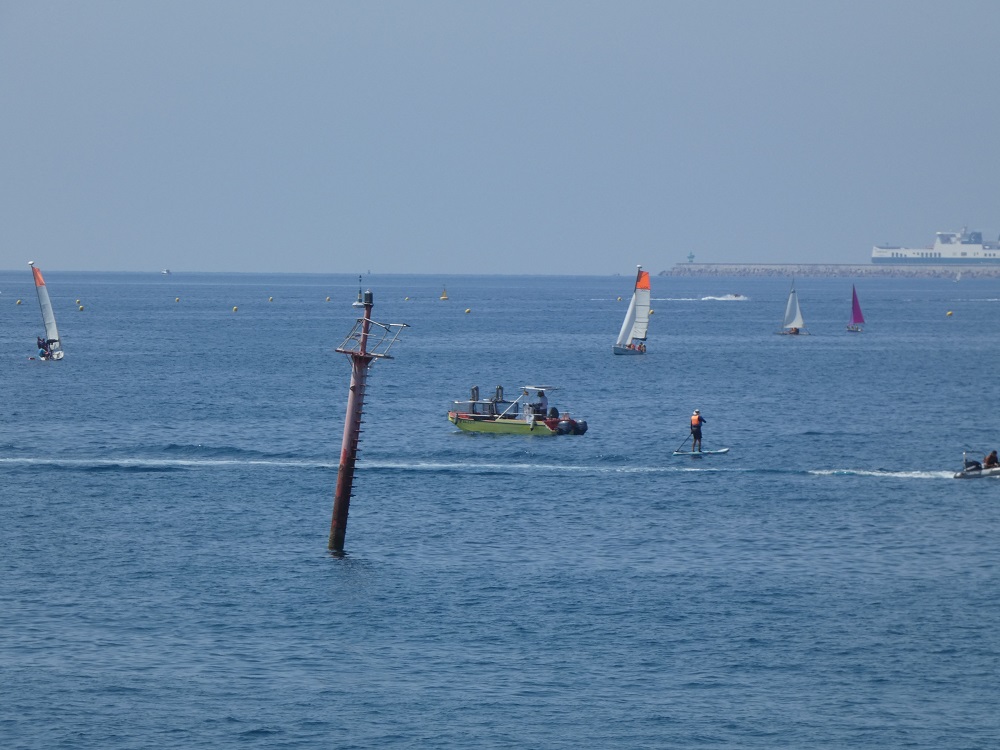
Old side marking of the Olympic Port
Cuerpo

Replacement of the lateral markers in front of the Somorrostro beach, which serve as a navigational aid for access to the mouth of the port, started this week

The work will take three weeks, ensuring minimum operational impact on the port at all times 

This week saw the start of work to improve the external beacons for the Olympic Port. The work will involve replacing the two lateral markers in front of the Somorrostro beach, which help navigation during port entry and exit manoeuvres.  

The renewal of these safety elements in the Olympic Port is necessary due to the structural damage caused by storms in recent years, and the natural dynamics of the sea. 

The work, which will last for three weeks and has a budget of nearly 200,000 euros, is being carried out with the help of a shipboard crane and the support of a team of divers. While the work is in progress, this ship, measuring 19.5 m in length and with a beam of 17 metres, will be docked at the Olympic Port’s Moll de Recer quay. 

The presence of the ship should not affect navigation around the Olympic Port. Sailing into and out of the port will only be restricted while the ship is mooring or leaving the dock. This will take place each day from Monday to Friday at 7 am and 2 pm, and will take around 15 minutes. 

An essential safety element for navigation 

The lateral markers are a type of tubular metal beacon, fixed to the sea floor and rising up out of the sea. Their function is to mark the sides of the navigation channels when approaching or leaving the mouth of the port. This is why they are coloured and fitted with lights to orientate vessels carrying out these manoeuvres. The colour green indicates the starboard side and red the port side of the port. 

The new lateral markers now being installed in the Olympic Port are 25 metres high; 7 of them are buried and 8 rise above sea level. They are similar in size to the current beacons.
 

Work to start on improving the Olympic Port external beacons
Read the note
Fecha de publicación
News or press release?
Press release
Imagen destacada
Imatge
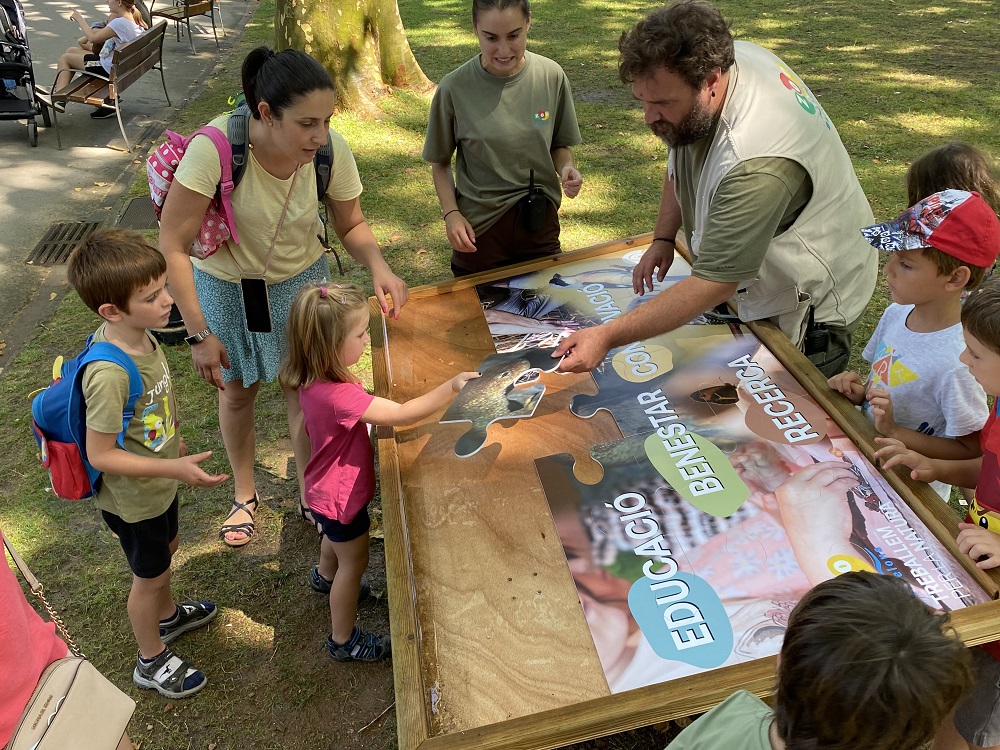
Educational activities at the Barcelona Zoo
Cuerpo

This summer, Barcelona Zoo is set to launch its new ‘Nature Passport’: a set of activities aimed at making Zoo Club members genuine nature experts 

Under the slogan “At the Zoo discovery area”, these activities invite club members to become Zoo ambassadors by getting involved in conservation activities, conducting scientific research and helping to raise awareness of the planet’s biodiversity 

This summer, Barcelona Zoo is set to bring in its new ‘Nature Passport’ programme: an exclusive and free initiative for the more-than-80,000 members of the Zoo Club which, under the slogan “At the Zoo discovery area”, aims to bring members closer to the Zoo's rich biodiversity and introduce them to the activities it carries out to preserve it. 

The Nature Passport is a physical document that will allow members to take part in different educational and fun activities. Each activity will be assigned a certain expertise level. The Zoo's team of educators will stamp your passport at the end of each activity, and once you get all the stamps you will be considered a true ‘nature expert’. 

Existing Zoo Club members can pick up the new Nature Passport at the Zoo Club office, while new members will find the passport in their welcome packs. 

The activities will last between 30 and 45 minutes, and must be booked in advance through the Zoo Club user area on the zoo’s website.

The first stop on this fun and educational tour of Barcelona Zoo focuses on discovering what modern-day zoos do to protect nature. This serves as an introduction to the other activities, which allow participants to explore different habitats and species. It will address, among other things, insects and the key role they play in ecosystems; the world of primates; and what we can learn from studying animal faeces. 

Free daily activities for all visitors

Besides the new Nature Passport activities, Barcelona Zoo will also run a series of activities throughout the summer for all other visitors. This programme includes new experiences with the keepers, which complement the visit and shine a light on the day-to-day reality of the Zoo and the important conservation work it carries out. 

These activities are free of charge and do not require advance booking. They are updated on a weekly basis. The schedule of activities can be consulted on the Zoo's website and using the QR codes found on the different information signs around the zoo itself. 
 

The Zoo launches new activities to promote the preservation of biodiversity 
Read the note
Fecha de publicación
News or press release?
Press release
Imagen de cabecera
Imagen destacada
Imatge
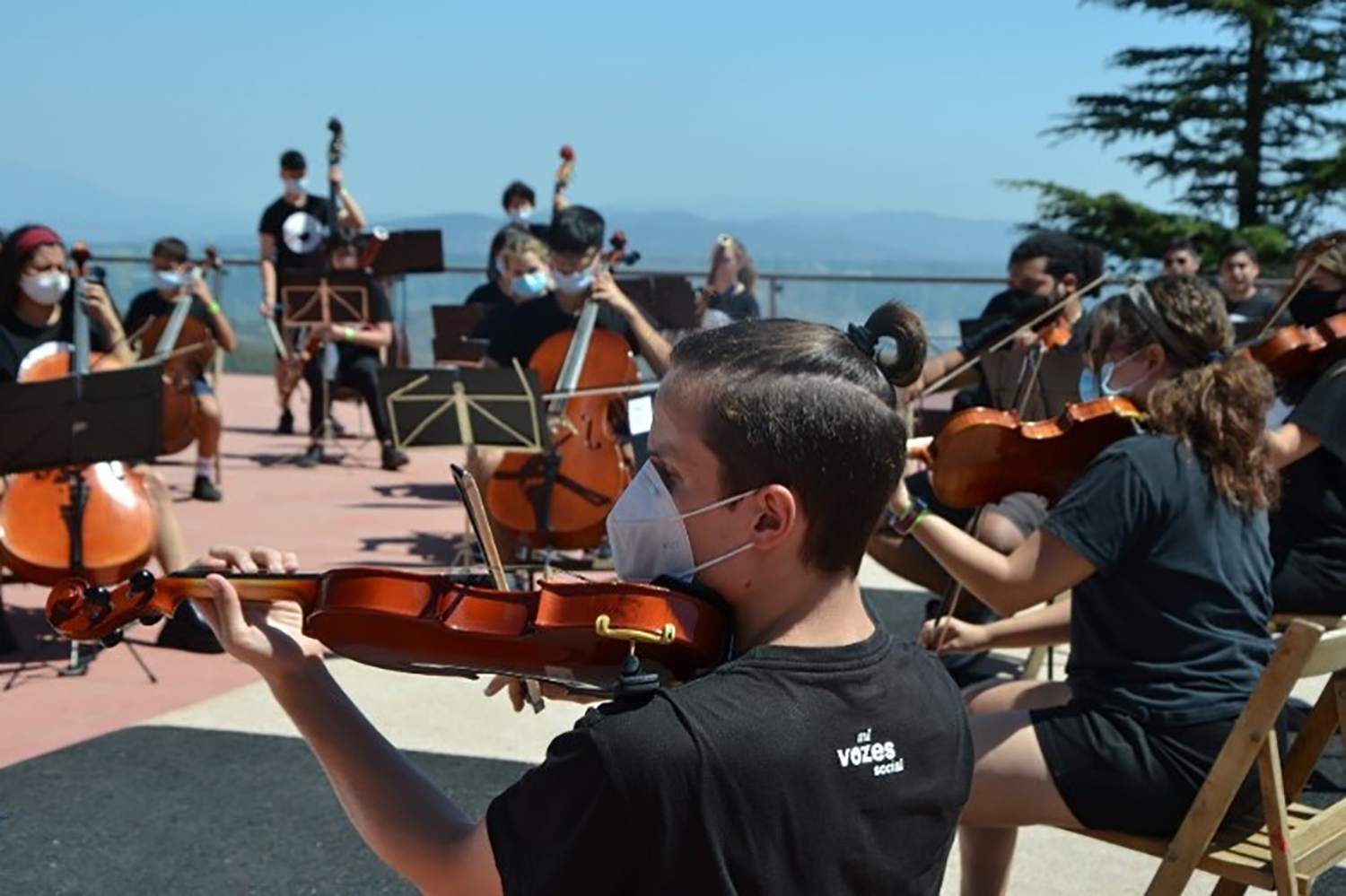
Young people from the Vozes orchestra playing music in Tibidabo
Cuerpo

The Tibidabo Amusement Park is holding its annual solidarity concert on 22 July with Vozes, an association that offers quality free music training for children and young people in vulnerable situations  

Over a hundred children from this organisation will be taking part in the concert, which will be attended by fifth deputy mayor for Barcelona City Council and chair of the Tibidabo Amusement Park, Albert Batlle

The Tibidabo Amusement Park is holding the 9th edition of the Vozes solidarity concert on Friday, 22 July, from 5 pm. Vozes is an organisation that offers free quality music training for children and young people in vulnerable situations. 

The concert is being held in Plaça dels Somnis in Tibidabo and involves over a hundred children and young people, offering a varied and upbeat programme of music. Fifth deputy mayor for Barcelona City Council and chair of the Tibidabo Amusement Park, Albert Batlle, will also be in attendance.

The concert will start with performances from the youngest children, the Orquestra d’Iniciació Vozes. After that, it will be the turn of the Orquestra Infantil i Juvenil Vozes, before the Orquestra Simfònica Vozes rounds off the concert.

The Tibidabo - Vozes alliance

The Tibidabo Amusement Park has been collaborating with the Vozes association since 2014. This collaboration corresponds to the park’s strategic goals of solidarity and education, which among other things aim to give visibility to those groups most in need, and promote education activities in a different setting.

Vozes, an association that offers free quality music training to children and young people in vulnerable situations, gives around sixty concerts a year in Barcelona and other locations. Notable concerts include the yearly summer performance at Tibidabo, one of the highlights on the calendar for the park and for Vozes alike. 
 

Orchestras from the Vozes association fill Tibidabo with music again
Read the note
Fecha de publicación
News or press release?
Press release
Imagen de cabecera
Imagen destacada
Imatge
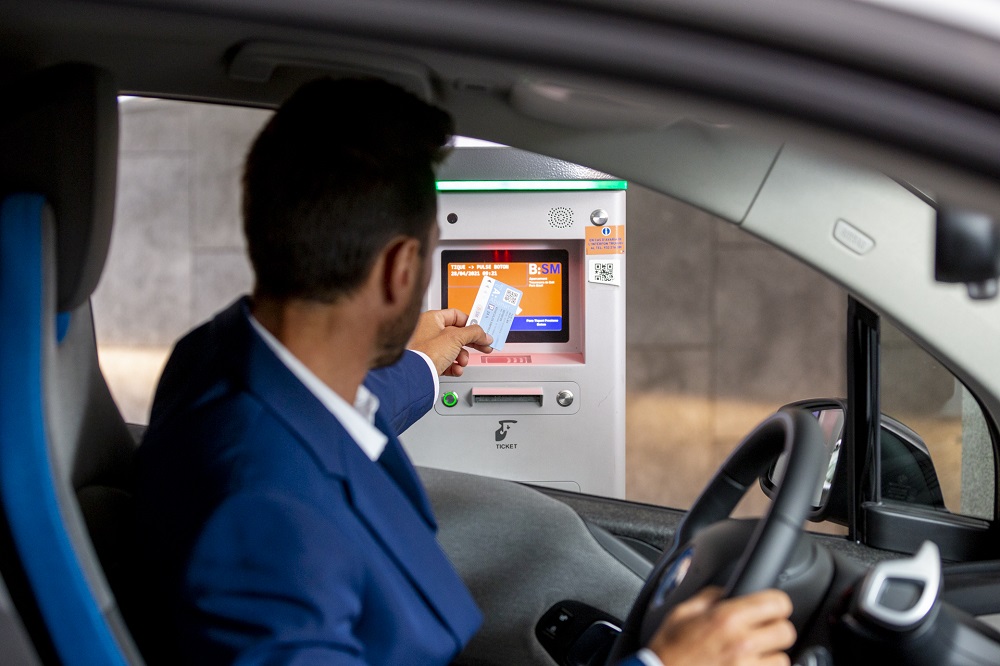
Driver validating a ticket at the entrance of a car park B:SM
Cuerpo

This week, Barcelona de Serveis Municipals (B:SM) will begin the tendering process for the refurbishment of the B:SM Avinguda Gaudí car park, located next to the Sagrada Família and the Sant Pau Modernista Complex  

The works, budgeted at more than 3.3 million euros, will begin in November and will last for one year 

In order to minimise the impact on paying users of the car park, the work will be carried out across various phases

B:SM is set to start the procedures for the refurbishment work to be carried out on the B:SM Avinguda Gaudí car park, located on Carrer Castillejos, very close to the Sagrada Família and the Sant Pau Modernista Complex. This week marks the beginning of the tendering process for the refurbishment work due to be carried out on this car park, which was built in 1982. The works are expected to entail the refurbishment of all of the car park’s facilities, various structural improvements and the introduction of LED lighting to replace its existing system. 

In order to provide maximum comfort to users of the Avinguda Gaudí car park, the spaces will be redistributed and enlarged so as to better reflect the size of modern vehicles. 

This redistribution will increase the size of the parking spaces and the number of electric car charging points. 10 more charging points will be installed, bringing the total number to 18. There will also be 94 additional spaces for motorbikes and 58 additional spaces for bicycles. The latter will be left in a Bicipark —an enclosed space within the car park— which will have a specific access control system for users.   

In addition, with the aim of contributing to a more efficient and sustainable distribution of goods throughout the city which better meets the needs of users, a space will also be set aside for the installation of parcel collection lockers. 

The works, budgeted at more than 3.3 million euros, will begin in November and will last for more than 12 months. 

In order to minimise the impact on paying users of the car park, the improvement works will be carried out across various phases. This will ensure that all users will have a parking space at all points of the refurbishment project. 

Barcelona’s Car Park Network 

With a total of 51 car parks distributed throughout the city of Barcelona, the B:SM Car Park Network has more than 14,800 spaces for cars, motorbikes, bicycles and special vehicles and boasts more than 14,000 paying users. 

B:SM Car Parks offer a personalised, digitised and high-quality service that supports sustainable mobility policies by helping to reduce many last-mile trips, lighten surface traffic and free up public space. 
 

Work begins on the refurbishment of the B:SM Avinguda Gaudí car park.
Read the note
Fecha de publicación
News or press release?
Press release
Imagen de cabecera
Imagen destacada
Imatge
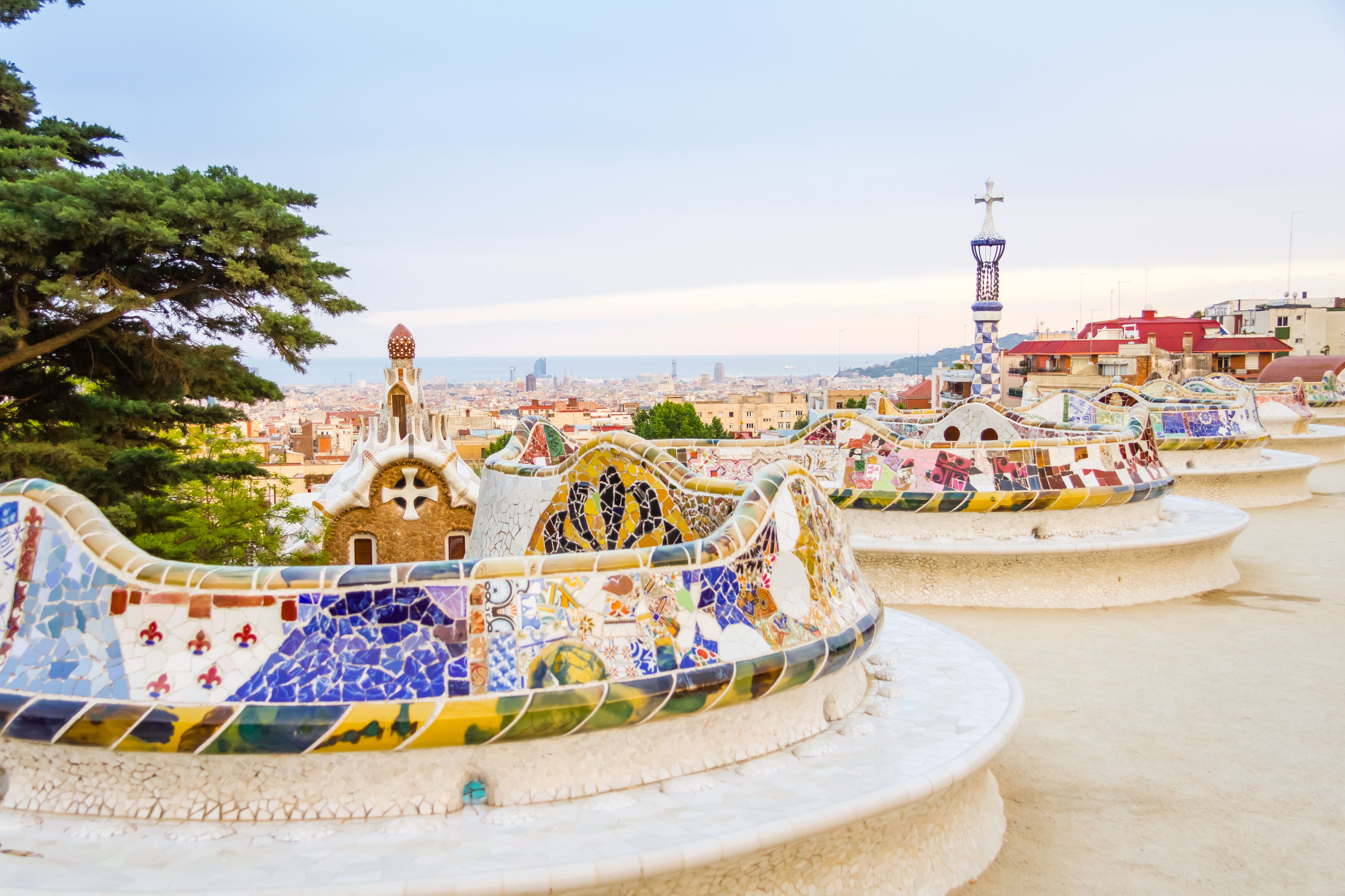
Balcony of Park Güell on a sunny day
Cuerpo

The Park Güell Strategic Plan will continue in the period 2023-2026 with a planned investment of at least 15 million euros. The aim is to improve the social return of the park in the city and to continue preserving the architectural and natural heritage.

The measures implemented up to now have halved the number of visitors and raised the numbers of local residents using the space thanks to the free access they are entitled to.

These actions have led to a social return which will be used, with 50% of the investment, to launch new initiatives aimed at improving the park and its surroundings. So, various interventions will be carried out, up to 2026, in the El Coll, La Salut, Vallcarca i els Penitents, El Carmel and Can Baró neighbourhoods, in the districts of Gràcia and Horta-Guinardó. To be more specific, the initiatives will be as follows:

Initiatives in Gràcia

  • Redevelopment of C/ Coll del Portell
  • New park at La Font del Carbó
  • Urbanisation of C/ Torrent del Remei
  • New passages: Pare Alegre – Antequera, Pícnic Park Güell at junction with Marianao and Passeig de Turull at junction with Coll del Portell

Initiatives in Horta-Guinardó

  • Redevelopment of C/ Albert Llanas and C/ Miquel dels Sants Oliver
  • Redevelopment of Plaça de Raimon Casellas

Work will also continue during this period to reduce the impact of the high density of visitors and to improve mobility through exclusive online sales, the strengthening of the “Gaudir més” program and promoting the mobility work group as a proposal and decision-taking space.

As for greenery and biodiversity, 25% of the investment will go towards protecting the park’s architectural and nature heritage. A research and dissemination programme will therefore be set up, called “Fem Park”, and the Coll del Portell Social Space and Work Centre will be launching initiatives to consolidate the space as a cultural site for organisations from the surrounding neighbourhoods and setting up a new museum discourse, among other things.

The plan will enjoy continuity until 2026 and will coincide with the events commemorating the anniversary of Antoni Gaudí's death and the start of the opening of the park as a public site.  

A park for Barcelona’s residents

The first stage of the Strategic Plan for 2018-2022 was achieved through over two hundred initiatives aimed at reducing the impact of mass tourism in the park and its surroundings, fostering its community use and improving mobility, creating a park with a living cultural heritage and drafting a new governance model. More than 8.5 million were invested in initiatives during that period, including:

  • Creation of an extensive cultural offer both inside and outside the park
  • Activities aimed at schools and city residents and sports activities
  • Traffic calming in the Olot, Mercedes, Marianao and Sant Josep de la Muntanya areas
  • Improvements to Font Sarva
  • Artificial grass in the El Carmel football pitch
  • Replacement of the escalator in the Baixada de la Glòria section 
  • Expansion of the Bosc Turull Environmental Classroom
  • Renovation of Escola Baldiri i Reixac, the Consol Canals viewpoint and Plaça de la Natura
  • Mechanisation of the El Carmel gate
  • Redevelopment of C/ Alguer
  • Self-care plan
  • Improvement of the area surrounding Font de Sant Salvador and the adjacent steps
  • Incorporation of existing cultural and artistic initiatives in the neighbourhoods within Park Güell

In addition, the process for obtaining free daily entry tickets has been simplified and made more accessible for all officially registered Barcelona residents and a series of measures have been implemented aimed at reducing the site’s load capacity. Before the pandemic, Park Güell used to receive nine million visits a year. Since its reopening in the summer of 2020, the park has seen measures implemented to limit its load capacity to a maximum of 4.5 million a year and reduce the pressure from tourists. 

Regulated access by time slots, some with exclusive access for local residents and schools and for everyone registered with “Gaudir més”, has also helped to reduce the high number of visitors. Since these measures were first launched, close to 60,000 people currently visit Park Güell free of charge every month.

As for mobility, among other initiatives, the bus platform regulation has been activated, car parking outside the park’s opening times has been restricted and five coach parking places and five coach pick-up and drop-off places have been removed.
 

Increasing social use and improvements in the surrounding area under Park Güell’s Strategic Plan
Read the note
Fecha de publicación
News or press release?
Press release
Imagen de cabecera
Imagen destacada
Imatge
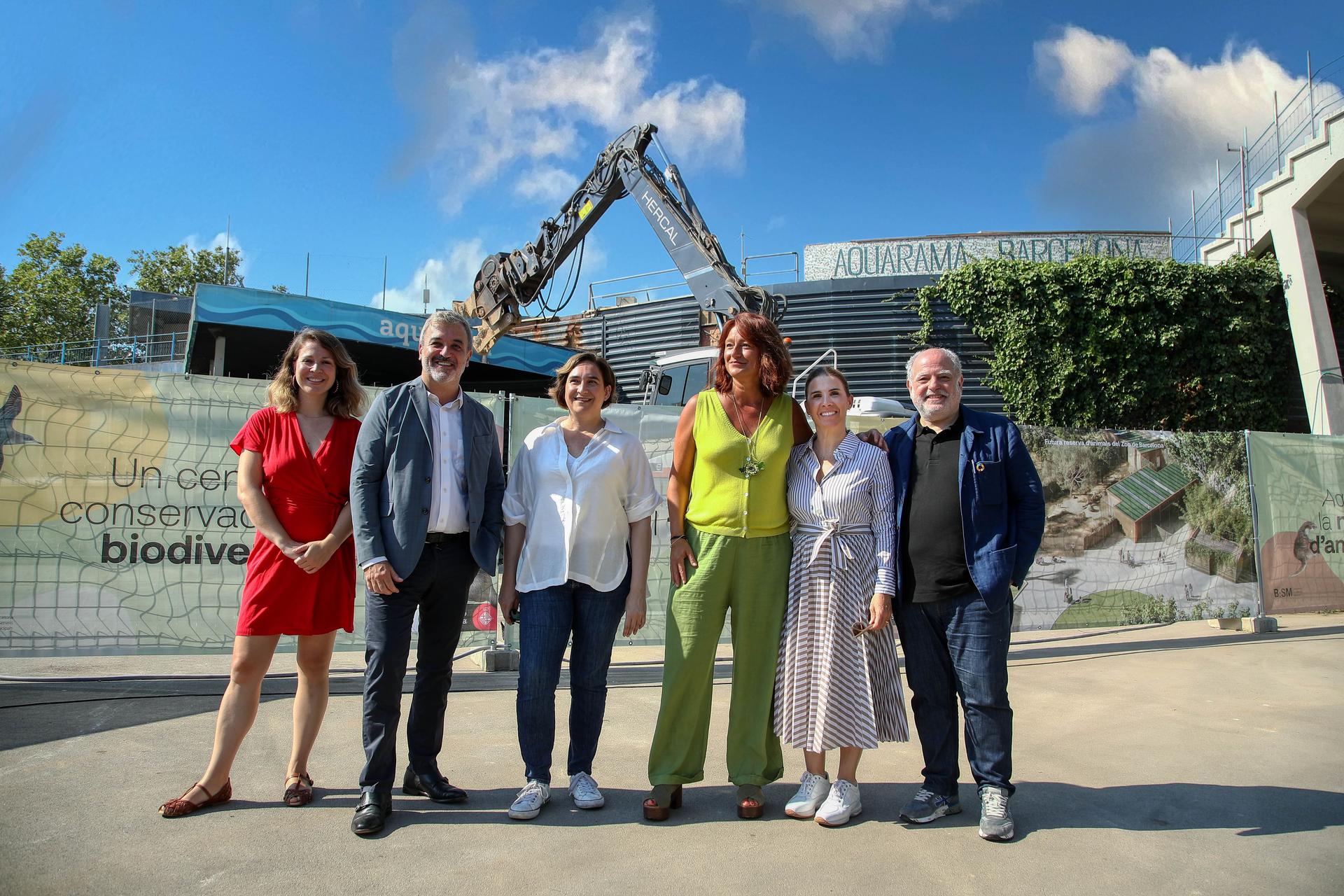
Authorities in front of the former Aquarama of the Barcelona Zoo
Cuerpo

The work of dismantling the installation will last for four months, while the well-being of the animals in Barcelona Zoo will be ensured at all times  

The new animal reserve, scheduled to open in 2024, will house species that will be temporarily affected during the Zoo’s transformation into a centre for the preservation of biodiversity 

Barcelona Zoo takes another step towards its new model, based on the preservation of biodiversity and dissemination. This week, work started on demolishing the old Aquarama, an installation inaugurated in 1968 which has been closed since 2015. 

Dismantling the old Aquarama will take four months and the work has been allocated a budget of nearly €365,000. The work will at all times strive to cause the minimum possible acoustic and environmental impact, thereby ensuring the well-being of the Zoo's animals. This is possible through the use of shears, which will break off pieces of concrete, instead of using the classic pneumatic demolition machinery, and avoiding noise and vibrations. 

An animal reserve to make the new Barcelona Zoo model possible 

The goals of the New Model for Barcelona Zoo include the transformation of most of its facilities, in order to create a centre for the preservation of biodiversity, which will actively contribute to the conservation, scientific research and dissemination of wild fauna and their natural habitats. These changes will be carried out while safeguarding the well-being and safety of the animals housed in Barcelona Zoo. For this reason, the free space left by the old Aquarama will be used to create an animal reserve. 

Construction work on this new facility will begin in the autumn of 2023 and is scheduled for completion in the summer of 2024. It will be used to house the Zoo species that will be temporarily affected by the improvement work planned in coming years. Its construction has a budget of €800,000.  

A space adapted to the needs of each species, safeguarding the well-being of the animals 

The future animal reserve will focus on animal health and well-being, ensuring that their needs are met at all times. It will have a surface area of 3,500 m2, including five exterior courtyards, viewable for visitors, and three sleeping areas. All of these spaces will be properly equipped and adaptable to the needs of each species, as well as those of their keepers. In order to reproduce the various habitats, there will be rocks, tree trunks, and shady areas, as well as air-conditioned spaces and technical rooms. The facility’s environment will be adapted with vegetation.

Over 50 years of history 

Aquarama and the Dolphin Pavilion were inaugurated in 1968, on the day of La Mercè, when Antoni Jonch i Cuspinera was the head of Barcelona Zoo. Inspired by the Seaquarium in Miami, it was one of the first facilities of that type in Europe, and its construction posed a significant challenge. Not only because of its size, but due to the complexity of having to store a vast amount of salt water and maintain it in good condition, while also having to periodically replace it. 

From its inauguration until 2011, a total of 31 dolphins were housed in Aquarama and the Dolphin Pavilion. Some of them coexisted with Ulisses, the killer whale, which arrived in 1983 and stayed until 1994, when it was transferred to Sea World in San Diego, in the USA. 

Aquarama was open to the public until 2015, the year when shows featuring those cetaceans were stopped. Barcelona Zoo continued to care for its last dolphins until July 2020. 
 

Demolition work begins on the old Aquarama, in order to build an animal reserve 
Read the note
Fecha de publicación
News or press release?
Press release
Imagen de cabecera
Imagen destacada
Imatge
Image of the show at the Magic Fountain of Montjuïc
Cuerpo

From 13 July, tourist coaches will have to reserve a parking place in the area around the Magic Fountain and pay a parking fee 

There will be a total of 65 parking places and reservations will be made via the Zona Bus website, between one and seven days before the visit 

This measure aims to help pacify and organise the area surrounding the Magic Fountain on show days   

From 13 July, tourist coaches will have to reserve a parking place and pay a fee for parking at the Magic Fountain of Montjuïc. The measure, provided for in the tax by-law on regulated parking for vehicles on public highways, “aims to help pacify and organise traffic at this point of great interest and attraction for visitors, and it forms part of various tourist mobility reorganisation measures aimed at minimising impact in areas under the most pressure”, explained Xavier Marcé, the Councillor for Tourism and Creative Industries.

There will be a total of 65 parking places, distributed as follows: 30 on each side of Avinguda Francesc Ferrer i Guàrdia, and 5 more on Avinguda de Rius i Taulet. In all cases, starting from thirty minutes before the first show on each day, these parking places will act as Zona Bus areas. During the rest of the day, they will be bus lanes (Avinguda Francesc Ferrer i Guàrdia) and parking areas (Avinguda Rius i Taulet).  

Zona Bus staff will be responsible for providing all necessary instructions to the coaches, before and after the Magic Fountain shows. 

This regulation will only be operative during the months with scheduled Magic Fountain shows: from June to October and from the end of December to the end of March. All times can be consulted on the Barcelona City Council website. 

Reservations can be made via the Zona Bus website 

Parking places in the area around the Magic Fountain can be reserved via the Zona Bus website, between one and seven days before the visit. The parking fee will depend on whether the reservation is made for one or two consecutive shows. Reserving a place for either the first or second show will cost €20, while a reservation for both will cost €30. 

Zona Bus, run by Barcelona de Serveis Municipals (B:SM), consists of a series of reserved parking spaces so that tourist coaches can stop or park in the city. They are always located close to locations that attract large numbers of visitors, such as the Sagrada Família, Ciutat Vella, Park Güell and La Pedrera, and they aim to reduce the impact these coaches have on mobility. With the regulation of parking in the area around the Magic Fountain of Montjuïc, Zona Bus now has a total of 227 parking places throughout the city. 
 

The coach-parking regulation in the area around the Magic Fountain of Montjuïc comes into force
Read the note
Fecha de publicación
News or press release?
Press release