Imagen destacada
Imatge
Cuerpo

The international manager of Barcelona Municipal Services (BSM), Lluís Gómez, formed part of the delegation representing the city that was sent to present the post-1992 management model for Barcelona's Olympic Ring and the model for the public services company BSM

Barcelona was the guest city at the “Japan-Barcelona Smart City Forum” event in Tokyo, which was organised by the Smart City Institute Japan and Nikkei, the most important business newspaper in Japan

The Smart City Institute Japan (SCI-J) recently hosted the “Japan-Barcelona Smart City Forum” event in Tokyo, in collaboration with Nikkei, the most important business newspaper in Japan. The meeting saw the participation of a delegation from Barcelona City Council, whose members included Jordi Cirera, director of the Knowledge Society Office at the Municipal Institute of Information Technology, Josep Bohigas, director of the Urban Ecology Agency and director of Barcelona Regional, Felip Roca, director of International Relations, and Lluís Gómez, the international manager of Barcelona Municipal Services. The event took place within the context of the growing popularity of smart city projects and initiatives in Japan. Barcelona is considered to be a benchmark city for innovation and smart city management. That is why it was the first guest city at the event hosted by SCI-J to exchange ideas and better understand smart city management and the opportunities that arise from innovative policies and projects. A key vision shared by Japan and Barcelona in smart city management is that of always making their citizens the first priority, humanising technology to put it at the service of the people. The development of Barcelona’s urban model since the Olympic Games in 1992 up to now was also noted with appreciation by Tokyo, a city which will also begin a similar process this year, in 2020. More than 600 people attended the 3 sessions, where Barcelona's Smart City strategy, post-Olympic urban development, and noteworthy projects such as Sentilo, City OS, the Low Emissions Zone, and the Superblocks initiative were presented. The sensor platform Sentilo, the citizen-focused approach, and the ever-increasing restrictions on private vehicle access to the city in favour of gaining green spaces were the most talked about ideas in the Japanese press. Following this event, Nikkei will publish an article about Barcelona this coming 25 February. In addition to the “Japan-Barcelona Smart City Forum” event, the Barcelona City Council delegation also took part in a conference at the University of Tokyo where the Barcelona model was introduced, with a special focus on the Superblocks initiative and the Decidim platform. The delegation also attended several meetings with important local authority figures in Tokyo, Shibuya, Yokohama, Kyoto, and Kobe, and with the organisers of the 2020 Tokyo Olympic Games. One of the most important meetings was with the vice-governor of Tokyo, Manabu Miyasaka. Here, the delegation provided insight into the inner workings of IMI, the Urban Ecology Agency/BCN Regional, BSM, and the Superblocks and Decidim projects, and showcased BSM’s management of the Olympic infrastructures. On top of that, they met with the mayor of Shibuya, Ken Hasebe, the vice-governor of the Kyoto prefecture, Akimasa Yamashita, the deputy mayor of Yokohama, Kazumi Kobayashi, and the deputy mayor of Kobe, Hidetoshi Terasaki.
 
Barcelona, in attendance for the memorial ceremonies marking the 25th anniversary of the Kobe earthquake
A representative from Barcelona City Council's Department of International Relations was present for the memorial ceremonies marking the 25th anniversary of the Kobe earthquake. On 17 January 1995, an earthquake registering 7.2 on the Richter scale rocked the prefecture of Hyogo, and Kobe was the hardest-hit city, with more than 6434 deaths recorded. Barcelona sent humanitarian aid and participated in a support campaign implemented through the municipal schools, sending messages that would form part of a large mural to support the children of Kobe. Barcelona has been twinned with Kobe for more than 25 years and one of their main collaborative projects is the World Data Viz Challenge, a competition organised by both city councils that encourages citizens to contribute to improving aspects of their city using data analysis and their own vision.


Barcelona Establishes Itself as a Smart City Leader in Japan
Read the note
Fecha de publicación
News or press release?
Press release
Imagen destacada
Imatge
Cuerpo

Cementiris de Barcelona has been awarded the Integration Prize for 2019 for meeting city residents’ intercultural needs with its services.

The city’s cemeteries provides specific services for people from different cultures and religions

Cementiris de Barcelona has received the Integration Prize for 2019 for meeting city residents’ intercultural needs with its services.  The Managing Director of Cementiris, Miquel Trepat, collected the award yesterday at a ceremony presided over by Javid Mughal, founder and director of the first Urdu newspaper, and Muhammad Iqbal, President of the Camino de la Paz Pakistani Community. Among the other attendees at the awards ceremony were the Pakistani Consul to Barcelona, Murad Ashraf Janjua. The award is organised by the El mirador dels immigrants newspaper, which is celebrating its 20th anniversary this year.

It recognises the work of individuals and organisations in providing suitable services for people from different cultures and religions. . Cementiris de Barcelona provides specific services to several communities, including the Muslim and Jewish communities.

Cementiris de Barcelona has always respected and valued cultural and religious diversity, which is why it provides specific services for the city's different communities, thereby promoting integration even in its cemeteries.

Other recipients of the award, besides Cementiris de Barcelona, include the SURT Foundation, the Casal d’Infants del Raval [Raval Kid’s Club], the Catalan Refugee Aid Commission, the Barcelona Official Language School, the Grup de Treball Estable de Religions (GTER), UCIDAT, Vicens Vives, Gala Pin (former Councillor for Ciutat Vella), and Ramon Sanahuja (former Director of Barcelona’s Migrant Reception Services).


Cementiris de Barcelona receives the Integration Prize for 2019
Read the note
Fecha de publicación
News or press release?
Press release
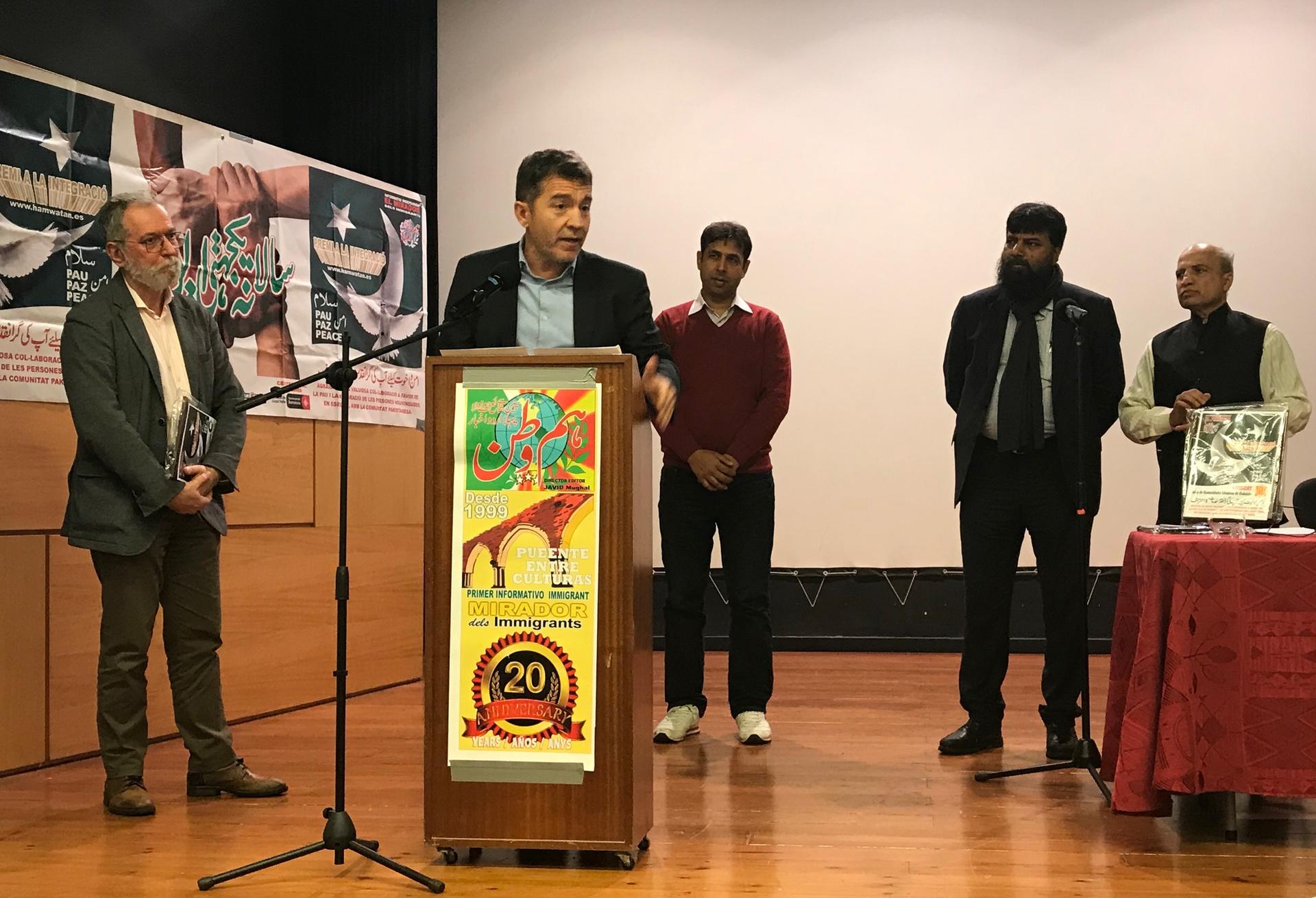
Imagen destacada
Imatge
Cuerpo

97 new stations will be opened throughout Barcelona, and the service will now reach 11 new neighbourhoods for the first time The most significant increase in service will be seen in the districts of Horta-Guinardó, Nou Barris, Sants-Montjuïc, Gràcia and Sant Martí

The service will improve for users, with more stations and better coverage throughout the territory, with as many as 1,000 more electric bicycles

The use of Bicing has increased by 9% since the new service was introduced

On average, electric bicycles are used more than mechanical ones

Bicing continues to expand after the introduction of the new system, which uses a more modern and versatile model of bicycle, as part of the municipal government's strategy to continue promoting sustainable mobility in Barcelona. The second phase of the new Bicing's deployment begins today, with the service expanding to include 11 new neighbourhoods, where 22 new stations will be installed. The number of stations in the existing network will also be increased by 75, in neighbourhoods where demand is greatest. The deployment will be carried out progressively over the first few months of the year. To date, 50 stations have already completed their pre-installation phase. A total of 97 new stations will be installed, improving the service received by users and offering greater territorial coverage. There will be a total of 519 stations distributed throughout the city. The service will have 7,000 bicycles, 2,000 of which will be electric. New territorial distribution The number of stations will be increased in all Barcelona's districts, reducing the differences in coverage between them, favouring intermodality as much as possible and providing service to areas with a high demand. The most significant increases will be in Horta-Guinardó (21), Nou Barris (16), Sants-Montjuïc (12), Gràcia (11) and Sant Martí (10). The new stations make it possible to cover neighbourhoods that Bicing had not previously reached, such as La Marina del Prat Vermell, Vallcarca i els Penitents, La Salut,Vall d’Hebron, La Clota, Canyelles, Les Roquetes, Verdum, Trinitat Nova and Ciutat Meridiana. Twice as many electric bicycles  At the end of the second deployment phase, the service will have 2,000 electric bicycles. This is double the number of electric bikes (1,000 units) initially planned, given how well they have been received by service users, This number may be increased if necessary, by converting mechanical bicycles. The best thing about the new system is the decision to use a single-frame model of bicycle.

The new stations will be distributed as follows:
 
Balance sheet for the new Bicing Use of the Bicing service increases by 9%. Once the transition period from the old to the new service was completed, the average use of Bicing increased by 9% compared to the previous year, with an increase of 1,161,847 journeys in 2019.

Bicing achieves 50,800 journeys per day on working days. On average, the service is used 44,808 times on working days, compared to 43,072 in 2018; i.e. over 1,000 more journeys per day. Electric bicycles are used more than mechanical ones. On average, mechanical bicycles are used 6.01 times a day. Electric bicycles are used an average of 9.27 times a day (with peaks of 13-14 times a day).
The number of service users has increased since January 2019. New Bicing registered a total of 113,796 users on 31 December 2019, 11,000 more than in 2018. Mobile phone use: 35% of Bicing journeys are made using smartphones

Change in mobility uses and new demand. The change in the service’s system has meant a change in mobility in terms of bicycle use, which signifies a clear challenge for planning. Offering electric bicycles in the new hybrid (mechanical-electric) stations has increased both the supply and the demand for this type of bicycle. Bicing users have changed the origins and destinations of their journeys and there will be more changes when the service arrives in the new neighbourhoods. These new requirements have caused plans to be redesigned, with the inclusion of predictive software for demand, in order to improve the service.

User satisfaction and profiles Users have given their rating for the new service, with a score of 6.9 on the SCI (Customer Satisfaction Index) in 2019, the year of system transition. The highest rated aspects in this survey are: service hours (8.2), station maintenance (8.0), comfort and ergonomics (7.7) and appropriateness of model for its use (7.4). The survey shows that 46.2% of the users are women and 53.8% men. The typical Bicing users are between 25 and 34 years old, use Bicing because it is a sustainable means of transport and whose first choice is the electric bicycle. They use the service between 1 and 5 times a week, mainly to go to and from work. Other interesting information APP:
An average of 9,320 downloads a month in 2018
An average of 19,960 downloads a month in 2019 Sustainable Km. Average distance in Km that a bicycle travels per month:
Mechanical ................338 km
Electric .......................739 km Twice as many visits to the website per month:
An average of 57,737 visits a month in 2018
An average of 130,778 visits a month in 2019


Bicing expands to include new neighbourhoods, with more stations and 1,000 more electric bikes
Read the note
Fecha de publicación
News or press release?
Press release
Imagen destacada
Imatge
Cuerpo

The Park will be present within the framework of the OpenSketch activity, an illustration contest in which participants can make their drawings from one of the highest viewpoints in the city


The Tibidabo Amusement Park participates next weekend, October 26th and 27th, at the 48h Open House Bcn, the architectural festival where you can visit more than 150 reference spaces in the city. On Sunday, October 27th, the park will be present within the framework of the OpenSketch activity, an illustration contest in which participants can make their drawings from one of the highest viewpoints and offer better views of the city.

The festival, which is held annually and this year celebrates its 10th edition, aims to explain architecture to society in a transversal way, to stimulate their knowledge by teaching to see it and discover it, as an essential component of culture.

It is organized by the non-profit cultural association 48h Open House Barcelona for the dissemination of the architectural heritage of the city of Barcelona, which works by offering cultural products and services in the field of architecture.

Tibidabo participates in the 48h OpenHouse BCN Festival
Read the note
Fecha de publicación
News or press release?
Press release
Imagen destacada
Imatge
Cuerpo

Sustainable mobility is one of the main themes of the new budgets

The Olympic Port project stands out among the new projects, with an investment of €3 million for the 2020 financial year


Today, the B:SM Management Board approved the budgets aimed at improving the quality of the services provided to city residents by the company and responding to the company’s main challenges and objectives for 2020. BSM is becoming established as a public company that not only effectively manages the services they provide to city residents on behalf of the municipal government, but it is also becoming a major source of innovation, transformation, and sustainability in the city.

To this effect, the company will make a clear commitment to improving mobility with major projects such as the deployment of new parking meters, a thorough renovation of the parking network, which will have digital connectivity in 2020, and the promotion of electromobility and integrated mobility on the SMOU app. The deployment of the new model for Barcelona Zoo will also , go ahead, and the management model for the Olympic Port will be implemented with a strategic plan also focused on digitalisation and sustainability.

The budget shows a total income of €136.5 million, which is an increase of over €6 million compared to the provision at the close of 2019, and an expenditure of €131.4 million, an increase of €10.5 million on the closing provision for the previous financial year.

Investments are calculated at €18.6 million, 13.7 million of which will be allocated to projects to renovate and adapt facilities and installations, and 3 million will be invested in the new Olympic Port project, which will be hugely important for the company in the coming year once the effective delegation of responsibilities has been achieved by the Generalitat of Catalonia and Barcelona City Council.

The Olympic Port project involves a large-scale transformation at all levels towards a new management framework, and the adaptation of current contracts to the new approved Land Use Plan. At the urban planning level, the project also involves the physical transformation of the spaces and changes in their uses. One example is the work undertaken to improve the Dic del Recer breakwater to avoid the negative effects of sea storms, an operation that accounts for most of the investment.

Regarding mobility, new mobility projects will be introduced and adaptations made to the BSM car park network, with a total investment of €3 million. In 2020, work on the projects for the future car parks in Ciutadella del Coneixement – Zoo, Ramiro de Maeztu, Soldevila and Thous will get underway. The latter will also be used as a car pound for Municipal Towing. Across the network as a whole, there will be large scale work to improve access points, safety, and cleaning to improve customer satisfaction. Mobile phone cover will also be introduced throughout the B:SM Car Park network in 2020. Electromobility is another of B:SM's commitments to the future. With an investment of over €450,000, the Endolla Barcelona electric recharging points network will be expanded to include new points, both on the street and in BSM car parks, along with their full integration into the SMOU mobility app.

The new network of parking meters will also be consolidated in 2020, making their use more sustainable since it will no longer be necessary to print out paper tickets, and also helping to implement the management of parking policies in line with municipal mobility policies and the low emission zones. Furthermore, efforts will be made to regulate discretionary buses for tourist use in the most congested areas such as the Magic Fountain in Montjuïc. Also among the company's mobility projects is the consolidation of the new Bicing model , which will include improvements to distribution logistics to improve supply and demand, and an increase in the number of stations and electric bicycles to provide a better service. Regarding bus stations, optimal levels of security, cleaning, and maintenance will continue to guarantee travellers a good service, and the number of arrivals and departures at the stations of Barcelona-Nord and Fabra i Puig will be increased.

Barcelona Zoo's new model, which focuses on the objectives of conservation, research and education linked to conserving biodiversity, will be implemented in 2020. Not only are there planned improvements for the animals' installations, but also for the logistic and public area infrastructures, placing special emphasis on improving accessibility. Furthermore, interactive digital technologies will be introduced in the park's interpretation centres and awareness-raising content will be created with the aim of examining the values of biodiversity and conservation, the new Zoo's principle message, in greater depth. Work will continue on revitalising the Olympic Ring installations, with a total investment of €2,600,000, promoting the use of the different spaces and improving environmental sustainability.

Furthermore, there will be an investment in the exterior lighting of the Esplanade and Palau Sant Jordi, and improvements made to emergency exits. Revitalisation work will continue in the different spaces at Forum Park with various cultural, sporting, and family activities, and serious efforts will be made to attract the general public to the park, and especially local residents. There are also plans for a series of actions aimed at controlling noise problems in the surrounding area, and maintenance work will be carried out to ensure that the venue is kept in an optimal state.

Last, the intervention plan set out in the new model of governance for Park Güell will continue to be implemented with operations to improve and conserve the environment focusing on pavements, street lighting. and architectural and plant heritage while the improvements to mobility set in motion in 2019 will also be consolidated.

B:SM Management Board approves the budgets for 2020
Read the note
Fecha de publicación
News or press release?
Press release
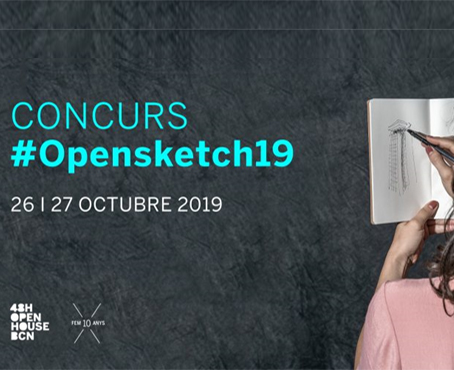
Imagen destacada
Imatge
Cuerpo

You can now get a ticket for regulated on-street parking in Badalona quickly and easily via the mobile APP

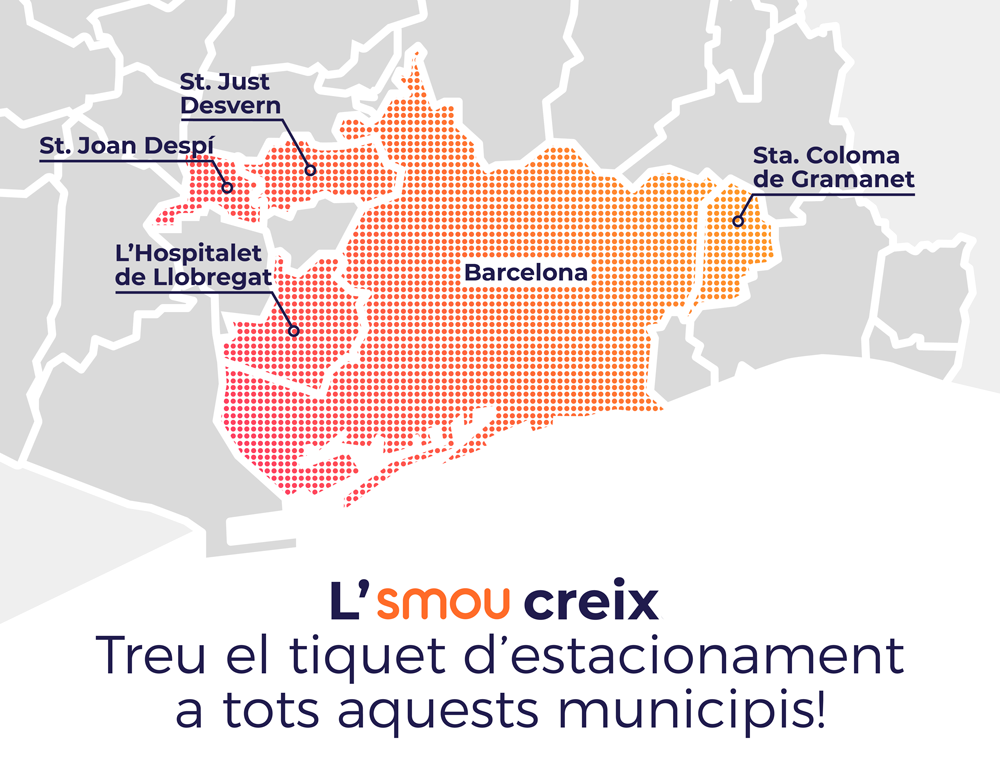
This service is already available for the municipalities of Hospitalet de Llobregat, Santa Coloma de Gramenet, Sant Joan Despí and Sant Just Desvern


Smou, Barcelona's personal mobility app which brings various mobility services together in one space, continues to grow and is now expanding its portfolio to include parking in Badalona. From now on, smou users can get a ticket for regulated on-street parking in Badalona quickly and easily via their mobile phone, with no need to go to the parking meter.

Badalona is the latest municipality in the metropolitan area to offer this service via smou, which is already available for: Barcelona, Hospitalet de Llobregat, Santa Coloma de Gramenet, Sant Joan Despí and Sant Just Desvern. This provides added value for users, who can now move around all these areas of the city and pay for regulated on-street parking using a single mobile application.

One app, a multitude of services

As well as being able to get a regulated on-street parking ticket for all these municipalities, smou also lets users enter and exit B:SM car parks directly by means of a number plate recognition system, and pay for their stay using the agilPark service.

Users can also find information on the network of B:SM car parks, the Bicing bike-hire service, the Endolla Barcelona car charging network, the Drivy and Ubeeqo car-sharing services, and the entire network of cycling lanes. All this information is completely customisable by means of a system of filters that users can enable or disable, depending on their needs.

his information is shown on the map on smou’s main screen by means of a system of superimposed layers, thus providing a clear, easy-to-understand display of nearby services at all times.

The new app is available for both iOS and Android devices and can be downloaded free of charge. Registering is very easy, in the standard way through the app itself, or on the www.smou.cat website.
 

Parking in Badalona is now included on SMOU
Read the note
Fecha de publicación
News or press release?
Press release
Imagen destacada
Imatge
Cuerpo

The summer season has ended with over 180,000 visitors in August: an all-time record

More educational activities are being offered, such as the new Creatibi Robotics space, with a view to providing added value for visitors and consolidating education as one of the Park’s four strategic pillars

The traditional Puppet Show series marks the start of the autumn season this weekend with ‘Pipa, la titella meravella’

The funibus, a bus service departing from Plaça Kennedy, will run daily while the funicular is being renovated

Tibidabo Amusement Park has ended the summer season with record figures for August, during which a total of 184,817 visitors, an all-time high, came to the park. That means an average of 5,962 visitors a day have enjoyed all the Park has to offer in the summer, highlights of which were a very popular laser show, new street performances and the Castell de Contes or fairytale castle attraction. Now that September is here, the Park will adapt to school hours and open every weekend from 11 am to 9 pm until late October. Next weekend, the funicular will make its final journey before closing to be renovated and give way to the funibus: a bus service departing from Plaça Kennedy that will run daily from 10.30 am while work is being done on the funicular. Apart from that, all the usual means of access will remain open. As the summer comes to an end, Tibidabo Amusement Park is getting ready for the autumn, with a host of new additions alongside activities that have become a tradition, like the Puppet Show. More educational activities are being offered for a wider audience, with a view to providing added value for visitors and consolidating education as one of the Park’s four strategic pillars, along with solidarity, sustainability and experiences. This makes Tibidabo not only a fun place with rides and entertainment but also a space for learning, where children can broaden their knowledge. Robots take centre stage Various improvements will be made to the Creatibi by LEGO Education centre, with one especially important new addition: Creatibi Robotics, a new educational robotics space with activities involving various programmable robotics platforms. It will include 6 areas with different activities, each with its own unique robotics platform. The combination of different types of robot will make this space a versatile way to teach programming through play to all age groups.
 
This new robotics space will be fully linked to the Creatibi by Lego Education room because besides sharing the aim of making educational robotics accessible to children and families, the two spaces will put on joint, cross-over activities. The Free Play area has also been improved and will take on a bigger role. Children can build things freely, but with a suggested theme, thus developing a host of skills: scientific thinking, programming, social development, creative exploration, language and communication. Meanwhile, the Maker space will introduce new content and ideas for children aged between 3 and 12, awakening an interest in design and engineering in them through construction models. Puppet Show The Marionetarium will play host to the ninth edition of the Puppet Show series, during which a puppet show by a different company will be performed every weekend from 14 September to 29 October. There will be 5 performances per day: at 12 pm, 1 pm, 3 pm, 4 pm and 5 pm.
 
On the first weekend, the Nestor Navarro company will perform ‘Pipa, la titella meravella’, a comedy for all the family in which Pipa, a traditional hand puppet, wants to spend her life playing and having fun but finds herself in a world of crazy characters who will take her on a series of surreal adventures. Over the La Mercè festival, from 21 to 24 September, the ‘De l’ou a la titella’ workshop will take place, organised by the Marionetes Herta Frankel company. In the workshop, children will let their imagination run free and make their own puppet, thus developing their creativity and focusing on different aspects of making a puppet: shapes, colours, expression, materials and all the other ways in which they can use their imagination to make their creation unique. Finally, the Núria Mestres company will perform ‘Mons Paral·lels’, a show involving sketches with 4 different characters, each a different kind of puppet, who will fill the Marionetarium with magic tricks, imagination and humour. The funicular’s final journey This weekend, the current funicular will make its final journey before closing to be transformed into the new Tibidabo funicular, the Cuca de Llum, which will be fully modernised and will fit into the Park as another attraction. Its renewed, customised design will improve user experience substantially. Interactive screens and electronic tablets will be installed for educational and entertainment purposes, allowing travellers to interact with the attraction. The interior of the funicular will be freed up to increase the available surface area and transformed into an open-plan space to ensure the best possible visual permeability inside. Visitors will enjoy bigger and better panoramic views during the journey, thanks to the large windows.
 

Tibidabo is changing for the autumn and offering more educational activities
Read the note
Fecha de publicación
News or press release?
Press release
Imagen destacada
Imatge
Cuerpo

In 2003, 365 artificial concrete structures were installed along the Barcelona coast to help recover the city’s marine biodiversity and the quality of its seabed

Through its Foundation, Barcelona Zoo has monitored this project over the years and has strived to raise awareness of and preserve the marine ecosystem of the Barcelona coast

The next step will be the creation of the Marine Biodiversity Conservation Centre, which will work to preserve marine organisms and raise awareness of the need to protect endangered Mediterranean habitats


In 2003, a series of artificial concrete reefs were created along the Barcelona coast to promote the recovery of the city’s marine biodiversity and improve the quality of its seabed. This project arose as part of an initiative to repair the coast at the mouth of the Besòs river, which had undergone environmental damage due to sanitation infrastructures leaking the products of inadequately treated urban and industrial wastewater into the sea. Following improvements to the sanitation system (remodelling of the Besòs wastewater treatment plant with biological treatment and an end to sludge being pumped into the sea, environmental recovery of the mouth of the Besòs river, construction of rainwater collection tanks, etc.), there was a great opportunity to improve the environmental quality of both sea water and the seabed through marine environmental services and usages. Sixteen years after the artificial reefs were installed, the local flora and fauna have been protected, the diversity of the marine organisms that inhabit them has increased, small-scale fishing in the area has improved and research into the local seabed has been supported, as the structure has been used as a platform for scientific trials. During this time, Barcelona Zoo has monitored the project in a bid to protect marine biodiversity. In the process, it has observed how the artificial reefs have been colonised by various local species, such as sponges, soft corals, anemones, flat oysters, the common octopus, the European spiny lobster and a host of fish species, including the scorpionfish and the comber. The artificial reefs have also demonstrated the effects of marine current and wind storm dynamics on the coast.

Barcelona Zoo: helping to improve marine biodiversity

As detailed in its recently approved New Model, Barcelona Zoo works to preserve nature around the world, with special concern for the Mediterranean bioregion, and to combat the constant deterioration of most natural habitats. This task is carried out alongside other zoos, public authorities, institutions, universities and scientific centres, and involves promoting and collaborating on various conservation and research projects, both in the field and on the Ciutadella site.

The creation of the Parc dels Esculls artificial reefs and the studies and monitoring carried out there have improved the health of this coastal submarine habitat and led to a proliferation of diverse marine organisms. For this reason, one of the next challenges set out in the Zoo’s New Model is the creation of the Marine Biodiversity Conservation Centre, which will continue with this task, contributing to the preservation and conservation of endangered species and local and Mediterranean wildlife. The centre will also promote research and projects that aim to protect nature, as well as carrying out awareness-raising and educational activities.

For years now, the Barcelona Zoo Foundation has coordinated scientific and technical monitoring at Parc dels Esculls aimed at obtaining characteristic data on the state of the structures, their colonisation by living creatures, their possible impact on the nearby coast and the evolution of the fishing and marine communities.
Moreover, it has contributed towards raising awareness of the need to preserve marine diversity through exhibitions, educational activities, multimedia projections and scientific articles with Parc dels Esculls as the protagonist.

The purpose of the monitoring carried out by the Zoo team has been to analyse the overall situation in the area occupied by the artificial reefs and to track the diversity of the organisms found there, through observation of the marine species living around or on them and of the spatial structure of the populations linked to the modules. It is worth noting that Parc dels Esculls is located in a natural environment that is permanently exposed to the dynamics of sea currents and to wind storms, some of which can be of a significant magnitude. One of the most serious wind storms of recent years took place in December 2008 but the area recovered quickly from its temporary loss of organisms.

The location and characteristics of Parc dels Esculls Parc dels Esculls is located between the new entrance to Barcelona Port and the submerged groynes near the Bac de Roda wastewater pipe, covering around 11 square kilometres of seabed, over which a total of 365 submerged structures are installed.

The reefs are artificial structures made to resemble the natural rocky seabed from modules of different kinds with a rough texture to make it easier for different marine species to colonise them. As well as promoting biological diversity, the artificial reefs are designed to protect the organisms that live there from illegal fishing.

Biodiversity at Parc dels Esculls

The organisms attached to the artificial structures at Parc dels Esculls spread over any colonisable surface in contact with the water. The degree of reclamation of all the structures by plants and animals is above 100%, as several layers of organisms are located on the rough, concrete, artificial substrate.

The organisms that inhabit the structures are spread out according to the amount of light available and the type of diet they require. Algae are found at the top of the reefs, where the most sunlight reaches. On the vertical walls are filter feeders, which feed off substances suspended in the water: soft corals, Mediterranean fanworms, mussels, etc. Near the filter feeders, we find other organisms that feed off them, such as the common octopus: a soft-bodied mollusc that lives in caves and holes. Nudibranchs, a common species at Parc dels Esculls, are also soft-bodied molluscs, like a kind of marine slug, that are found in a wide range of shapes, sizes and colours. Compared to other points on the Catalan coast, Parc dels Esculls is home to a lot of this species.

Parc dels Esculls is also inhabited by the flat oyster, the European spiny lobster and the comber fish, and their population is expected to rise in the coming years. One of the fish species that has colonised this habitat most successfully is the scorpionfish, which lives in close contact with the rocky seabed and camouflages well with its surroundings.

As for the types of structures installed in 2003, the stacked cubic ones present the greatest number of inhabitants due to their horizontal and vertical dimensions, their large surface available for colonisation and their number of orifices that can be used as shelters.

The presence of marine wildlife at Parc dels Esculls The latest studies carried out by the Zoo demonstrate that the wildlife that currently lives at Parc dels Esculls is as follows:

•    the so-called sea snail (Parablennius rouxi, Parablennius pilicornis and Parablennius gattorugine), found on all the structures, is most widely observed on the highest part of the artificial reefs
•    the scorpionfish (Scorpaena sp.) is found frequently and consistently across all the surfaces of the modules and is more abundant at night in all locations
•    the European conger (Conger conger) is increasingly present; the modules constitute an ideal habitat for it, and it often sits in the gaps on the lower levels
•    the comber (Serranus cabrilla), found on structures inhabited by highly territorial species, is mainly observed in the gaps at the intermediate and lower levels
•    various species of sea bream such as the common two-banded sea bream (Diplodus vulgaris) and the white sea bream (Diplodus sargus) are found around and inside the modules, where they find shelter and protection from their predators. Meanwhile, the saddled sea bream (Oblada melanura) moves in a school around the modules
•    the Mediterranean rainbow wrasse (Coris julis) is found at lower and intermediate levels
•    the damselfish (Chromis chromis) is abundant and, like the saddled sea bream, moves as part of a school of fish around the structures at the intermediate and upper levels during the day, but rests in the gaps in the modules at night
•    the common dentex (Dentex dentex), a species that was uncommon in this area of the coast until now, can be found between structures at the lower level
•    the grouper (Epinephelus sp.) is present in the gaps at the lower level
•    the forkbeard (Phycis phycis) is found between the stacked modules at the lower level and inside the tubes of the tubular modules
•    the cardinalfish (Apogon imberbis) is common in the gaps at the lower level
•    the bastard grunt (Pomadasys incisus) is abundant only in the spring and, like the saddled sea bream and the damselfish, moves as part of a school around the structures at the intermediate level
Barcelona Zoo’s work at Parc dels Esculls is helping to repair the coastal marine ecosystem
Read the note
Fecha de publicación
News or press release?
Press release
Imagen destacada
Imatge
Cuerpo

The new service will enable smou users to pay for stays by minutes in B:SM car parks, and to enter and leave by means of a number plate reading system

It joins other smou services such as paying for regulated on-street parking, and information on Bicing bike-hire and recharging points for electric cars, among others

The smou app has attracted over 110,000 users in just 5 months and has now topped a million operations

Smou, Barcelona's personal mobility app which brings various mobility services together in one space, continues to grow. And from now on it will let you park by minutes at any of the more than 40 B:SM car parks using the new service, called agilPark. In other words, smou users will be able to enter and leave these car parks directly by means of a number plate reading system, paying for their stay with the app. This way, once smou users have activated the new service, they will no longer have to take a paper ticket when they enter B:SM car parks because a number plate reader will recognise their car and the barrier will open automatically. Exactly the same will happen at the exit: when a user leaves the car park, the reader will recognise the number and the barrier will open. The stay in the car park will be paid for immediately and automatically through smou, without the user having to go and pay at a pay machine.
 
If a user takes a ticket when entering the car park but the car they are driving has not been set to enter by reading the number plate, they will still be able to scan the ticket with smou and pay using the app. One app, a multitude of services The service is the new addition to the other services already available on the app. For example, through the apparkB service, smou lets you pay for regulated on-street parking in Barcelona, L’Hospitalet de Llobregat, Santa Coloma de Gramenet, Sant Joan Despí and Sant Just Desvern without having to go to a parking meter, which saves you time and facilitates the process. What’s more, you only pay for the exact parking time. This provides added value for users, who can now move around these cities and park their cars using a single mobile app.
   
Users can also find information on the B:SM car parks, the Bicing bike-hire service, the Endolla Barcelona car recharging network, the Drivy and Ubeeqo car-sharing services, and the entire network of cycling lanes. All this information is completely customisable by means of a system of filters that users can enable or disable, depending on their needs. This information is shown on the map on smou’s main screen by means of a system of superimposed layers, thus providing a clear, easy-to-understand display of nearby services at all times.

More than a million operations
Since smou was launched just five months ago, it has already attracted over 110,000 users who have carried out more than a million operations. Smou is a dynamic app that is continually growing and will go on developing and incorporating new services and functions, for example, the possibility of applying B:SM car park subscriber discounts. This free app is available for both iOS and Android devices. Click this link to see the presentation of the new service
Smou is growing and expanding its service portfolio to include parking in municipal car parks
Read the note
Fecha de publicación
News or press release?
Press release
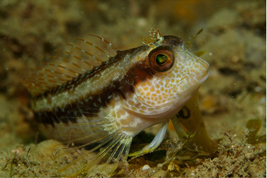
Imagen destacada
Imatge
Cuerpo

The ApparkB service, included in smou, can now be used to pay for regulated surface-level parking in Hospitalet de Llobregat, Santa Coloma de Gramenet, Sant Joan Despí and Sant Just Desvern

96% of users who pay for per-minute regulated parking with their mobile phones do so through smou

Ubeeqo, a new car-share service, has also been added

Smou, Barcelona's personal-mobility app, which brings together various mobility services, is already growing, just a short time after its publication. The app has been updated to include Ubeeqo, a new car-share service, and the ApparkB service has been extended in scope. The service was previously limited to Barcelona, but now users can also pay for regulated surface-level parking in Hospitalet de Llobregat, Santa Coloma de Gramenet, Sant Joan Despí and Sant Just Desvern. After just 2 months of operational life, smou has already become the most-used application to pay for per-minute regulated parking. 96% of people who pay via their mobile phones use smou. In this short time, the app has been downloaded over 100,000 times and now has over 85,000 users, who have performed over 300,000 operations. What's more, this new update includes various improvements which have come about thanks to the comments and suggestions made by these users. They include the relocation of the parking-start button, which has been moved to the main screen to make paying easier and more intuitive. There is also an option for geolocating the vehicle on the map once it has been parked to help users remember where they have parked. Smou is a constantly-growing, dynamic application, which will continue to evolve and incorporate new services, such as the possibility of accessing B:SM car parks in a seamless way and being able to pay through smou. Inclusion of the Metropolitan Area The operational scope of the ApparkB service, which is included in smou, has also been extended in this new update. Users can now use smou to pay for parking in Hospitalet de Llobregat, Santa Coloma de Gramenet, Sant Just Desvern and Sant Joan Despí, as well as in Barcelona. This provides added value for users, who can now move around all of these areas of the city and park their cars using a single mobile application.

This improves the smou experience for users, incorporating new services in an agile, user-friendly way, making access easier. More information and fully customisable Users will have direct, centralised mobility information of all kinds at their fingertips, including the services ApparkB, Aparcaments B:SM and the public network of electric recharging points, in addition to information on complementary mobility services. It also includes all the information about the new Bicing and the Drivy and Ubeeqo car-share services, showing Barcelona's entire network of bicycle lanes. What's more, it provides access to the User Information System (SIU), which predicts the availability of AREA parking spaces in Barcelona for a specific destination and time.
   
There is a map on the main smou screen where all the information is displayed and it is completely customisable. Users can choose the services and information they want displayed at any given time, using filters. The information is shown in a system of layers superimposed on the map, providing a clear, easy-to-understand display of nearby services at all times. The new app is available for both iOS and Android devices and can downloaded free of charge. Registering is very easy, in the standard way through the app itself, or at www.smou.cat.

Smou adds more services and now includes parking in new municipalities
Read the note
Fecha de publicación
News or press release?
Press release