Imagen destacada
Imatge
Cuerpo

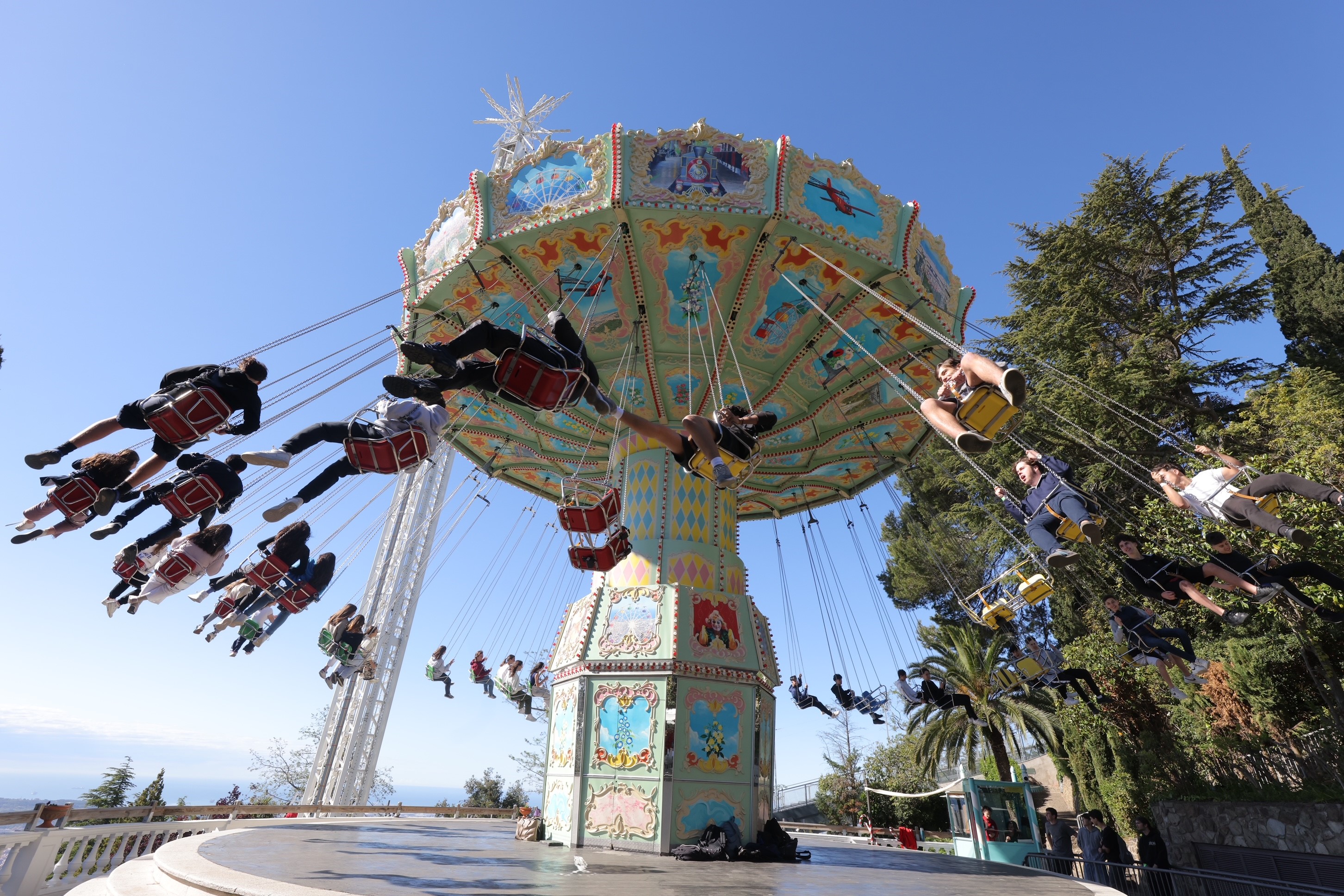
Fisidabo turns the rides and attractions at the park into spaces for physics experiments for students from 58 schools

The meeting is part of the STEAM programme, an initiative by BSM and the Polytechnic University of Catalonia - BarcelonaTech (UPC) to promote science vocations among students, particularly girls

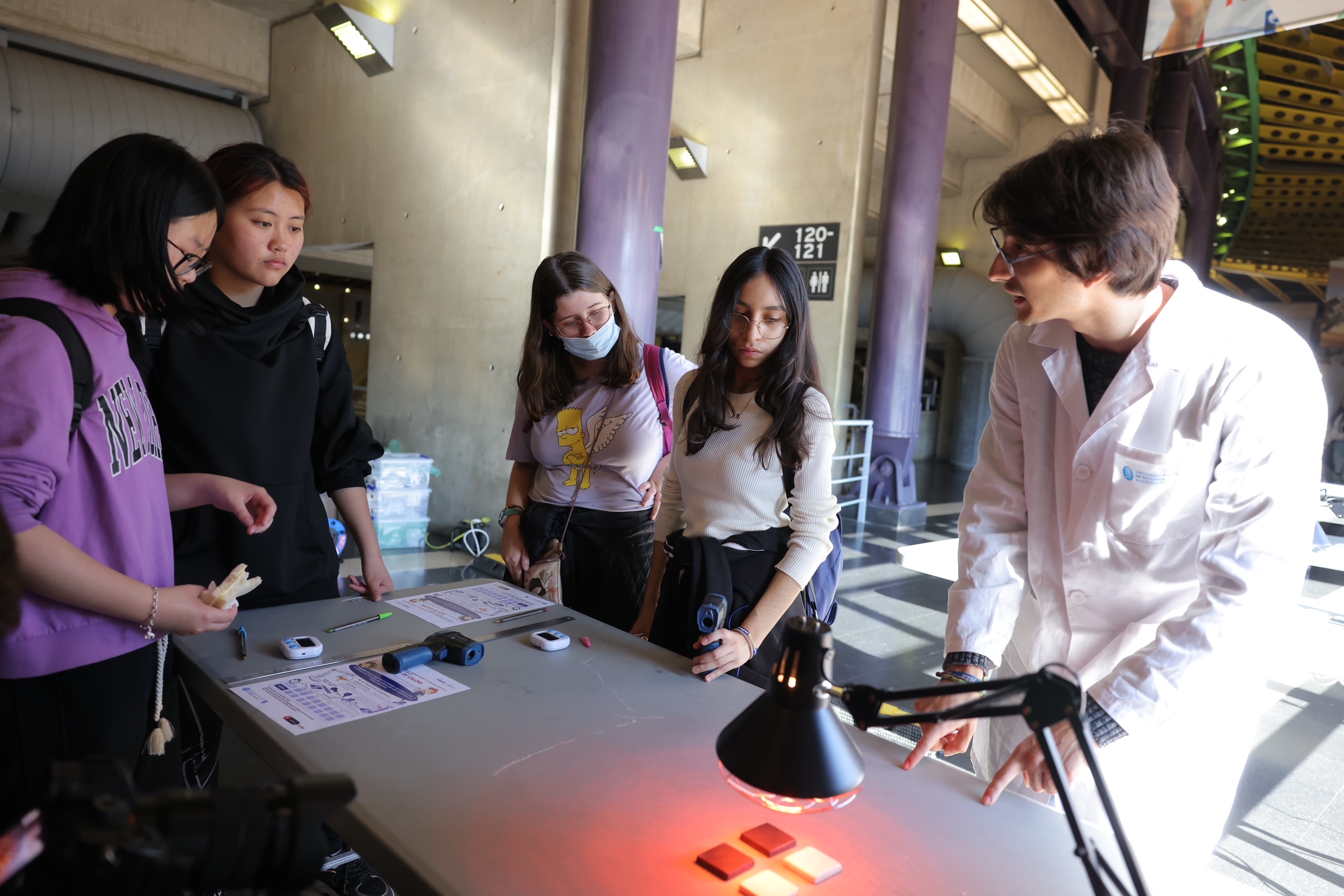
Tibidabo turned its rides and attractions into a scientific testing bed this morning as it hosted the 7th edition of Fisidabo, a science morning forming part of the STEAM programme organised by BSM and the Polytechnic University of Catalonia - BarcelonaTech (UPC) to promote science vocations among students, particularly girls. The activities were coordinated by over 50 students from the Engineering Physics degree at the Barcelona School of Telecommunications Engineering (ETSETB).

Over 2,100 students in their 4th year of secondary school or sixth form from 58 schools in Barcelona and its metropolitan area, Girona and Tarragona, made their way around the twenty experiments at the event, learning about taking measurements, calculations and applying physics knowledge gained in the classroom to resolve the activities. 

During the morning, Fisidabo challenged students to calculate the acceleration, speed and energy of the park’s roller-coaster, study the forces and movement at work in the pirate ship ride, and measure the speed of the Cuca de Llum funicular to get to the top of the mountain, plus other tests. 

Fisidabo was the final event in a series of activities at the Tibidabo Amusement Park to promote science dissemination among school students after a training event last week where 38 teachers learnt how to use mobile phones to conduct physics experiments. 

Balance of the STEAM programme during the 2023-2024 school year

The seventh edition of Fisidabo rounds off the STEAM programme for the 2023-2024 school year, after primary, secondary and sixth form students discovered the secrets of physics, chemistry and technology in iconic locations in Barcelona such as Park Güell, the Parc del Fòrum, the Palau Sant Jordi and the Tibidabo Amusement Park.

The BSM and UPC project to promote science vocations has been running for six years, becoming a firm fixture on the city’s academic calendar and achieving substantial participation. The events organised during the 2023-2024 school year brought together over 6,800 students. 
Over 2,100 students in their 4th year of secondary school or sixth form take part in the 7th Tibidabo Science Meeting
Read the note
Fecha de publicación
News or press release?
Press release
Etiqueta
Imagen destacada
Imatge
Cuerpo

Twenty bioregeneration gabions have been installed over the last few days, designed to promote the recovery of marine ecosystems

The trial will gauge the suitability of these structures for restoring ecological functions in marine environments such the Port Olímpic

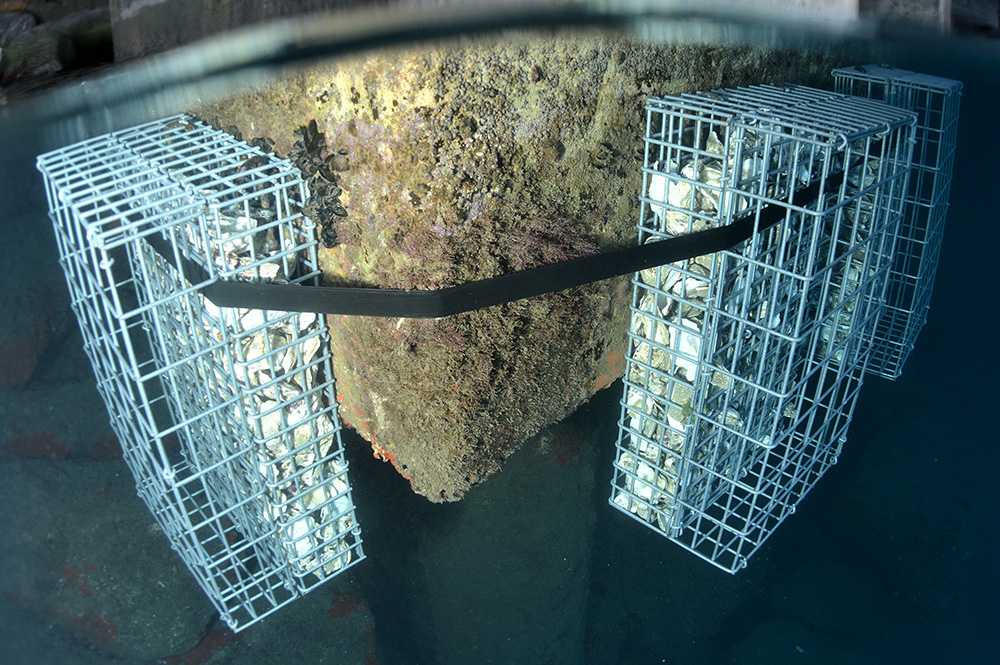
The Port Olímpic is making progress in its project to promote biodiversity in its seabed by installing approximately twenty biohuts, which are bioregeneration gabions designed to foster the presence and development of young fish, typically found in port areas.

The structures have been set up on the water’s surface at the Port Olímpic, along the Sea Wall and at the Moll de Marina wharf. Created using uneven mollusc shells, these spaces offer shelter from predators and also provide nutrients. 

The project creates a nature-based solution to bring back marine flora and fauna. There are currently more than 5,000 biohuts like the ones at the Port Olímpic distributed around Europe’s coasts, where over 500 different species have been observed. 

The pilot trial is one of the measures adopted by the Port Olímpic to foster the recovery of its seabed. The project is in addition to the greening strategy being carried out in collaboration with Zoo de Barcelona. In front of the Sea Wall, there is currently a large bioregeneration area of 1,300 m2 made up of reefs that foster seabed biodiversity and help to improve the quality of the water. 

Port Olímpic as a leader in sustainable management

The pilot project to promote the presence of young fish is another step by the Port Olímpic in its efforts to become a role model in sustainable management. In terms of energy, the large solar pergola that will cover the new restaurant deck and generate 825,000 kWh a year is set to be one of the most iconic elements of the site, making the Port Olímpic one of the leading kilometre-zero shared consumption initiatives in Barcelona. 

The Port Olímpic will also be a pioneer in promoting sustainable sailing thanks to the installation of two ultra-fast charging points for electric boats, making it the first port in Spain to offer this service using green energy produced and stored at the port itself. 

The project to transform the Port Olímpic also includes environmental measures such as improved insulation in new buildings and the application of circular strategies, including the use of sea water for cooling the air-conditioning systems at Moll de Mestral wharf premises, avoiding the heat island effect. 

Port Olímpic launches a pilot project to foster biodiversity on its seabed 
Read the note
Fecha de publicación
News or press release?
Press release
Etiqueta
Imagen destacada
Imatge
Cuerpo

The new attraction's installation is nearing completion. At 52 metres high, it will offer a 360º panoramic view of Barcelona

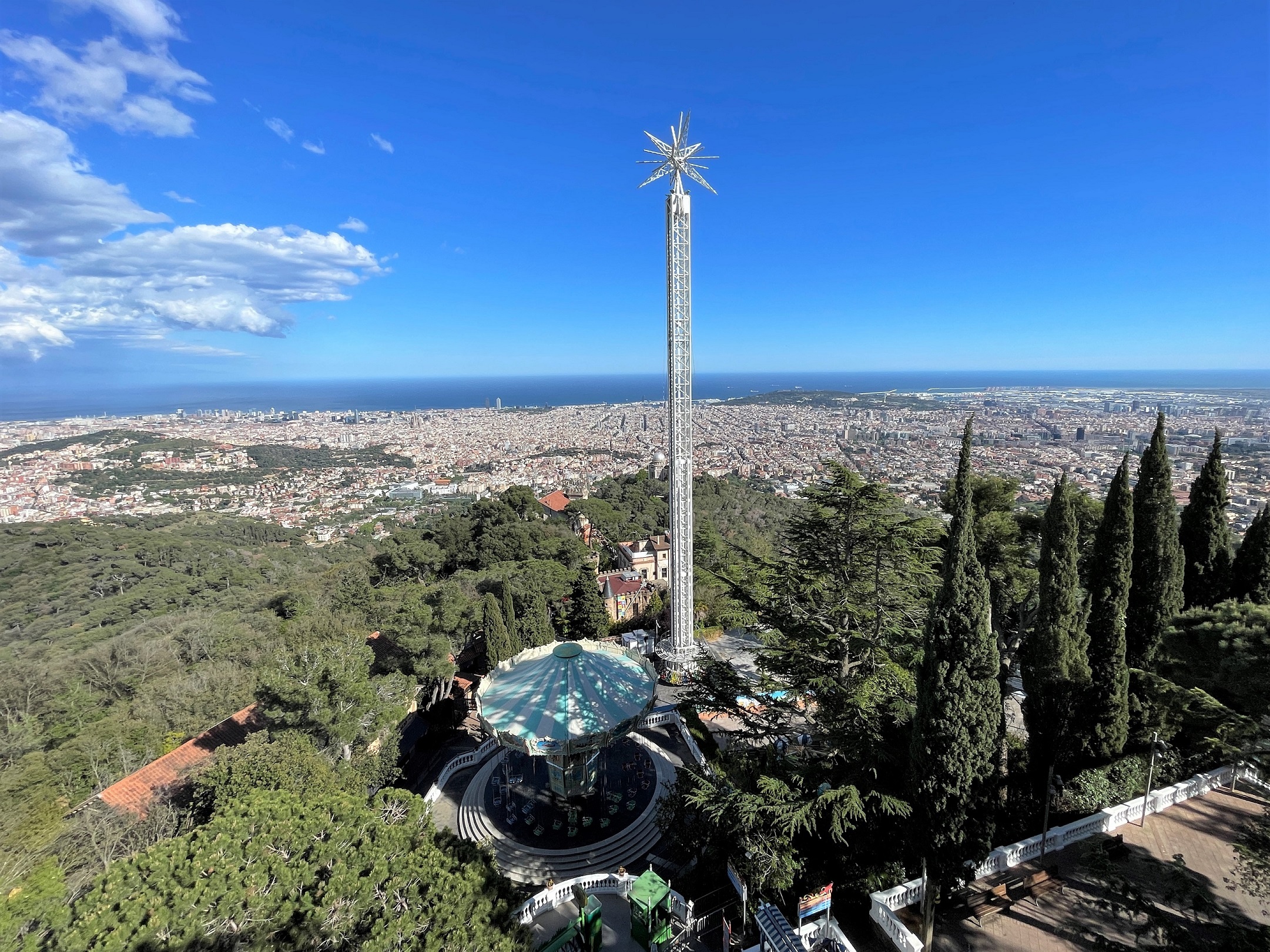
Tibidabo's much-awaited new attraction for the 2024 season now has a name. The new free-fall ride is called Merlí [Merlin], and it will enter service at the end of May. The Amusement Park finished its assembly this week, so park visitors can already see this new feature on Barcelona's skyline. 

The drop tower's name is the result of a competition among workers at BSM, the company responsible for managing Parc d'atraccions Tibidabo. Its inspiration comes from the attraction's theme and design, as it looks like a magic wand with a star at its tip.

The 52-metre-high ride will also offer a magical experience, taking visitors to a height of 500 metres above sea level, where they can enjoy the best views of Barcelona before experiencing the drop.  

Merlí will be one of Tibidabo's main attractions for the 2024 season, during which the park hopes to surpass 700,000 visitors, with 22,500 families as members of Tibiclub. 

The start of a season full of new features

While awaiting the opening of Merlí, the Park began its 2024 season on 2 March, with various new features, including CreaTibi, by Lego Education, with the collaboration of Abacus Educació. During the first few weeks of the season, children have been able to experiment with robotics and science, in a project inspired by the first woman to reach the moon.

The Park has also renovated its viewpoints and the experience of its classic Hotel 666 horror-show attraction. It also recently inaugurated Espai 666, where visitors can meet, and be photographed with, the protagonists of this terrifying accommodation. 

In addition to its new experiences, Tibidabo is continuing with its commitment to sustainability, solidarity and education, with the aim of becoming much more than an amusement park. Some of the projects which demonstrate this ambition include its alliance with Unicef to defend the rights of children all over the world, celebrating solidarity days in collaboration with organisations such as Aprenem Autisme [Learning about Autism] and Fanoc [Large Family Association of Barcelona], among others; as well as its education programme, with new editions of Fisidabo and Mes de la Física [Physics Month], jointly organised with the UPC in order to foster children's vocations in science and technology. 

In regard to sustainability, the Glow Worm train is becoming established as the emblem for the Park's environmental strategy, and a leading example of collective sustainable mobility. Tibidabo's funicular railway is expected to reach a total of 900,000 journeys this year. 

Tibidabo's drop-tower ride is called Merlí [Merlin], and it will be opening at the end of May
Read the note
Fecha de publicación
News or press release?
Press release
Etiqueta
Imagen destacada
Imatge
Cuerpo

The regatta was organised by the Catalunya La Pedrera Foundation and the Veles per l’Alzheimer Association. It brought together 200 participants and it is the only sailing event in which the crew is made up of people with Alzheimer's or other forms of dementia

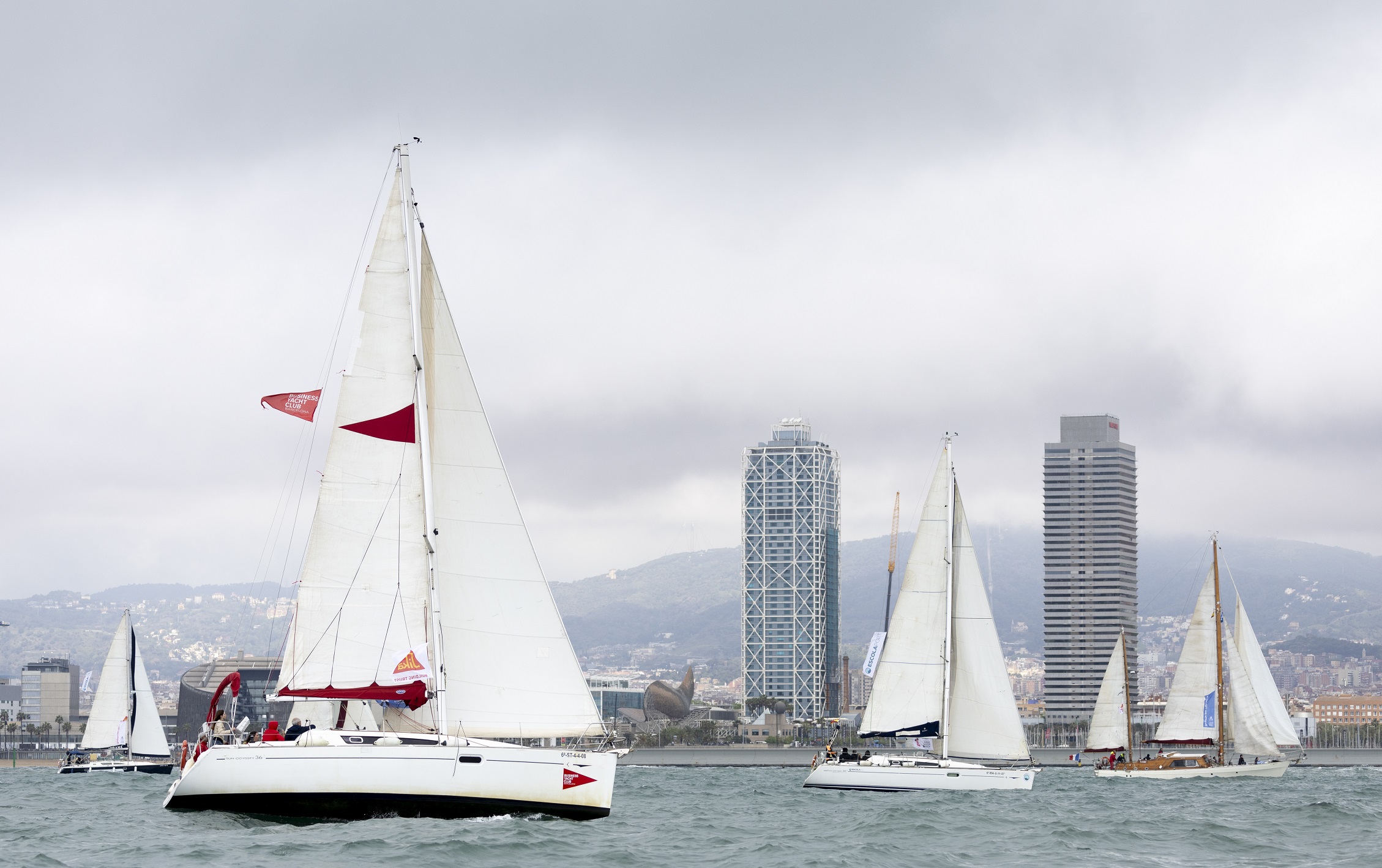
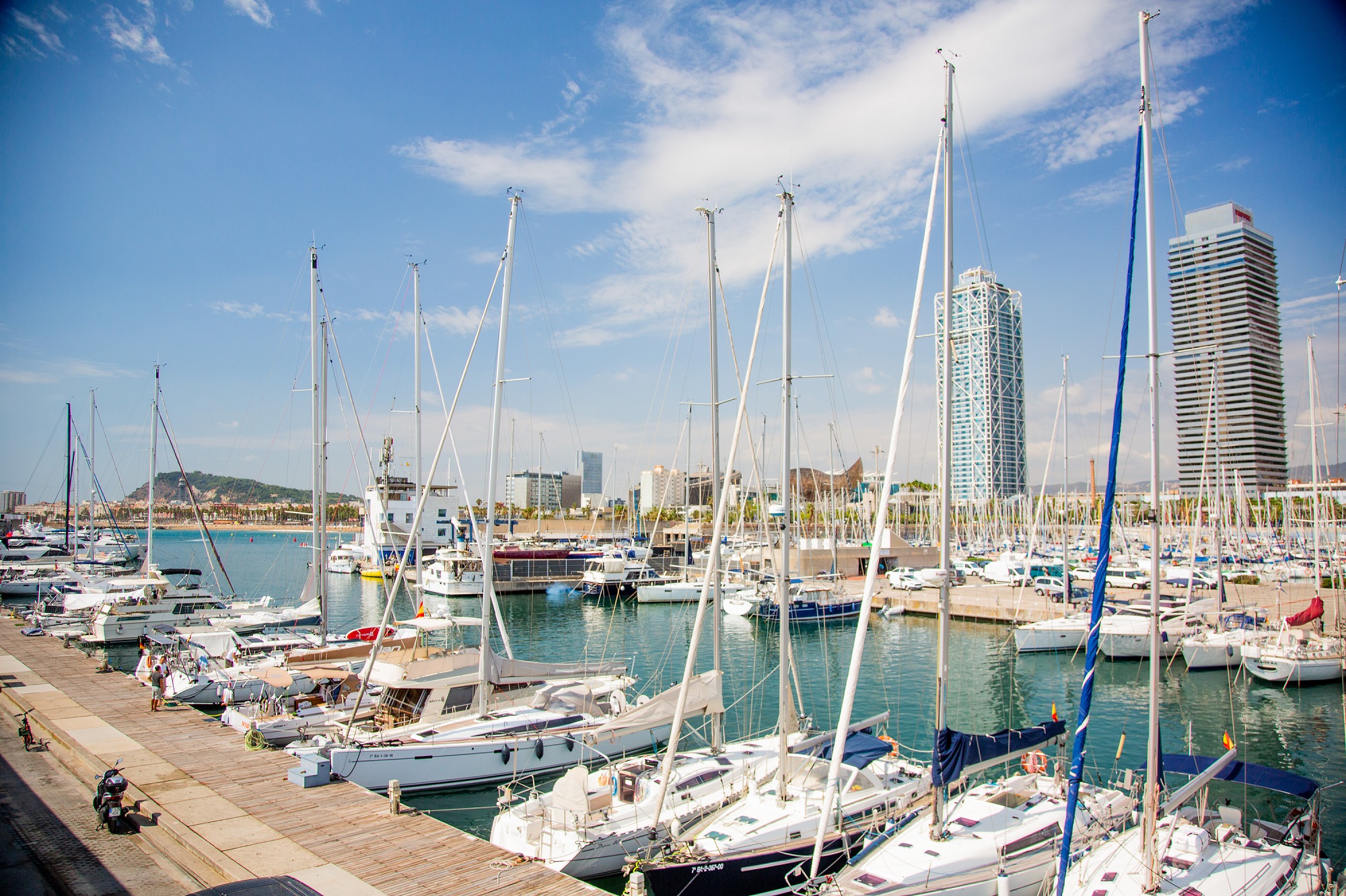
Over 200 people suffering from Alzheimer's or other forms of dementia took part in the second edition of the Regatta for Alzheimer's, a sailing race organised by the Catalunya La Pedrera Foundation and the Veles per l’Alzheimer Association. The event, which was held today in Port Olímpic, is the only sailing race in the world where the crew is made up of people suffering from this illness. 

The event's first meeting in Port Olímpic doubled its level of participation, thanks to the presence of crews and families from all over Catalonia, who are taking part in the Catalunya La Pedrera Association's memory-reinforcement programme. A total of 31 sailing boats set out from Port Olímpic, accompanied by catamarans, where a further 110 people with reduced mobility were able to follow the regatta. 

The regatta's second edition included the presence of organisations involved in defending the rights of people suffering from Alzheimer's, from both Spain and countries such as the United Kingdom, Italy and Brazil, underling the aim of reproducing the event in other parts of the world. 

At the end of the event, Olga Cerezo, the director of Port Olímpic, underlined the Port's intention of becoming “a venue for the teaching and practice of sailing for everyone. Events such as the Regatta for Alzheimer's are in line with this ambition, making it possible for us to progress towards accessible, inclusive and socially-aware sailing for all groups of people”. 

Fostering sailing is one of Port Olímpic's main strategic activities, with an extensive calendar of both recreational and competitive regattas, thereby helping to promote the practice of sailing. In this regard, the modernisation and improvement of the Municipal Sailing Centre (CMV) will make it possible to expand its services, turning it into a leading sailing centre that can teach and provide access to sailing for the general public, especially young people. 

Port Olímpic is promoting inclusive sailing by hosting the second Regatta for Alzheimer's
Read the note
Fecha de publicación
News or press release?
Press release
Etiqueta
Imagen destacada
Imatge
Cuerpo

Testing is being conducted in the BSM Plaça Navas car park and will be used to assess the performance and feasibility of the systems

Two technology solutions are being trialled, resulting from the call from Ajuntament de Barcelona and Barcelona de Serveis Municipals (BSM) through the InnovAcció 2030 programme

Endolla Barcelona, the electromobility network operated by Barcelona de Serveis Municipals (BSM), has begun testing a mobile electric vehicle (EV) recharging robot and an economical and low-maintenance solution. The two technology solutions are from the call from Ajuntament de Barcelona and Barcelona de Serveis Municipals (BSM), through the InnovAcció 2030 programme, to meetchallenges for the expansion of electromobility in the city. 

Both solutions are being tested in the BSM Plaça Navas car park, in the Poble-sec neighbourhood. BSM chose the car park to test innovation projects in mobility. 

The execution of these two projects, selected through a public innovation competition, has an overall budget of 160,000 euros. 

An EV charging point which moves around the car park

One of the prototypes being tested is ZIGGY, a robotic mobile EV charging platform designed for charging electric vehicles in car parks. The solution was developed by EV Safe Charge, a Californian start-up offering fast-charging solutions for electric vehicles.

The unit can move around a car park, providing service for various parking spaces. The solution offers flexible use for short and medium-stay car parking spaces. 

During the trial period, this robotic mobile unit has been added to the Endolla Barcelona network and is being used by a group of people who usually charge their electric vehicles at the BSM Plaça Navas car park. 

A charging system that is cheap to produce and easy to maintain 

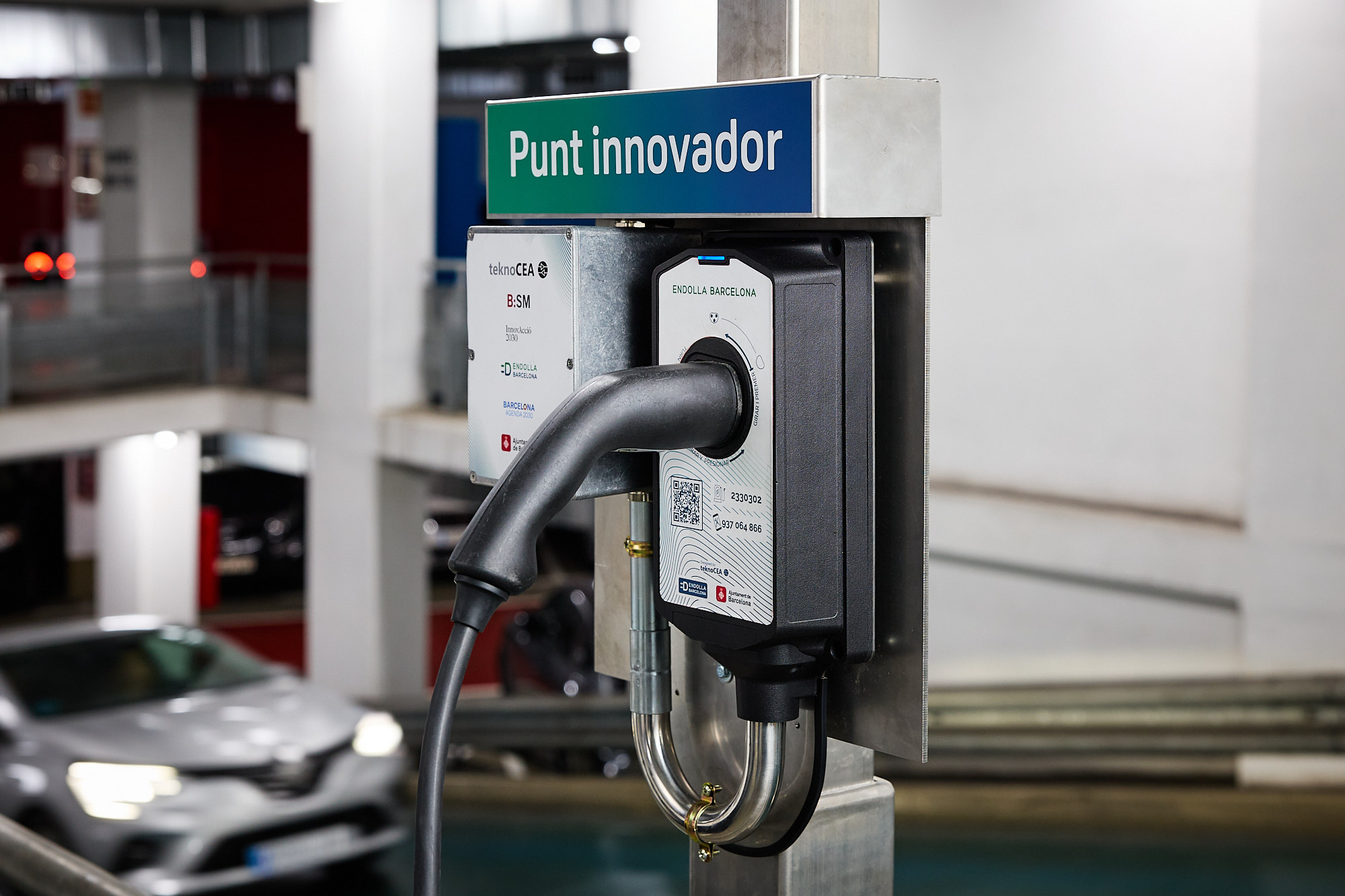
The other prototype being tested is an EV charging point designed to ensure cost-effective large-scale production and easy maintenance, thus addressing the electromobility challenge of achieving easy-to-produce and user-friendly charging infrastructure that could accelerate the take-up of electric vehicles in the city. 

The prototype was developed by teknoCEA, a Catalan spin-off from the Polytechnic University of Catalonia - Barcelona Tech (UPC) offering electric energy solutions. In this case, five units are being tested, also in the BSM Plaça Navas car park. As with the robotic mobile unit, the trial is being conducted with a small group of Endolla Barcelona users. 

Endolla Barcelona, the leading public electromobility network in the Spanish state    

Managed by BSM, Endolla Barcelona is the largest network of recharging points for electric vehicles in the Spanish state. The network currently has 1,000 recharging points around the city and 3,300 active users. The service is used nearly 14,000 times a month on average. 

Endolla Barcelona is implementing a capillary expansion strategy to spread to all the city’s neighbourhoods equally. The growth of the network, which has received EU Next Generation funds, continues to facilitate the switch to electric vehicles for people in Barcelona who have no access to recharging points at home or work.

Endolla Barcelona tests innovative mobile and low-maintenance electric vehicle charging solutions
Read the note
Fecha de publicación
News or press release?
Press release
Etiqueta
Imagen destacada
Imatge
Cuerpo

The STEAM Anella morning, organised by Barcelona de Serveis Municipals (BSM) and the Polytechnic University of Catalonia – BarcelonaTech (UPC), brought science and technology to second-year and third-year secondary school students from 29 schools

The Palau Sant Jordi was the setting for some 15 activities and shows about the effects of climate change, technology and electromobility, among other subjects

More than 2,100 second-year and third-year secondary school students took part in the STEAM Anella event, the science and technology morning organised by Barcelona de Serveis Municipals (BSM) and the Barcelona East School of Engineering (EEBE) at the Polytechnic University of Catalonia – BarcelonaTech (UPC), which took place today at the Palau Sant Jordi. The event brought together students from 29 schools in Barcelona and its metropolitan area, as well as the Maresme and Gironès counties. 

STEAM Anella transformed Palau Sant Jordi into a science lab with some 15 activities and shows that gave students the chance to experiment with the increase in temperature generated in cities by the heat island effect and seek solutions to mitigate the effect; discover how the brain reacts to magic tricks; build automatons to learn about design and technology; and understand how electric cars work with the e-Tech Racing team, comprising EEBE students. 

The event also featured dynamic activities such as an escape room to explain the role women scientists played in developing the theory of relativity, as well as music and dance linked to themes like Newton's laws of motion. 

Science at one of Barcelona’s most iconic venues

The BSM-UPC project to promote careers in science has been running for six years now and during this time it has achieved high levels of participation: the five sessions held in 2023 were attended by more than 7,500 students. 

After visiting Zoo de Barcelona, Park Güell, Parc del Fòrum and Palau Sant Jordi, the final STEAM event for the 2023-24 school year will be taking place at Tibidabo Amusement Park on 8 May. 

More than 2,100 secondary school students take part in the STEAM science event at Palau Sant Jordi 
Read the note
Fecha de publicación
News or press release?
Press release
Imagen destacada
Imatge
Cuerpo

The aim of the initiative is to try out a natural filtering system in order to reuse the surplus water left over from cleaning the Zoo’s facilities 

Today and tomorrow, the University of Barcelona Solidarity Foundation and the Zoo will be hosting a working day which will be attended by the various institutions involved in the project 

Zoo de Barcelona is participating in the project “Water Resources Management in Zoo Facilities – FIT4USE Water Recirculation Technology” financed by the European Union through the LIFE project. The aim of the project, coordinated by the Technical University of Liberec (TUL) (Czechia, the Czech Republic)), is to find ways to ensure zoos optimise their use of water, an essential resource in the day-to-day running of their facilities. 

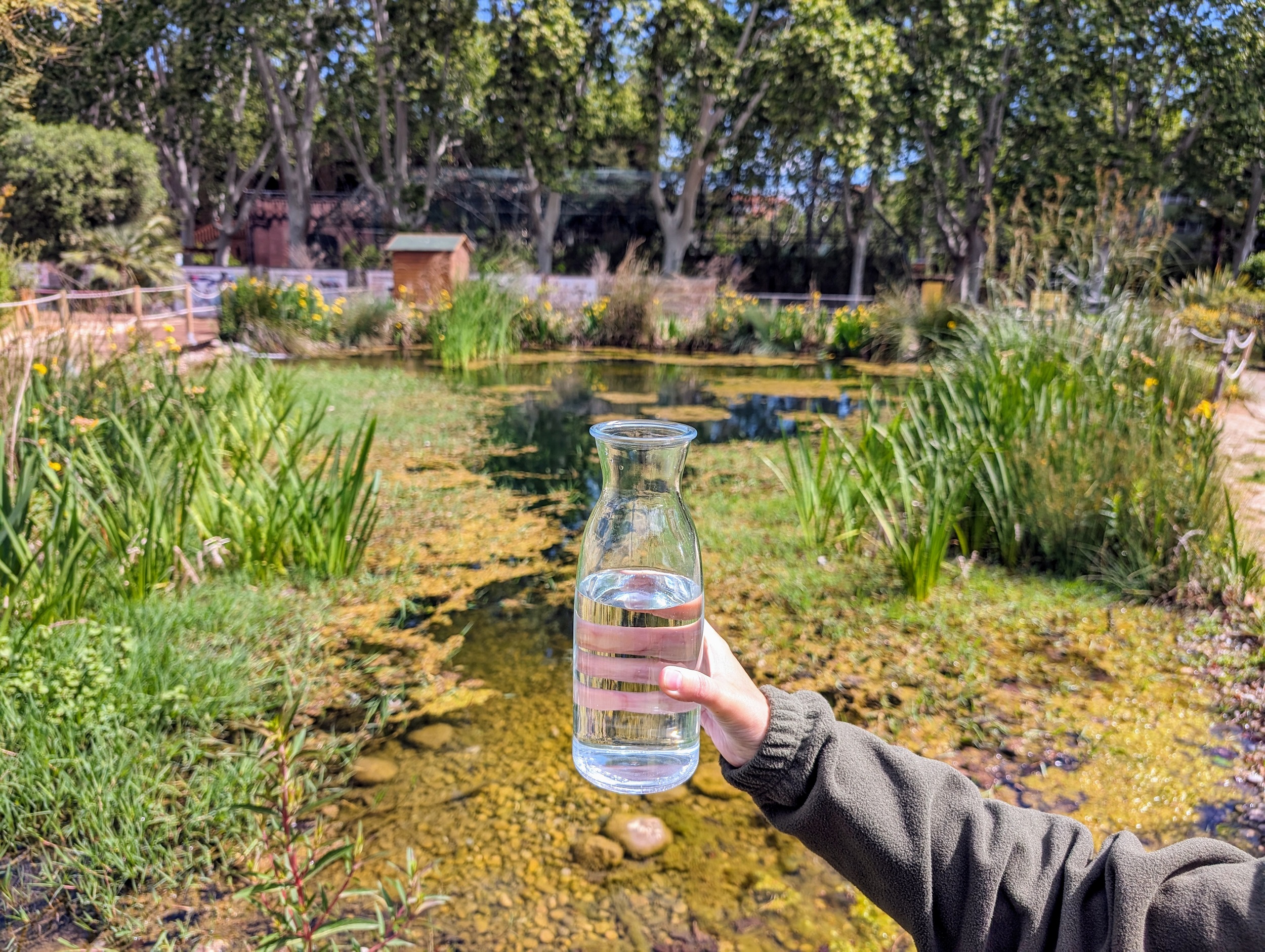
Within the framework of this project, Zoo de Barcelona will be trying out a new system for reusing surplus water left over from cleaning its facilities. This is a plant fitted with natural filters through which plants and micro-organisms remove the nutrients and pollutants from the water. 

Once the water has been treated, it is put back to use in the Zoo for irrigation, cleaning and refilling naturalised ponds, among other uses. 

The pilot plant, which will enable the regeneration of this surplus cleaning water, will be located outside the Doñana installation and will be up and running in the summer of 2025. What’s more, in order to publicise the Zoo's participation in this LIFE project and with the aim of raising public awareness of the role played by wetlands, this installation will be open to the public and will feature information panels. 

Meeting of the various institutions involved in the project in Barcelona 

Also participating in this LIFE project, which has a total budget of €2.7 million, are the University of Barcelona Solidarity Foundation; the University of Girona (UdG), through the Chemical and Environmental Engineering Laboratory (Lequia) research group; Liberec Zoo (Czechia); and the Photon Water Technology group, experts in water treatment systems. There is also a group of external experts involving, among others. the Valencia Biopark and the Cabárceno Nature Park. 

Today, 25 April, the UB Solidarity Foundation will be hosting a working day with representatives from the different institutions involved in the project. And tomorrow, the same representatives will be meeting at Zoo de Barcelona. You can check out the meeting programme at this link.  


Life 4 zoo


Zoo de Barcelona takes part in a LIFE water re-use project
Read the note
Fecha de publicación
News or press release?
Press release
Etiqueta
Imagen destacada
Imatge
Cuerpo

BSM, as the company responsible for managing the venue, will be offering the Parc del Fòrum to the Barcelona East School of Engineering (EEBE) e-Tech Racing team to create the first single-seater in Spain equipped with engines designed and produced by the students themselves 

Parc del Fòrum and the electromobility network Endolla Barcelona are the university team’s sponsors

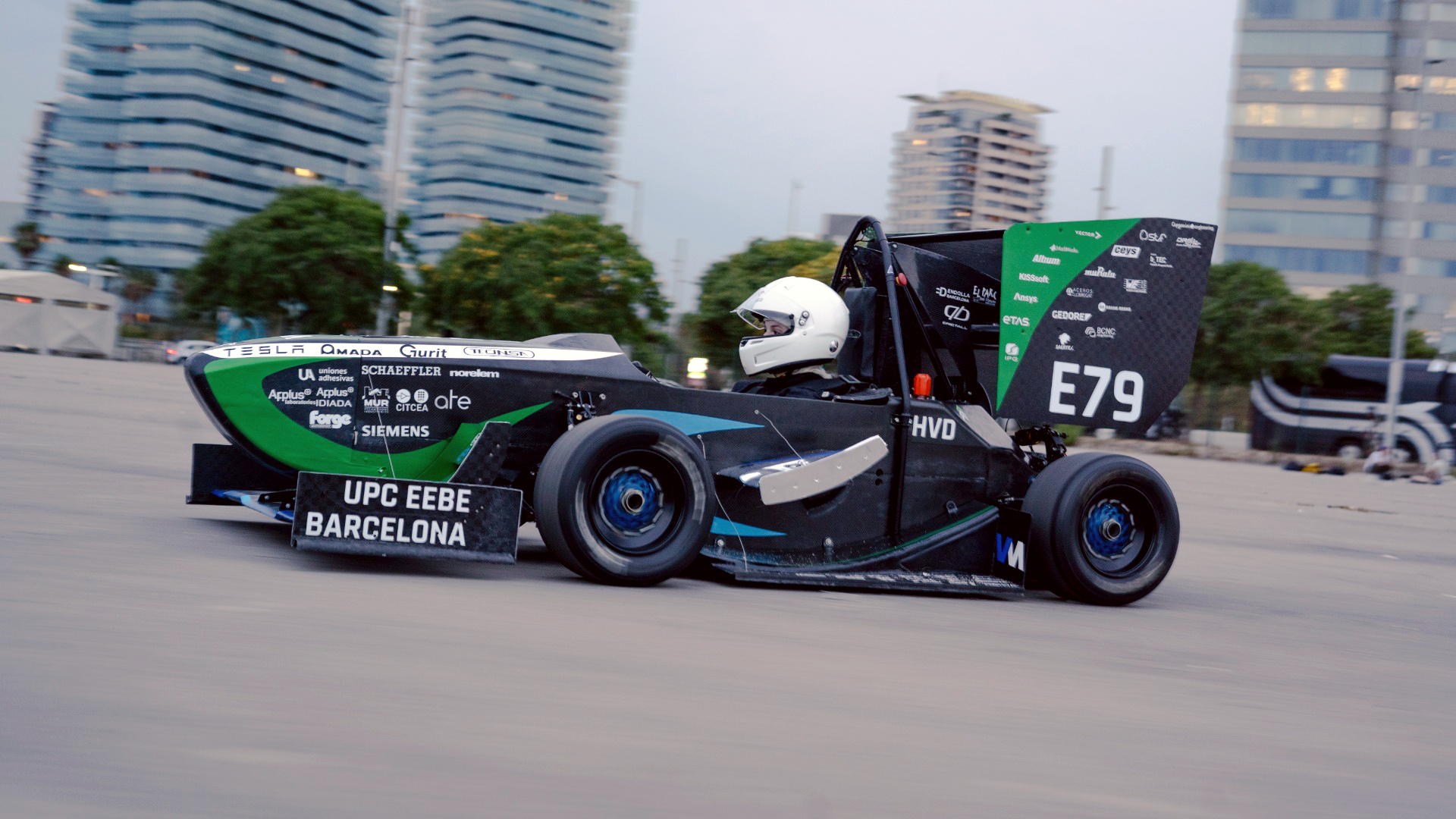
Parc del Fòrum will be the testing ground for the new electric vehicle being developed by the e-Tech Racing team, comprising students of the Barcelona East School of Engineering (EEBE) at the Polytechnic University of Catalonia – BarcelonaTech (UPC). This year the university team is creating a new model that will make it the first team in Spain and the second in Europe to fit its single-seater with engines that are fully designed and produced by the students themselves. 

Use of Parc del Fòrum is included in the agreement signed between BSM and the UPC, which also provides for sponsorship of the team by the Park and the electromobility network, Endolla Barcelona. 

This alliance dates back to 2018 and forms part of Parc del Fòrum’s action plan to generate a social return in the local area in which it is located. In this case, through collaboration in one of the projects emerging from the UPC Diagonal-Besòs Campus. 

Over the course of the year, Parc del Fòrum will also head a series of social initiatives aimed at fostering equal opportunities and the participation of local residents from the Besòs i el Maresme neighbourhood in the activities it hosts.

Commitment to electromobility as a mechanism for improving quality of life in the city

Sponsorship of the e-Tech Racing team is part of BSM’s commitment to developing and promoting sustainable mobility through projects such as Endolla Barcelona, Spain's biggest public electromobility network. 
Endolla Barcelona currently has 1,000 charging points installed across the city and more than 3,300 active users with an average of 14,000 recharges per month. 

Endolla Barcelona is pursuing a capillary expansion strategy to ensure uniform coverage across all Barcelona’s neighbourhoods. The growth of the network, which has received EU Next Generation funds, continues to facilitate the switch to electric vehicles for people in Barcelona who have no access to charging points at home or work.

University innovation in electromobility

In recent years, the UPC e-Tech Racing team has participated in competitions such as Formula Student Spain, Formula Student Netherlands and Formula Student Germany, which have put the reliability, endurance and speed of Wall-e, the student's latest electric vehicle, to the test. 

The new prototype will keep Wall-e’s emblematic aspects, such as collaboration with Tesla for the use of the manufacturer's batteries, and will incorporate new aerodynamic and design features that will be put to the test at Parc del Fòrum.

Promoting careers in science and technology

As well as sponsoring the e-Tech Racing team, BSM and the UPC help to organise the STEAM programme for promoting careers in science and technology among secondary school students, particularly girls. 

In 2023, more than 7,500 students participated in the five STEAM events that were held in iconic venues in Barcelona such as Parc del Fòrum, Palau Sant Jordi, Tibidabo Amusement Park, the Zoo and Park Güell. The high levels of participation and the educational aspect of the programme have made it an important fixture on the city’s science and education calendar. 

Parc del Fòrum collaborate in developing the electric competition vehicle created by UPC students 
Read the note
Fecha de publicación
News or press release?
Press release
Etiqueta
Imagen destacada
Imatge
Cuerpo

The species, native to Western Sahara, was on the verge of extinction due to excessive hunting and it is now classified as vulnerable thanks to the conservation programmes of the Spanish National Research Council (CSIC) and the European Association of Zoos and Aquaria (EAZA) 

Zoo de Barcelona plays a very active role in both programmes, providing technical and veterinary advice and producing educational material for local communities 

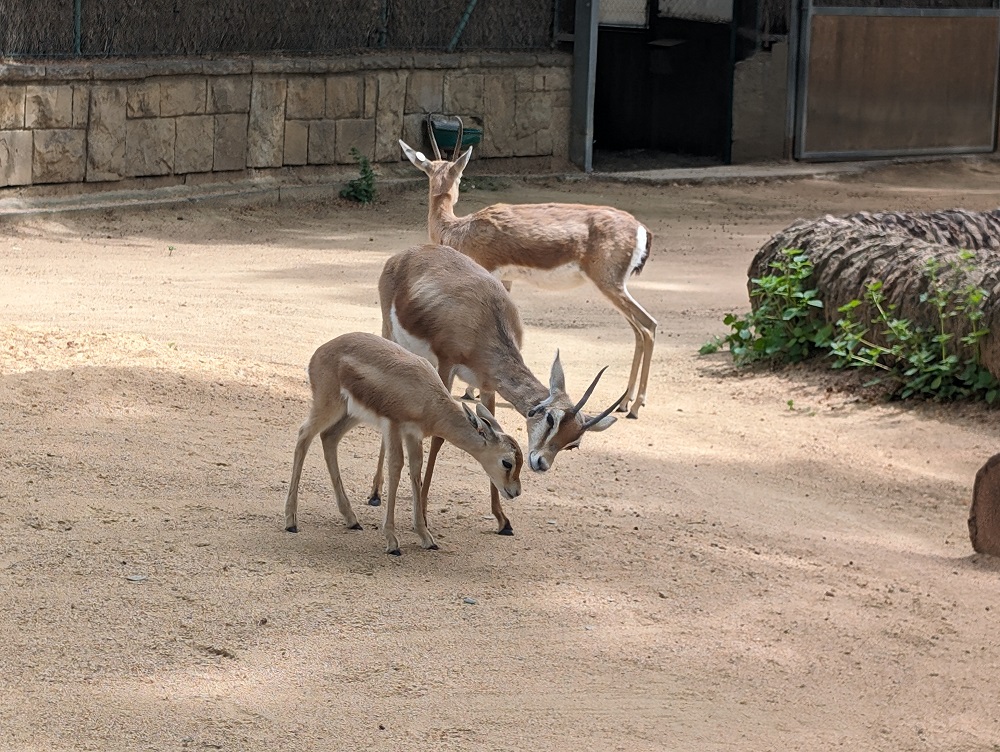
Since the start of the year, a further four dorcas gazelles (Gazella dorcas) have been born at the Zoo de Barcelona. Three males and one female, all healthy and now living with the rest of the group. 

The dorcas gazelle, native to the Western Sahara, was on the verge of extinction due to excessive hunting in the places it inhabits. Now, thanks to ongoing conservation programmes that the Zoo plays a very active role in, the species is classified as vulnerable, according to the International Union for Conservation of Nature (UICN). 

In this context, the Zoo de Barcelona’s director, Sito Alarcon, emphasised that “the birth of four dorcas gazelles is a great achievement for the conservation programmes of this species and reflects the efforts made by the Zoo and other scientific institutions to protect and restore biodiversity in a region that is gravely threatened by human pressures and the effects of climate change”. 

Zoo de Barcelona is a partner in the dorcas gazelle reintroduction programme 

The dorcas gazelle has always been hunted by the nomadic populations of the Western Sahara who use its meat as food. In order to prevent its extinction and that of other Saharan species also under threat, the Saharan Fauna Rescue Park was created in Almeria in 1971. 

Thanks to the work carried out by this centre, part of the National Research Council (CSIC) Arid Zones Research Station (EEZA), and the support of Barcelona and other European zoos, over the course of the past few years, it has been possible to reintroduce dorcas gazelles in certain parks and reserves in North Africa.

Between 2006 and 2009, 30 dorcas gazelles were reintroduced in the Guembeul Nature Reserve in Senegal; and since 2009, the Zoo de Barcelona Foundation has been working in partnership with the CSIS to protect the reintroduction area and to monitor the individuals released into the wild with the aim of undertaking actions that will once again enable this species to survive in its natural habitats.

The Zoo is also providing funding and veterinary and educational advice to Senegal, one of the native countries of this species which inhabits the deserts and steppes of North Africa, Arabia and the Near East. 

The Zoo is also taking part in the ex situ EEP dorcas gazelle conservation programme run by the European Association of Zoos and Aquaria (EAZA). 
 

More dorcas gazelles born at Zoo de Barcelona
Read the note
Fecha de publicación
News or press release?
Press release
Etiqueta
Imagen destacada
Imatge
Cuerpo

The Moll de Mestral dock will host talks, exhibitions and shows for all audiences that show science's contribution to responsible ocean management and the deep connection between the sea and Mediterranean culture

The UNESCO conference dovetails with the final phase of the Port Olímpic transformation, which aims to position the Port as a space for promoting and disseminating activities linked to the blue economy, the nautical sector and marine ecosystem conservation

The Port Olímpic is getting ready to become one of the settings for the Satellite Events of the UNESCO Ocean Decade Conference, the international summit that will gather the international science community in Barcelona from 8 to 12 April to address the challenges that need to be tackled in order to achieve responsible ocean management by 2030. The renovated Moll de Mestral dock will host a series of talks and social and cultural events and activities designed to raise citizens’ awareness of our deep connection with the ocean. 

The Espai Mestral, the events space in the Port Olímpic’s blue economy hub, will host part of the programme of talks and panel discussions, which will begin on 8 April with a series of talks promoted by the Institute of Sea Sciences (ICM/CSIC) and the Basque Country Association for UNESCO (UN Etxea) about gender equality in ocean science and the scientific contributions to ocean research made by women.

The morning of the second day, the Port Olímpic will host the debates organised by Mission Atlantic, National Oceanic and Atmospheric Administration and Peace Boat US about how innovation and marine policies can contribute to restoring marine ecosystems; the possibilities afforded by collaboration between the public administration, the scientific community and society to carry out the initiatives proposed in the Ocean Decade plan; and future generations of scientists’ view of sustainable ocean management. 

Taking place in the afternoon is the symposium ‘Conservation and Protection of the Oceans: A Shared Responsibility’ co-organised by the Barcelona Nautical Capital Foundation and Barcelona Global, which will bring together port and marine authorities and representatives to look at how urban infrastructures might contribute to protecting marine ecosystems and what strategies and innovations enable us to move towards the decarbonisation of the nautical sector. One of the panel discussions will feature Olga Cerezo, director of the Port Olímpic, who will be talking about how the Port Olímpic’s transformation is contributing to protecting the marine environment. 

Culture and leisure to explore the relationship between society and the sea

In addition to the programme of talks, the Port Olímpic will be hosting exhibitions and shows open to the public which will highlight the deep connection between the sea and Mediterranean culture. These activities will begin the weekend prior to the Ocean Decade Conference. 

Between 6 and 14 April, the Moll de Mestral dock will be the setting for the outdoor exhibition Parlem del mar per parlar de nosaltres (Let's Talk about the Sea to Talk about Ourselves), organised by the Barcelona Nautical Capital Foundation, which aims to show the impact of the sea on innovation and sustainability, and on Catalan culture, sport and cuisine. Raising awareness of the core role oceans play in our lives is also at the heart of the family show ‘SalvaMars Cirkus’, which will be taking place on Sunday 7 April. Through the medium of theatre, it shows the problems caused by plastic in the sea and the effects of climate change. 

The Port Olímpic programme during the Ocean Decade Conference also includes the UNESCO Ocean&Climate Village, which features the interactive exhibition ‘I, the Child of the Ocean’ by the European platform EU4Ocean, showing from 6 to 12 April, along with an educational experience for discovering the relationship between the climate and the conservation and biodiversity of oceans. 

A port committed to the dissemination of marine knowledge and culture

With the programme of activities linked to the Ocean Decade Conference, the Port Olímpic is demonstrating its commitment to becoming a hub that promotes activities and events linked to the blue economy, the nautical sector and marine conservation with the capacity to mobilise the sector's key agents and to raise citizens’ awareness of the need to responsibly manage marine ecosystems. 

The Ocean Decade Conference is taking place during the final phase of the Port Olímpic transformation project. Visitors will be able to enjoy the renovated Plaça de Mestral, a new public space measuring more than 8,000 m2, which, together with the Sea Wall, will be home to more than 50 venues in Barcelona's first blue economy business centre. With this project, the Port Olímpic seeks to promote the growth of the sector. 

The business centre also features the Espai Mestral, an auditorium with a capacity for 170 people where the talks and panel discussions of the UNESCO event will take place, and a space that will play a key role in making the Port Olímpic a dynamic space for presenting innovations and promoting the growth of the blue economy and projects linked to the nautical sector and marine environmental management.    

The Port Olímpic is one of the settings for the scientific, social and cultural programme of the UNESCO Ocean Decade Conference
Read the note
Fecha de publicación
News or press release?
Press release
Etiqueta