Imagen destacada
Imatge
Cuerpo

Barcelona Zoo hosted a full morning of different biology activities organised by Barcelona de Serveis Municipals (BSM) and the East Barcelona School of Engineering (EEBE) at the Polytechnic University of Catalonia - BarcelonaTech (UPC) 

The next STEAM session is being held at Park Güell on 30 November, with children in their 5th and 6th years of primary school 

The aim of these sessions is to promote science and technology vocations, especially among girls, through workshops and activities based on STEAM (Science, Technology, Engineering, Arts and Maths) methodology

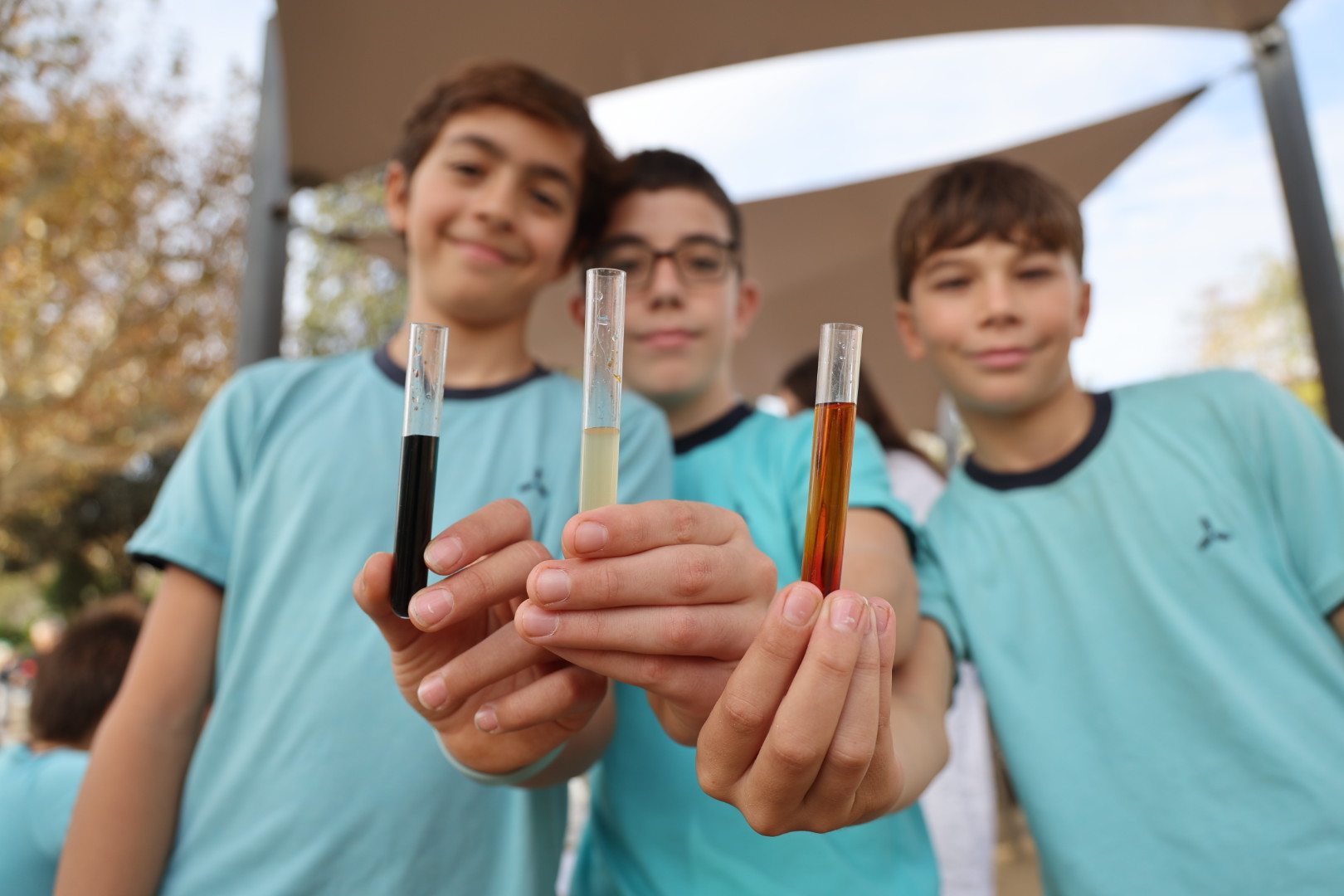
This morning, and for the second year running, Barcelona Zoo played host to STEAM Zoo, a series of activities relating to biology and aimed at students in their first and second years of secondary school.  In all, 640 youngsters from various secondary schools in Barcelona and the metropolitan area took part.

The students enjoyed four activities conducted by a team of educators at Barcelona Zoo, who worked together with teaching and research staff from the East Barcelona School of Engineering (EEBE) at the Polytechnic University of Catalonia - BarcelonaTech (UPC).

The first of these workshops, entitled “DNA in your hands”, saw students extracting DNA from a sample of strawberry cells, which they were also able to touch. The workshop “What are we eating?” consisted of a series of experiments which enabled the students to learn how we turn what we eat into energy. The third activity, “Interpreting what we think”, saw participants conduct live tests to find out how the body’s brain and muscles communicate with each other. Finally, in “Bionic hand” students learnt how we move our extremities.  

In addition, the students enjoyed a participatory show called “The three neurones”, where they learnt how the cells making up nervous tissue function.   

For the First Deputy Mayor and chair of the Barcelona Zoo Foundation, Laia Bonet, “STEAM meetings are a clear example of Barcelona’s commitment to science and its efforts to encourage science vocations among young people, particularly girls. The fact that the Zoo has hosted one every year also highlights the work it has done to become a leader in environmental education, science, the conservation of biodiversity and the promotion of values which are implicit in it”. 

Similarly, the director of the EEBE at the UPC, Adriana Farran, noted that “one of the aims of the UPC is to get science and technology out to society. We want children in their first and second years at secondary school to engage with science in a fun way, with this series of experiences we’ve designed especially for them, and in this magical and marvellous setting that is Barcelona Zoo”.

Park Güell becomes a new STEAM site for primary school students 

The next STEAM session being organised by BSM and the EEBE is at Park Güell on 30 November. This is the first time the park will be taking part in these activities, offering a programme of activities designed for children in their 5th and 6th years at primary school, a new age group included in the project. 

Through a variety of workshops and guided activities, the students will work on several curricular skills in the fields of mathematics, science, art and technology, while discovering the secrets of Gaudí and Modernista architecture. This initiative reaffirms Park Güell and BSM’s commitment by creating new experiences that ensure public enjoyment and educational use of this heritage site.

After that, on 20 March 2024 the programme will head to Parc del Fòrum, which will once again act as a large science and technology laboratory for students in their 4th year of secondary school or baccalaureate studies, topics that students in their 2nd and 3rd year of secondary school will also explore at the Palau Sant Jordi on 16 April.

STEAM activities this school year will end on 8 May 2024 at Tibidabo, and are expected to bring together 7,000 students in all.
STEAM Zoo brings together over 600 secondary school students
Read the note
Fecha de publicación
News or press release?
Press release
Etiqueta
Imagen destacada
Imatge
Cuerpo

BSM has begun the selection process for the three food shops that will complete the Port Olímpic's offer of culinary establishments

It has also authorised the tender process for the last planned restaurant, which will complete the ten food projects already awarded spots, maintaining the Port's commitment to culinary quality and variety

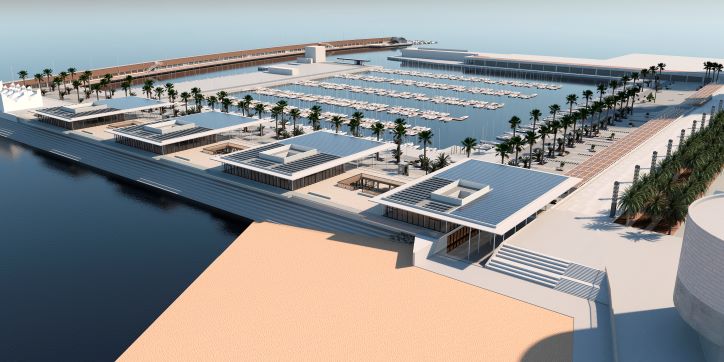
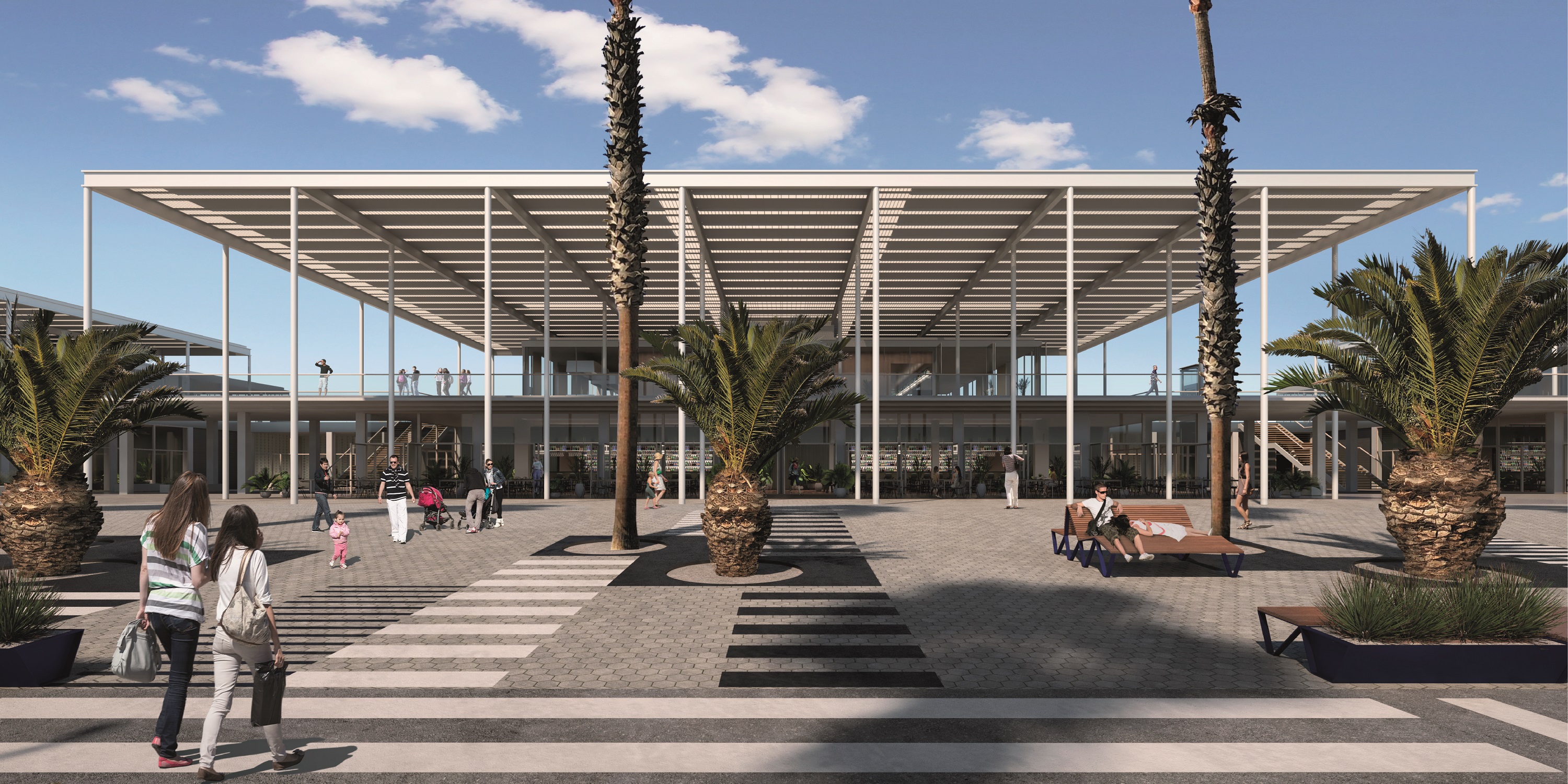
Work on the Moll de Gregal quay is progressing at a good pace, allowing a glimpse of the new appearance of the Culinary Balcony, an innovative architectural project that will increase the dialogue between the port’s interior, the beach and the city

This November, BSM has opened the tender for selecting the three food shops that will complement the eleven restaurants planned for this new food area. 

There will be three 85 m2 establishments located on the lower level of the Culinary Balcony, in the squares being built as spacing features between the various restaurants. The location of the shops will contribute to making these areas places for relaxation and leisure, complete with vegetation to enhance harmony with their surroundings. This is also where the steps and lifts connecting the city with the Port's interior will be located, thereby improving accessibility. 

In keeping with the architectural approach to the Culinary Balcony as a whole, the shops will all have a characteristic glass façade. This will ensure maximum visibility and transparency for the interior, fostering interaction with the Port's activities.  

The items that the shops will be selling are meant to complement the culinary approaches of the restaurants, with high-quality take-away products available to the sailing community, people who work in Port Olímpic and the surrounding area and those who are visiting the Port's facilities or enjoying nearby beaches. 

The idea is also for the shops in to be different from one another, in order to ensure diversity. This is why the tender provides for different categories of establishments: from a shop selling gourmet products to a grocery shop, an ice-cream shop and a patisserie, among others. The selection process prioritises, and will pay special attention to, the shop concept, the quality of the produce on offer and the ambiance of the interior design. As in the rest of the Port Olímpic project, opting for sustainability as a cornerstone of the shop's business activity will also be taken very much into account. 

In parallel with the food-shop tender, BSM has also begun the selection process for the last of the eleven planned restaurants. The process will be governed by the same criteria of excellence used in the previous tender: food quality, the style of cuisine and products, the design and ambiance of the interior and the sustainability measures established to reduce its impact on its surrounding area. 

In order to continue fulfilling its commitment to culinary diversity, the Port is seeking a restaurant that is completely different from the projects already awarded spaces, which range from market cuisine to establishments involving culinary innovation. 

24,000 m2 already undergoing transformation, which will improve the Port's relationship with the city and its beaches 

The advanced state of the work makes it possible to see the Culinary Balcony taking shape. This area, measuring 24,000 m2, will mark a new era in Port Olímpic's relationship with the city and its beaches. 

On the Moll de Gregal quay, under the scaffolding, you can already see the structure of the four upper restaurants. One of the project's most emblematic features, the planned photovoltaic canopies, will be built above them. The new entrance opening out onto Nova Icària Beach is also visible, as are the three vertical connection hubs where the squares/viewpoints, steps and lifts will be located, favouring links between the Port's interior, the beaches and the city. 

The construction work, with a budget of €20 million, is scheduled to finish in late summer 2024, coinciding with the start of the America's Cup youth and women's regattas, which will be held in Port Olímpic. 
 

Port Olímpic begins the final design phase for its Culinary Balcony 
Read the note
Fecha de publicación
News or press release?
Press release
Etiqueta
Imagen destacada
Imatge
Cuerpo

Bosch, Zunder, Wenea, Efimob and Spirii are joining the interoperability strategy launched by Barcelona de Serveis Municipals (BSM) to promote the use of electric vehicles and offer users the best experience 

Their inclusion means there will now be 10 electro-mobility suppliers integrated into the Endolla Barcelona network 

Customers of these operators will be able to see and use Endolla Barcelona’s charging points on their usual electromobility app  

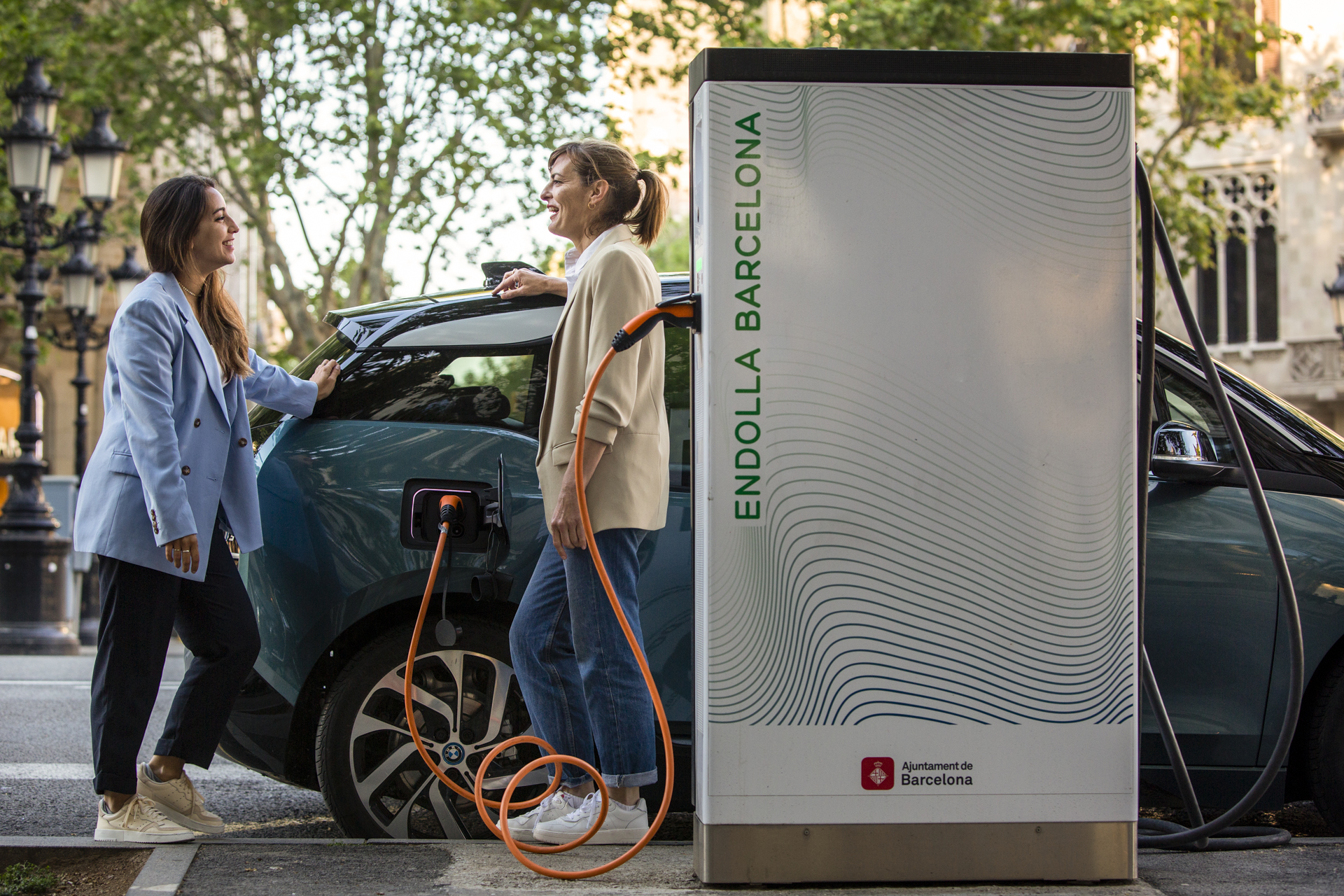
BSM’s electromobility network, Endolla Barcelona, will be adding five new operators to their interoperability strategy. Bosch, Zunder, Wenea, Efimob and Spirii customers will be able to use Endolla Barcelona’s charging points without having to download a new app. The integration will be carried out gradually, at the start of 2024.

This means that there will now be 10 operators and suppliers of electric mobility integrated into the Endolla Barcelona network after the first five companies joined last year in a first phase: Electromaps, Etecnic, Iberdrola, Place to Plug and Shell Recharge Solutions. 

This permeability makes Endolla Barcelona a public service that places electric-vehicle users at the centre, providing them the best experience. Thanks to these additions, users can locate any of Endolla Barcelona’s 720 charging points from their usual electromobility app, activate charging from their mobile device and pay quickly and easily, without the need for making a new registration or downloading another app.  

BSM thus continues to make progress in its commitment to promoting the use of electric vehicles. For the First Deputy Mayor and Chair of BSM, Laia Bonet, “interoperability is currently one of the most notable challengesfacing electric mobility, and public-private alliances such as these represent big advances. The Endolla Barcelona agreement with these five electromobility operators, and those yet to come, will make the charging infrastructure more accessible, not just for Barcelona’s residents, but for all visitors alike”. 

Olivia Arago, the Managing Director of Bosch Charging Solutions, likewise points out that “making electric-vehicle charging simple is essential for improving its acceptance and eliminating concerns over limited operating ranges. The interoperability agreement with Endolla offers drivers of electric vehicles the possibility of planning their routes better and accessing more charging points throughout Barcelona. We are working with Endolla and its close to 1,000 charging points, to increase the total number of public-access charging points in 30 European countries, which has so far reached over 600,000”.

A message shared by Daniel Pérez, the CEO of Zunder, for whom this agreement represents an important step in its commitment “to promote electric mobility and provide solutions for electric-vehicle users, as well as offer users the comfort and flexibility they need. Zunder clients can now enjoy a more fluid charging system, free of complications, in the Endolla Barcelona network, without the need for downloading additional apps”.

Alberto Cantero, the CEO of Wenea, also celebrates the possibility of offering clients the possibility of charging at Endolla Barcelona points through the platform. “Customers choose Wenea for its reliability and ease of use and for the wide cover we offer in fast and ultra-fast charging. Completing our network with Endolla Barcelona means increasing the range of charging stations on offer to our clients, while keeping all the advantages and payment methods associated with Wenea. Endolla Barcelona’s range of interoperability offers is a benchmark in public-private collaboration in the field of electric mobility”.

Martin Costa, the Managing Director of Efimob, asserts that “integrating with Endolla Barcelona will grantimproved experiences to users inside and outside car parks, providing simple universal access to the charging infrastructure, through our digital platforms”. That, he adds, “strengthens our commitment to electric mobility and decarbonisation of transport, inside and outside cities.”

Finally, Tore Harritshøj, the CEO and co-founder of Spirii, insists that “this partnership with the BSM charging points network will make the daily lives of our app’s users even more comfortable. It makes the charging process easier for them and reduces the concern for operating ranges”.

Endolla Barcelona, the Spanish State’s leading public electromobility network 

Boasting 720 charging points, Endolla Barcelona is currently the Spanish State’s largest public electromobility network, with an average 96% availability of service. Endolla Barcelona also plans to have 1,000 charging points operational by the end of 2023. 

The city has 12.5 public-use points per km2, with a charging point for every existing 16.5 electric vehicles. These figures make Barcelona the second largest European city in number of charging points per km2, after Stockholm; and the fourth largest in number of points per resident, after Stockholm, Gothenburg and Oslo.

The new charging points will be located in the B:SM Car Parks Networks, where 7 out of every 10 existing points are already concentrated. This roll-out strategy is promoting a uniform expansion throughout the city's neighbourhoods, making it easier for Barcelona residents without charging points at home or work to take leap to electromobility. 

Installing these new charging points in car parks will also help to minimise the occupancy of public space, reducing other parking-associated effects and encouraging planned recharges during off-peak hours. The supply of on-street charging points - designed for unplanned, quick recharges - will remain the same. 

Endolla Barcelona currently has 19,000 users and an average of 11,500 charging operations a month. 

BSM: sustainable mobility services for a better quality of life

Barcelona de Serveis Municipals (BSM) is one of the main service companies in Barcelona. In recent years it has become a leader in managing mobility services and looking after public spaces, as well as a notable cultural and leisure operator.

BSM encourages sustainable, planned, integrated and connected mobility through the SMOU app. It also promotes the development of Endolla Barcelona, the most extensive public charging network in Spain, and manages the Bicing shared-bicycle service, the regulated street parking service (AREA) and B:SM's car parks network, the largest in Barcelona.

The company also makes a significant contribution to professional mobility through solutions such as the SPRO app, aimed at goods distribution and tourist transport professionals. It also manages the Zona Bus parking and bus stop areas and Barcelona Nord Station, which is being transformed into the city's main local tourist transport hub.

Innovation, digitalisation and continuous improvement are the driving forces behind BSM's work to improve citizens' quality of life. 

Bosch

Bosch Charging Solutions is part of Bosch Mobility, the largest business area of the Bosch Group, which is working for safe, sustainable and exciting mobility. The Bosch charging network is constantly growing. By November 2023, it will have around 850,000 charging points in Europe, North America and the Asia-Pacific region. Car manufacturers, mobility-service providers and fleet managers can benefit from a service that can be personalised and integrated into vehicles to guarantee a perfect user experience and much greater comfort in driving electric vehicles. As a result, Bosch's charging services are making electromobility even more suitable for daily use.

Zunder

Zunder was founded in 2017 by Daniel Pérez and Lorenzo Antolín in Palencia. It is the highest-rated independent ultra-fast charging infrastructure operator by its sector’s users. The company currently has over 350 operational charging points. International-expansion plans already include the opening of the first ultra-fast charging station in France, to be followed by Portugal and Italy. They expect to have over 4,000 charging points operational by 2025 and to manage 40,000 through the platform, thanks to an investment of more than €300 million.

Wenea

Wenea is the leading independent electric-vehicle charging operator, offering charging services to individuals, companies and public bodies. Its aim is to contribute to the transition towards sustainable mobility, deploying the biggest fast and ultra-fast charging network in the country, which is accessible from its platform. Wenea currently has over 1,000 charging points in Spain and aims to roll-out 5,000 charging points by 2025. It excels in the public and private charging solutions market, offering extensive urban and inter-city cover through strategic agreements. In addition, it offers fleet- and electrification-management services for companies, hotels and others, with a platform focusing on meeting the needs of electric-vehicle customers. Its customer-care service is available 24 hours a day, 7 days a week, and customers can access over 100,000 charging points in Europe, under its interoperability agreements.

Efimob 

EFIMOB is an engineering company specialising in the development of software for managing and monitoring charging networks for electric vehicles, as well as supplying and installing charging infrastructures for both private organisations and public authorities alike. Focusing 100% on electric mobility, its professionals have over 10 years’ experience in the sector. EFIMOB has been part of the TELPARK group since 2022, managing over 450,000 parking places, enabling it to continue leading the electric-mobility market and the digitalisation of services geared to charging-point energy efficiency, installations and operations. 

Spirii 

Spirii is an international electromobility platform that offers software solutions for payment-collecting companies and operators for building, managing and scaling up their business. Spirii also offers user interfaces, including apps and online environments, which enable electric-vehicle drivers to use charging stations worldwide. Spirii currently operates in 18 countries covering two continents.

Endolla Barcelona opens to the customers of five new operators
Read the note
Fecha de publicación
News or press release?
Press release
Imagen destacada
Imatge
Cuerpo

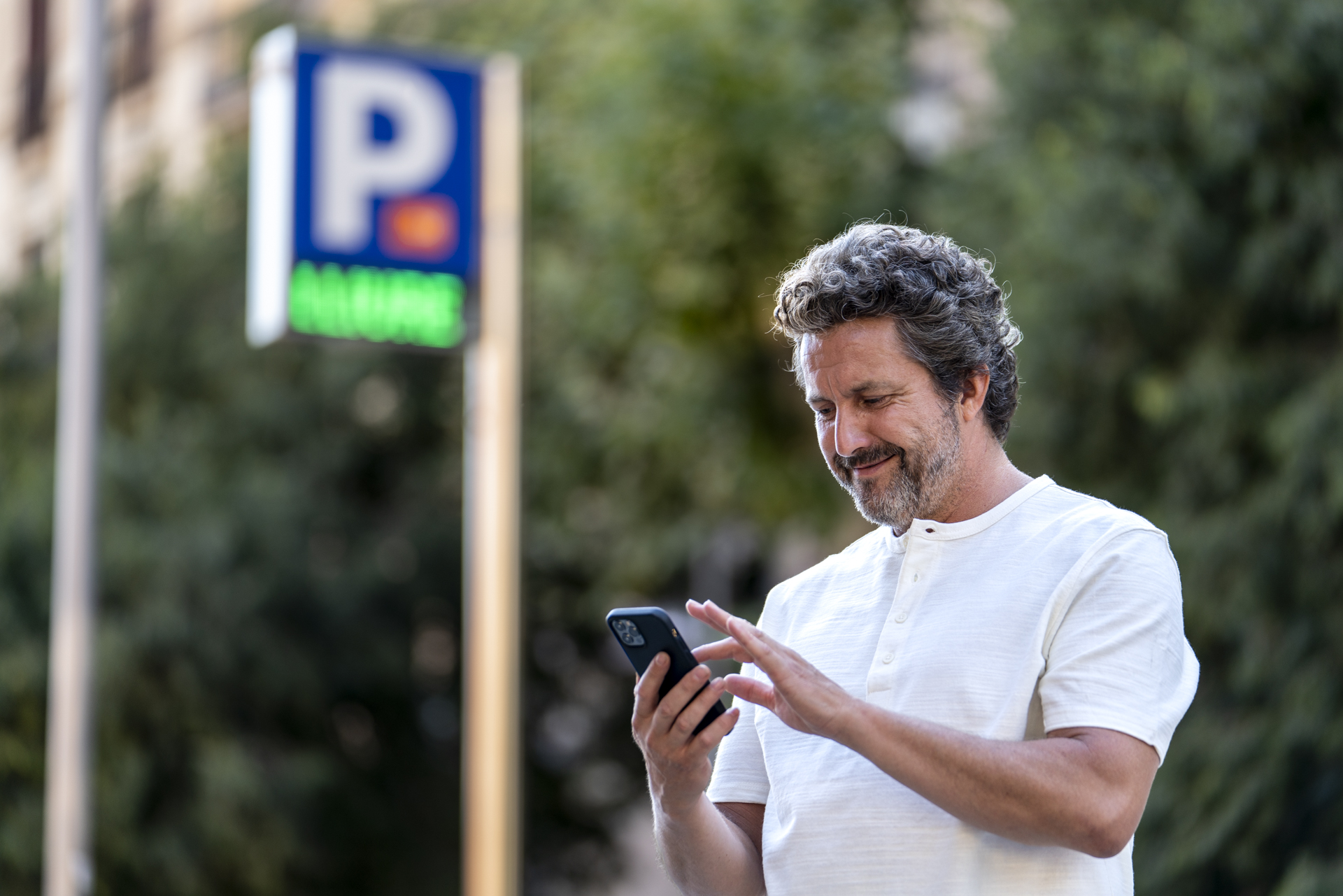
With their mobile phones, private vehicle users can now check information on the services offered by 300 car parks, twice as many as a year ago

The application also integrates real-time information on the availability of parking spaces in approximately 100 car parks in the city

As a new feature, SMOU allows car park operators to incorporate the app as a payment method for parking by the minute

SMOU, the leading personal mobility services application in Barcelona and the greater metropolitan area, is thus facilitating planned mobility that reduces the time spent looking for parking, congestion in public spaces and pollution

The SMOU personal mobility services application allows users to check information on the location and services of half of Barcelona’s car parks, 300

in total, twice as many as one year ago when this feature was launched following an agreement between Barcelona City Council and the Barcelona City and Province Garage Guild.
In total, the application provides information on 80,000 off-street parking spaces, 78% more than a year ago.

SMOU also incorporates real-time information on the availability of free off-street parking spaces. There are now 100 car parks in the city that offer this service thanks to the BSM application.

“Barcelona City and Province Garage Guild are working hard on this project, and the progress were are making is a clear example of how public-private collaboration can help us tackle the major challenges facing the city,” says Laia Bonet, first deputy mayor and president of BSM. “In a compact city like Barcelona, car parks have an important role to play in terms of mobility. Supporting the digitalisation of the sector is crucial, as it has a direct impact on aspects such as the planning of our routes and the reduction of the time we spend looking for parking spaces. These are issues that have a direct impact on congestion in public spaces and pollution.”

A technological solution promoting planned sustainable mobility

The parking space information and availability features will enable private vehicle users to find out, from their mobile phone, the closest available parking place to their destination. This will enable routes to be planned and simplified, thereby reducing the time it takes to find a parking place, the distance travelled, congestion in public spaces and pollution.

The user can access a detailed profile for each car park which specifies the entrance addresses, the opening hours, the type of vehicles allowed, the spaces available, the rates, the list of services offered in the car park and information on the clearance gauge and maximum width in order to access the car park.

As for availability of parking places, real-time information is shown intuitively from the car park location point on the map in the app. A traffic-light indicator provides the straightforward and immediate information users need in order to decide where to park.

Furthermore, in order to optimise the planning of routes using private vehicles, SMOU has incorporated the “I want to park close to my destination” option within its “How do we get there?” route recommender. This new feature shows the location of the closest car parks to the destination and redirects the route to the chosen option.

SMOU is a committed partner in the digitalisation of the city’s car park experience

SMOU now allows car park operators in Barcelona and its metropolitan area to incorporate the app as a payment method for parking by the minute in their car parks. This gives users of the SMOU app easy and convenient access, allowing them to do everything from choose their car park to pay for the time parked.

SMOU, the leading personal-mobility services app in Barcelona and the metropolitan area

With more than 985,000 users in Barcelona and the metropolitan area, SMOU brings together some 20 mobility services. These include by-the-minute payments for on-road and Aparcaments B:SM car park parking, the management of AREA parking places for local residents, the Endolla Barcelona charging point network and Bicing.

It also allows users to check the location of services such as shared bicycles, cars and motorbikes, plus real-time data on public transport, including a journey planner to find the most efficient way to get from one point to another in the city, offering several alternatives. The app also now includes the taxi service, which makes it possible to request and pay for taxi travel around Barcelona and its metropolitan area.

Last year, SMOU recorded a total of 16.4 million transactions, almost 45,000 a day. The app is constantly being improved, and after just four years in operation, the range of services and users continues to grow, making it the app that one in every two people in Barcelona uses to get around the city.

BSM: sustainable mobility services for a better quality of life

Barcelona de Serveis Municipals (BSM) is one of the main service companies in Barcelona. In recent years it has become a leader in managing mobility services and looking after public spaces, as well as a notable cultural and leisure operator.

BSM encourages sustainable, planned, integrated and connected mobility through the SMOU app. It also promotes the development of Endolla Barcelona, the most extensive public charging network in Spain, and manages the Bicing shared-bicycle service, the regulated street parking service (AREA) and Aparcaments BSM's car park network, the largest in Barcelona.

The company also makes a significant contribution to professional mobility through solutions such as the SPRO app, aimed at goods distribution and tourist transport professionals. It also manages the Zona Bus parking and bus stop areas and Barcelona Nord Station, which is being transformed into the city's main local tourist transport hub.

Innovation, digitalisation and continuous improvement are the driving forces behind BSM's work to improve citizens' quality of life.

This is a project financed with funds from the Recovery, Transformation and Resilience Plan, itself funded by the European Union – NextGenerationEU.

Logos Next Generation


SMOU now provides information on the location and services of half of Barcelona’s car parks
Read the note
Fecha de publicación
News or press release?
Press release
Imagen destacada
Imatge
Cuerpo

“SMOU: Your mobility partner in Barcelona” is the slogan for the stand where BSM will be presenting the features the SMOU app contributes to the digitalisation of some of the services offered by parking, shared mobility and public transport companies, among other sector stakeholders

The trade fair is taking place from 7 to 9 November at the Fira de Barcelona's Gran Via venue

For the second year running, Barcelona de Serveis Municipals (BSM) will be taking part in the Tomorrow Mobility World Congress, which is being held from 7 to 9 November at the Fira de Barcelona's Gran Via venue. With the slogan “SMOU: Your mobility partner in Barcelona”, BSM will be explaining how the SMOU app is becoming a global mobility tool which is now not only at the service of the general public, but can also play a key role in supporting companies and operators on their path towards the digitalisation and promotion of a more connected, shared and sustainable mobility.  

During the three days of the trade fair, the BSM stand will also host presentations and round-table conversations that address some aspects of the evolution of this application, which now brings together over twenty services. 

The activities begin on the morning of Tuesday 7 November, with a discussion about the services that SMOU can provide for parking companies, in order to support them on the path towards digitalising their customer experiences. Those taking part will include Josep Maria Deulofeu, director of BSM's Urban Mobility Solutions Division; Xavier Ferrer, president of the Barcelona City and Province Garages Association; and representatives from various companies in the sector. 

SMOU is also the official application of Endolla Barcelona, the largest public e-mobility network in Spain. That's why the second day of the congress will be dedicated to analysing one of the main challenges for ensuring the adoption of electric vehicles: interoperability. Xavier Castellsagué, the head of BSM's Endolla Barcelona Unit, will be discussing, with various companies in the e-mobility sector, how the Endolla network is opening up to customers from other e-mobility operators and suppliers. The main goal of this project is to facilitate access to the charging network for the general public. 

Lastly, on Thursday 9 November, there will be an analysis of the role of Mobility as a Service (MaaS) tools, such as SMOU, in the transition towards a new mobility. Josep Maria Deulofeu, director of BSM's Urban Mobility Solutions Division, will be speaking with Eglantina Dani, Factual Consulting's Lead Consultant and head of European Transport and Mobility Projects, about the concept of mobility as a service and the social and technological challenges involved in introducing this type of tools. 

SMOU, the leading personal-mobility services application in Barcelona and the metropolitan area

SMOU is used by over 985,000 people in Barcelona and its metropolitan area and brings together twenty mobility services. These include by-the-minute payments for on-road and Aparcaments B:SM car park parking, the management of AREA parking places for local residents, the Endolla Barcelona charging point network and Bicing. 

It also lets users find car, bicycle and motorbike sharing services and check real-time information about public transport in the metropolitan area, including the “How to Get There” feature, which allows users to find and plan the best route for getting from point A to point B in Barcelona and its metropolitan area.

And now, it also includes the taxi service, which makes it possible to request and pay for taxi travel around the city of Barcelona and its metropolitan area. 

With 1.85 million operations a month, SMOU has become an application that fosters mobility intermodality in an easy, intuitive, sustainable and safe way, making it possible to plan and personalise journeys without having to download various applications.

BSM: sustainable mobility services for a better quality of life

Barcelona de Serveis Municipals (BSM) is one of the main service companies in Barcelona. In recent years it has become a leader in managing mobility services and looking after public spaces, as well as a notable cultural and leisure operator.

BSM encourages sustainable, planned, integrated and connected mobility through the SMOU app. It also promotes the development of Endolla Barcelona, the most extensive public charging network in Spain, and manages the Bicing shared-bicycle service, the regulated street parking service (AREA) and Aparcaments B:SM's car park network, the largest in Barcelona.

The company also makes a significant contribution to professional mobility through solutions such as the SPRO app, aimed at goods distribution and tourist transport professionals. It also manages the Zona Bus parking and bus stop areas and Barcelona Nord Station, which is being transformed into the city's main local tourist transport hub.

Innovation, digitalisation and continuous improvement are the driving forces behind BSM's work to improve citizens' quality of life.


This is a project financed with funds from the Recovery, Transformation and Resilience Plan, financed by European Union – NextGenerationEU.

Logos Next Generation

BSM brings the evolution of the SMOU app as a mobility service provider to the Tomorrow Mobility World Congress 
Read the note
Fecha de publicación
News or press release?
Press release
Etiqueta
Imagen destacada
Imatge
Boy showing his cell phone with SMOU application
Cuerpo

The awards recognise cases of success and good practice which enable progress in the improvement of energy efficiency and competitiveness through digitalisation and innovation

The voting process for the awards is open from today until 20 November on the enerTIC platform website

The candidacy was presented jointly by BSM and Ibermática-Ayesa, a tech partner in SMOU

SMOU, the personal mobility app for Barcelona and the metropolitan area, is one of the finalists in the enerTIC innovation and energy competitiveness awards. The awards were created a decade ago by the Platform for TIC Companies to improve Energy Efficiency and Sustainability (enerTIC) and highlight the value of tech initiatives to drive the transition to energy efficiency and sustainability through digitalisation. 

The SMOU candidacy was presented jointly by BSM and Ibermática-Ayesa, a tech partner in the app. SMOU is competing in the ‘Smart Mobility’ category, which recognises projects and initiatives that use information and communication technologies to improve journeys and cut CO2 emissions, among other aspects.

The winners will be decided through an active voting process on the platform website from today, 24 October, to 20 November. The awards ceremony will be held in Madrid on 14 December.

SMOU, the leading personal-mobility services app in Barcelona and the metropolitan area

With more than 985,000 users in Barcelona and the metropolitan area, SMOU brings together some 20 mobility services. It includes solutions such as Bicing, the Endolla Barcelona network of EV charging points, payment of regulated parking by the minute, both on-street and in BSM car parks, and managing AREA parking spaces for residents. It also allows users to check information on services such as shared bicycles, cars and motorbikes, plus real-time data on public transport, including a journey planner to find the most efficient way to get from one point to another in the city, and various other journey options. The app also now includes the taxi service, which makes it possible to request and pay for taxi travel around Barcelona and its metropolitan area. 

Last year, SMOU recorded a total of 16.4 million operations, equating to almost 45,000 mobility operations a day. The app is constantly being improved, and after just four years in operation the range of services and users continues to grow, making it the app that one in every two people in Barcelona uses to get around the city.

SMOU is a finalist in the enerTIC innovation and energy competitiveness awards
Read the note
Fecha de publicación
News or press release?
Press release
Etiqueta
Imagen destacada
Imatge
Cuerpo

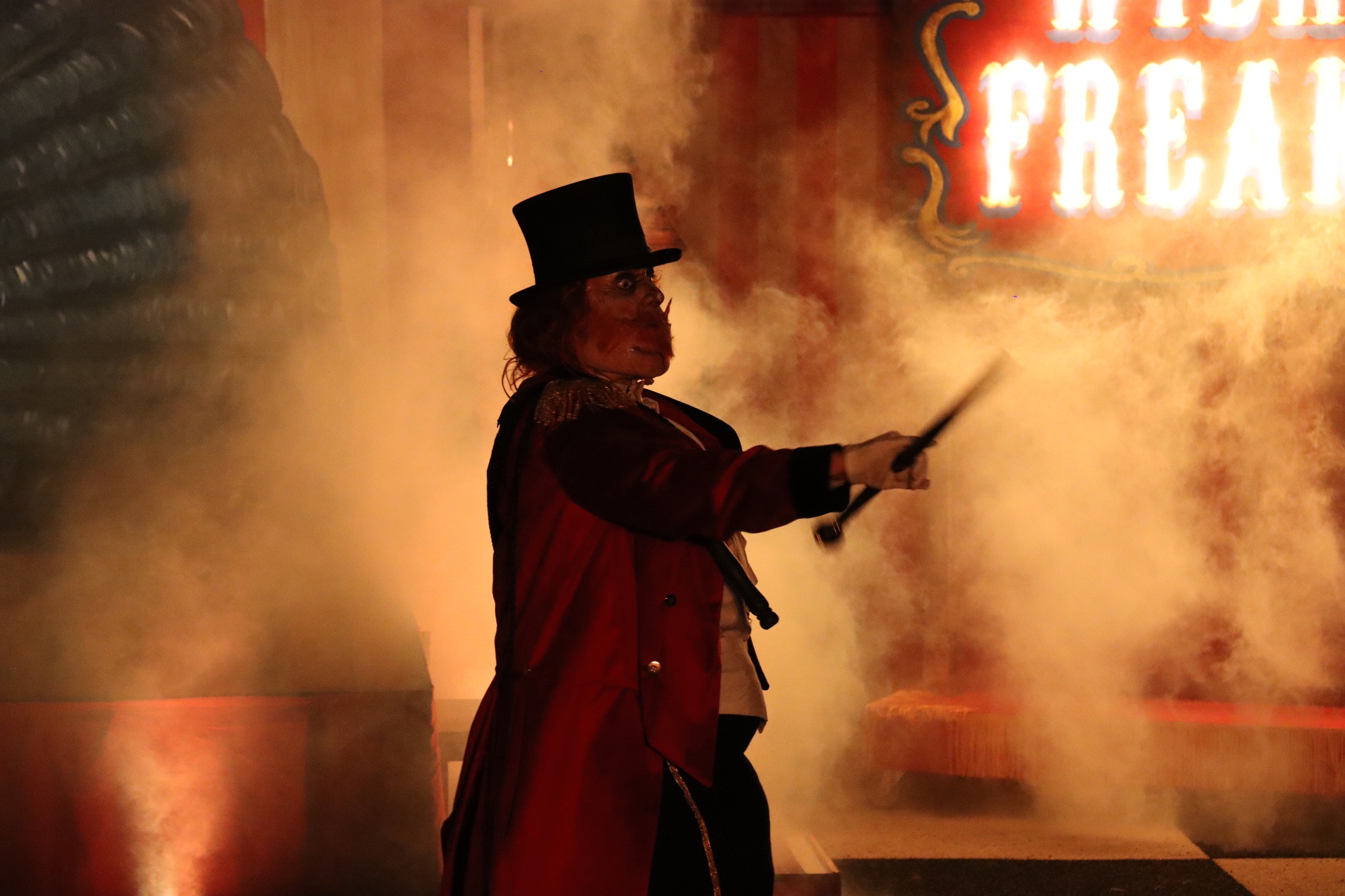
The Wilhelm Freak Show is on in Plaça dels Somnis until 12 November and is part of the special Halloween programme at the park 

The virtual reality attraction Beyond is offering a zombie film, while the Krüeger Hotel welcomes a new character

The Tibidabo Amusement Park is continuing its special Halloween programme, which this year focuses on horror, magic and circus. One of the new attractions is the Wilhelm Freak Show, which has notched up over 7,300 visitors in just three weekends.

The show takes place in Plaça dels Somnis, 30 minutes before the park closes. It is performed by some fifteen actors and actresses from the Krüeger Hotel, who take temporary leave of their rooms to bid farewell to visitors. The show is on until 12 November. 

This variety performance combines circus acts, magic and horror, based on the freak show genre, which showcases individuals with unusual and astonishing abilities. The show’s unique master of ceremonies, Wilhelm, is a dark and greedy character who has spent his life belittling those who have made him famous and who is now most likely facing his final performance.

The act offers something innovative and completely different from all the previous shows held at Tibidabo at this time of year. It aims to break away from the usual aesthetics of skulls and cemeteries, in favour of a different theme: the circus, which also highlights the festive spirit of the Halloween tradition.

With a new special setting and decor, Tibidabo Amusement Park has prepared more surprises for the coming weeks. The other new attraction is a zombie film at the recently opened virtual reality attraction Beyond, which is proving a real hit, with over 1,500 visitors since 30 September.

Visitors can also enjoy the park’s star attraction during this festive season, the Krüeger Hotel. This theatrical tour is set inside an abandoned hotel, where characters from horror films come to life. For these next few weeks it will feature a new guest, the legendary Michael Myers.

During Halloween, at the park’s pastry shop, visitors will also be able to sample products specially created by the renowned Barcelona pastry chef Christian Escribà.

Tibidabo Amusement Park has welcomed over 43,000 visitors over these three Halloween weekends. 

Access to the park during the Halloween season will be as easy as it is during the rest of the year. Visitors can use the Cuca de Llum funicular as their main means of arrival, as well as the T2B and T2C shuttle buses. In this way, the Park is stepping up its environmental commitment to the Collserola Nature Park. The amusement park opens at 11 am, with closing times varying depending on the day. Schedules can be found on the park’s website.

Over 7,300 spectators so far at Tibidabo’s new Halloween show
Read the note
Fecha de publicación
News or press release?
Press release
Etiqueta
Imagen destacada
Imatge
Cuerpo

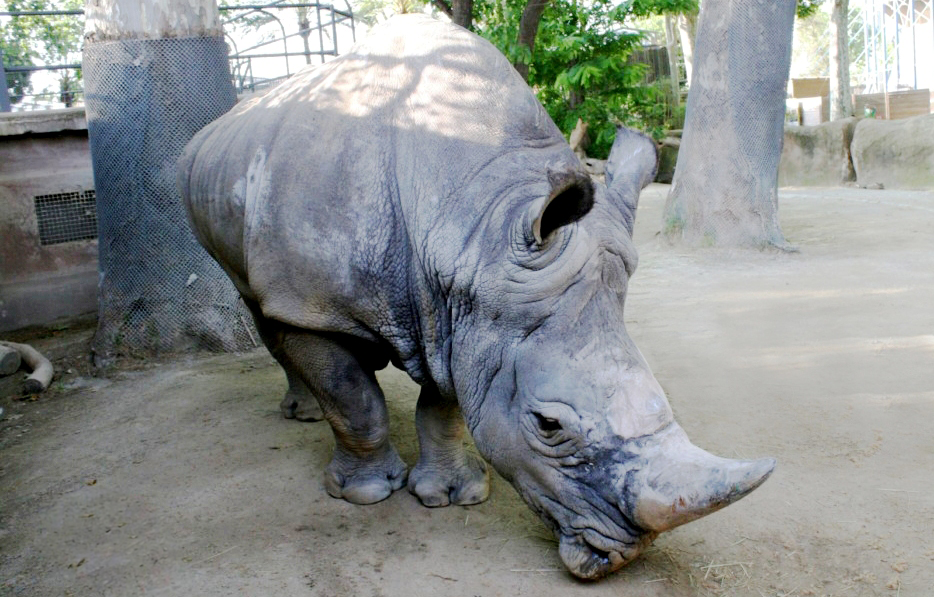
The animal arrived in Barcelona Zoo 20 years ago at the request of the authorities and through an embargo to ensure its care and welfare   

The rhino’s health had deteriorated in recent weeks, owing to age-related problems

Barcelona Zoo has specialised in geriatric animal care, becoming a leading international centre for the care and welfare of animals of an advanced age   

Barcelona Zoo has lost one of its best-loved inhabitants, Pedro the rhino, one of the oldest animals of this species in the world according to existing records. Pedro died this morning. As a result of his age, some days ago he started to become weaker and increasingly more fragile to the point where there was no way of recovering, despite the care given by the specialist staff at the Zoo.
The exact age of the rhino is unknown, but using existing customs records estimates put his age at between 53 and 54. Considering the maximum life expectancy of the species is between 40 and 50 years old, Pedro was the oldest white rhino in Europe – there are currently 339 in centres belonging to the European Association of Zoos and Aquaria (EAZA) – and one of the four oldest out of nearly 800 in the world, according to existing records.

Object of an embargo, he found shelter in Barcelona Zoo

Pedro arrived in Barcelona Zoo on 2 December 2003, coming from another zoo at the request of the authorities responsible for finding him a new home that would guarantee his care and welfare. The data available show he had been imported from South Africa in 1972 and transferred to the Spanish state in a very different context to the current one, when the movement of animals was not regulated to the degree that it is today through international legislation. 

At Barcelona Zoo he found shelter and living conditions which were suitable for his species. Pedro was a calm and sociable animal, a positive soul always willing to interact with his keepers. Given his age, in recent years he had received specialised geriatric care to minimise pain caused by the problems he suffered with his joints, as well as other discomfort. The director of Barcelona Zoo, Antonio Alarcan, noted “an animal has died which was much loved by us all, an individual who over these years received maximum care from the team of specialists at the Zoo, who gave him the assistance he needed.  Pedro represents one of the most important aims of Barcelona Zoo today, to provide shelter and ensure the welfare of animals which require special protection, whether they are from a species whose natural habitat is threatened or whether they have special needs as a result of their own history”.  

Barcelona Zoo is a world leader in the care of ageing animals

The Zoo has taken in various animals of advanced ages over the years, such as Pedro the rhino and elephants Susi, Yoyo and Bully, with specific physical and emotional needs. This has made the centre a leader in geriatric animal care, a specialisation achieved in conjunction with the Zoo Animal Welfare Education Centre (ZAWEC) at the Autonomous University of Barcelona, positioning Barcelona Zoo as an international leader in the care and welfare of these animals.

In line with its new model, Barcelona Zoo now focuses its work on species that require special protection owing to their conservation status in the natural world. It is also committed to animal welfare, meaning it is always available to work with the authorities and welcome animals which need a new home where they can live in conditions suited to their species.

Ambassador for a threatened species

Pedro was a southern white rhinoceros (Ceratotherium simum simum), a subspecies classed as Near Threatened (NT) on the International Union for Conservation of Nature (IUCN) Red List of Threatened Species, and for which a special EAZA Ex-situ Programme (EEP) from the European Association of Zoos and Aquaria exists, which Pedro was included in.

Although until recently the species was in serious danger of extinction, like all other rhinos, owing to illegal hunting for their horns, the southern white rhinoceros is the species which has made the strongest recovery in recent years, thanks to the strict protection measures applied.  Not long ago, this species only lived in the Republic of South Africa, but more recently been it has been reintroduced in other places such as Botswana, Namibia, Zambia, Kenya and Zimbabwe.

The white rhino is the largest of the five rhinoceros species currently in existence. Some individuals grow to nearly 2 metres in height and 4 metres in length and weigh nearly 3,500 kg. The species lives in savannah areas with trees, herbaceous plains, open bush regions and even wetlands.  Males tend to have solitary habits.
 

Pedro, Europe's oldest white rhino, dies
Read the note
Fecha de publicación
News or press release?
Press release
Etiqueta
Imagen destacada
Imatge
Cuerpo

BSM is driving an environmental strategy that aims to ensure the net positive impact of port activity, mitigate the effects of the climate emergency and adapt the port to the challenges posed by global warming, and to align it with the SDGs and the 2030 Agenda

The photovoltaic pergola on the Gastronomic Balcony will supply electricity to the Port Olímpic and other nearby BSM facilities, such as Barcelona Zoo, up to 7 car parks and the Poblenou Cemetery, making it one of the first zero-kilometre shared self-consumption initiatives in the city  

The Port Olímpic will be the first port facility in the Spanish state to have two ultra-rapid charging points for boats which will feed off the self-produced renewable power stored at the port itself 

The Port Olímpic is also committed to using seawater in the climate control systems of the new blue economy establishments on the Moll de Mestral 

Ensuring the port’s activity has a net positive impact, mitigating the effects of the climate emergency and adapting to the new context brought about by global warming. These are the main aims of the environmental strategy that BSM is implementing at the Port Olímpic in line with achieving the Sustainable Development Goals and the 2030 Agenda, a project that is being presented over the coming days at the Boat Show. 

To achieve this important goal, within the framework of the transformation process that is already under way, various initiatives are set to be implemented covering energy, water, waste, biodiversity and environmental education. There are also plans to implement measures to promote the naturalisation of the land and sea space and the use of innovation as a lever of change for nautical activities. All with digitisation as a key tool to facilitate decision-making and raise public awareness as a core aspect of the project. 

For the first deputy mayor and president of BSM, Laia Bonet, “the Port Olímpic has mainstreamed sustainability, making it a key part of its transformation process. We are driving projects that will help us to mitigate the effects of the climate emergency and that, at the same time, will reduce the impact that the port itself has on the environment. Generating green energy, using seawater to reduce the heat island effect caused by climate control systems, managing waste and regenerating the seabed are just some aspects of this commitment. All these action lines are being carried out based on innovation and digitisation and they aim to respond to public demand for more sustainable infrastructures.

A large photovoltaic installation for shared self-consumption 

In the eyes of the public, the large photovoltaic pergola that will cover the Gastronomic Balcony, the Port Olímpic’s new restaurant area, will be one of the most obvious signs of the commitment to sustainability in this new phase of the project. 
Divided into 4 large sections of a high architectural quality, it will be formed by 1,576 photovoltaic panels, it will cover a surface area of 3,560 m2 and will have 620 kWp of power, with capacity to generate up to 825,000 kWh a year

The installation will not only supply electricity to the port. It will be able to generate clean energy for other BSM facilities situated within a 2 kilometre radius: Barcelona Zoo, Poblenou Cemetery and up to 7 BSM car parks. In this way, the Port Olímpic will become the precursor to one of the first urban shared self-consumption and zero kilometre initiatives in the city, a strategy that BSM aims to follow in other emblematic establishments in the city that it manages. 

The installation of the photovoltaic pergola, which will help to provide shade over the new restaurant area and will be fully integrated into its surroundings, has a budget of €1.9M.

The Port Olímpic is also putting other measures in place to promote energy saving, such as the use of high-efficiency LED lighting systems, improvements to the constructed elements of the new buildings to ensure better insulation, the circular economy of materials and the incorporation of more sustainable climate control systems. 

A benchmark for sustainable sailing

The photovoltaic pergola will be directly involved in one of the most innovative projects being promoted by the Port Olímpic. As part of the commitment to sustainable sailing ,and with the aim of supporting the development of the sector, the Port Olímpic will have two ultra-rapid charging points for electric boats. Each point will be capable of charging either one 150 kW vessel or two 75 kW vessels simultaneously. 

The project will make the Port Olímpic the first port facility in the Spanish state with an ultra-rapid charging service provided using green energy produced and stored at the Port itself. Specifically, the chargers will run on energy generated by the photovoltaic pergolas. To maximise the use of solar power, next to the charging points a series of batteries will be installed that will be able to store up to 150 KWh. When necessary, the chargers will also be able to run on power from the conventional network, from where they will obtain green energy. 

The installation of the two EV chargers is yet another example of the Port Olímpic's commitment to promoting the sustainable and innovative sailing sector, one of the activity sectors that it aims to ensure has a significant weight in the configuration of the blue economy hub which is now under way and which is anticipating the future of small and medium-sized vessels.  

The EV chargers will be up and running by the end of summer 2024, to coincide with the start of the America's Cup, during which the Port Olímpic will be the base for the youth and women’s regattas. The charging points will be used to charge the support vessels used in the competition, which will be electric motor boats. In this way, the project will become one of the initiatives being put in place to drive the development of the local blue sectors, coinciding with the holding of this important event in the city. 

However, the Port Olímpic has also thought about how to make use of this new infrastructure after the competition. And so, when it came to deciding on the location of the chargers, a place was chosen that will facilitate their use by the boats moored at the Port Olímpic and by other vessels that are passing through. Given that the development of the electric boat sector still has some way to go, they can also be used to charge electric cars. 

The project has a budget of €1,058,000, of which €423,200 comes from a subsidy awarded by the Moves Programme for efficient and sustainable mobility within the framework of the Recovery, Transformation and Resilience Plan, financed with Next Generation funds. 

Using the sea to combat the heat island effect caused by climate control systems 

The Port Olímpic will use seawater to cool the climate control system of the Moll de Mestral, the epicentre of the blue economy hub and the place where the future auditorium will be located. To do this, a seawater capture infrastructure is being built along with a pipeline that will carry the water to the machine room located inside the dock where the heat production equipment will be cooled, after which the water will be returned to the sea.  
 

Logos


The Port Olímpic makes headway in its bid to become a benchmark for sustainable sailing and environmental management
Read the note
Fecha de publicación
News or press release?
Press release
Imagen destacada
Imatge
Cuerpo

BSM highlights its commitment to the blue economy, innovation and sustainability as key areas in the transformation of the Port Olímpic

Until 15 October, the Port Olímpic's stand will be hosting talks, presentations and roundtables to make known the aims of this blue economy hub, highlight the sustainability projects that are being carried out and the role the Port will play in the celebration of the America’s Cup

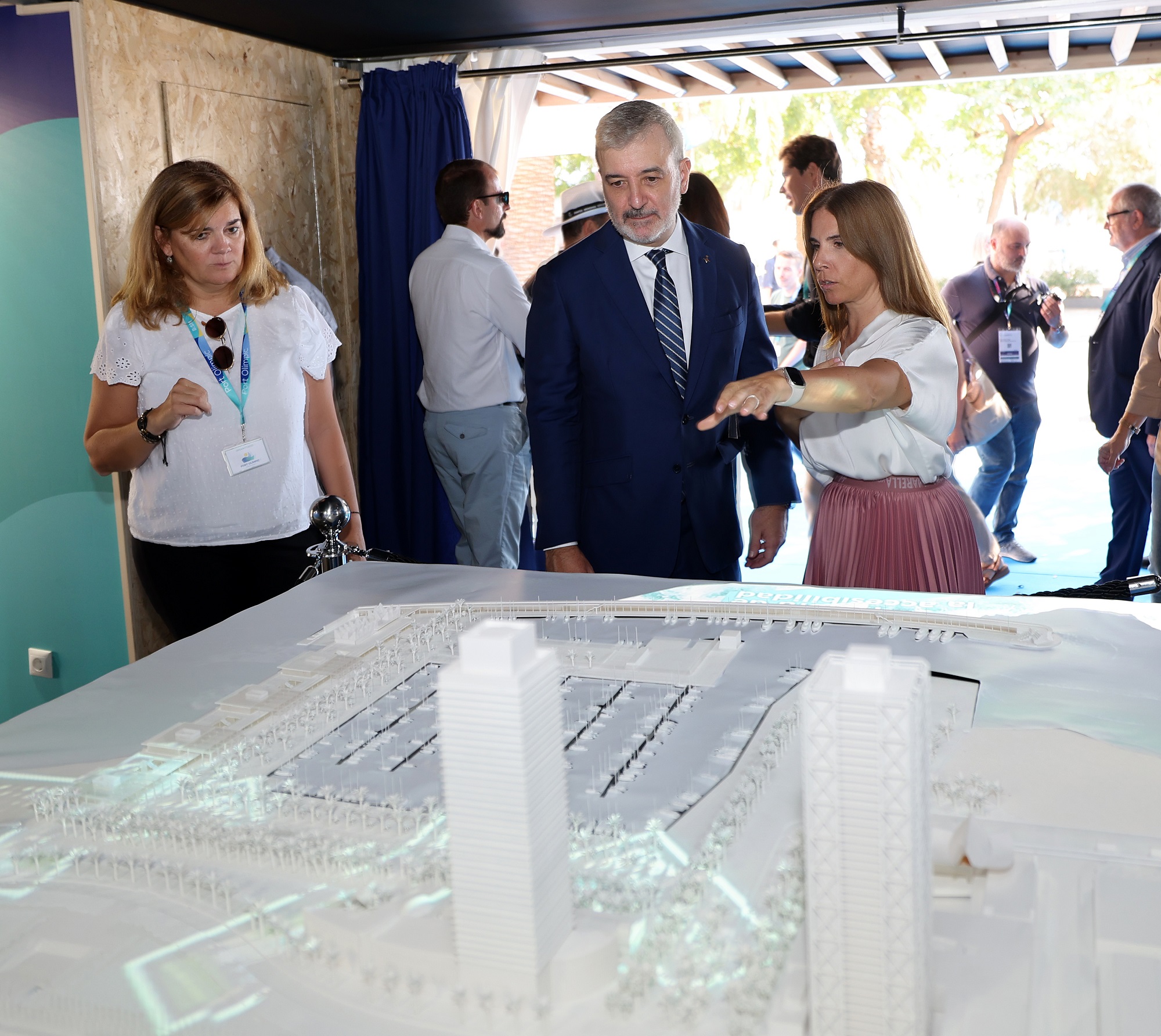
The Mayor of Barcelona, Jaume Collboni, this morning attended the inauguration of the 61st edition of the Barcelona International Boat Show, which is taking place until 15 October in Port Vell. The Mayor visited the Port Olímpic stand, which was later visited by the Minister of Transport, Mobility and Urban Agenda, Raquel Sánchez, and the Catalan Minister for Territory, Esther Capella, among other authorities. The Managing Director of BSM, Marta Labata, and the Director of the Port Olímpic, Olga Cerezo, together with other BSM executives, explained how the transformation of the port was coming along and talked about the projects that would be highlighted this year within the framework of the competition.

This will be the second time that the Port Olímpic has participated in this major industry gathering since BSM started managing it in 2020. Under the slogan “The future is blue”, the Port Olímpic stand, measuring 130 square metres, will be the meeting point where city residents and the nautical ecosystem can find out first hand how the port is turning into a new urban setting committed to the surrounding area and to generating economic activity linked to the sea, specialising in nautical services and activities, innovation, technology, circular economy and sustainability. 

This morning's official opening will give way to the programme of activities that BSM has put together to showcase some of the projects that are being carried out at the Olympic Port in relation to the blue economy, sustainability and innovation. The first activity will be a conversation between the Director of the Barcelona Zoo, Antoni Alarcón, and the biologist and researcher at the Institute of Marine Sciences, Xavier Salvador. The discussion, which will be taking place this afternoon, will serve as an opportunity to take stock of the project for recovering the seabed which the Olympic Port is developing by creating a bio-regeneration reef around the port installations, an initiative that as well as improving water quality will help to boost marine biodiversity in the area. 

Tomorrow 12 October, David Serrano, corporate director of ESG at BSM, and Narcís Armengol, dean of the Official College of Industrial Engineers of Catalonia, will be participating in a roundtable on the sustainability and innovation projects that are being developed to ensure the net positive impact of port activity, to mitigate the effects of the climate emergency and to adapt the port to the challenges posed by global warming, in line with the SDGs and the 2030 Agenda. 

Just like last year, the sailing companies working in the Port Olímpic will also visit the stand. On the afternoons of 12 and 14 October, they will be participating in roundtables on the experiences they offer and the opportunities being created by this new era in the Port Olímpic. 

The blue economy will be featured on Friday 13 October. The event entitled ‘The Port Olímpic: A showcase for the blue sectors’ will help to disseminate the work underway to attract companies for the Blue Economy Hub being created on Moll de Mestral and Dic de Recer sea wall. The event will be attended by Olga Cerezo, director of the Port Olímpic; Anna Majó, director of Business Innovation at Barcelona Activa, and representatives of the first companies to have confirmed their presence in the new economic hub that is being developed at the Port. 

The 37th America’s Cup will also make a stop at the stand of the Port Olímpic, which will be the base port for the youth and women’s regattas being held as part of this major sailing event. On Saturday 14 October, ‘This is how the Puig Women’s America’s Cup is being planned’ will focus on how the first women’s regattas in the history of this major nautical event are being organised. Participants will include Aurora Catà, vice-president of America’s Cup Event Barcelona (ACE Barcelona); Mack Dalton, manager of the Youth & Puig Women’s America’s Cup; and several sailors from the participating teams.


The complete programme is available here.

The Mayor of Barcelona, Jaume Collboni, opens the Port Olímpic stand at the 61st edition of the Boat Show
Read the note
Fecha de publicación
News or press release?
Press release
Etiqueta