Imagen de cabecera
Imagen destacada
Imatge
Rendering of the interior of the new Parking B:SM Ciutadella del Coneixement
Cuerpo

Located at the future Mercat del Peix research complex, this will be the first car park to be purpose built as a mobility-services hub in terms of both its range of services and its architecture and image

The car park will have electric-charging points, vehicle-sharing rental services, secure spaces for leaving bicycles, parcel-collection points and more

The Universitat Pompeu Fabra's Ciutadella Campus today hosted the presentation of the strategy to configure the Ciutadella del Coneixement (Ciutadella Knowledge Hub), with the first stone of the future research complex laid at the site of the former fish market, from which it will take its name of the Mercat del Peix. The launch of this project involves the start of building work on the future car park, which will be located under the complex’s three buildings and built and managed by Barcelona de Serveis Municipals (BSM).

The new 7,000-square-metre BSM Ciutadella del Coneixement car park will be the first purpose-built mobility-services hub and include electric-charging points, vehicle-sharing rental services, a secure space for leaving bicycles and personal-mobility vehicles, as well as accessible parcel-collection points for city residents and a goods micro-distribution centre.  

The BSM Car Parks network, the most extensive in the city with 44 car parks distributed around all the city's districts, thus takes another step in its commitment to turn car parks into spaces that go well beyond vehicle parking. 

The construction of this infrastructure entails an overall investment of €22.2 million, of which €10.7 million euros comes directly from BSM and the rest from the other operators involved.

First major project linked to the Ciutadella del Coneixement

The Mercat del Peix project is one of the first set of works towards the Ciutadella del Coneixement, a scientific, cultural and urban-planning initiative to turn the surroundings at Barcelona's central Parc de la Ciutadella into a pre-eminent urban-knowledge hub. The initiative is promoted by Barcelona City Council in conjunction with the Catalan government and the Universitat Pompeu Fabra. 

Laying of the first stone for the new BSM Ciutadella del Coneixement car park
Read the note
Fecha de publicación
News or press release?
Press release
Etiqueta
Imagen de cabecera
Imagen destacada
Imatge
Boy picking up a package from Amazon in a parking lot
Cuerpo

The Barcelona City Council will approve a new special urban development plan which will allow car parks to incorporate areas for logistics and the provision of services 

The measure will help to optimise urban goods distribution, while also freeing up public space 

This consolidates the pilot tests of this type of activity promoted by Barcelona Municipal Services (BSM) in its network of car parks  

Barcelona City Council has started processing the ‘Special Urban Plan for New Activities in Barcelona City Car Parks’. This new regulation aims to ensure that short-stay car parks can house other activities in addition to vehicle parking. 

The text primarily provides for car parks to be used for activities such as loading and unloading, the delivery of goods and activities related to the collection of small packages. This includes micro-distribution points where lorries and vans can unload packages, which are later delivered by more sustainable vehicles, along with delivery lockers from where online purchases can be collected. 

Barcelona is thus consolidating the pilot tests of these types of activities promoted by Barcelona Municipal Services (BSM) in its network of car parks. By doing so, it is regulating and promoting services such as the almost 50 Click&Collect points, the eight goods micro-distribution centres and Barcelona Markets’ four refrigerated delivery lockers which can now be found in different BSM car parks. 

The extension of these types of initiatives will lead to a lower occupancy of public thoroughfares, given that many packages can be delivered to a single point. It also ensures greater efficiency by lowering the number of kilometres that distributors have to travel, which reduces pollution and noise. Furthermore, it does away with empty vehicle returns, because the packages are left where consumers will collect them, and if they don’t they can more easily be returned using the carrier's regular route. 

Concentrating the distribution of goods in car parks also allows for deliveries at off-peak times or at night, reducing both any nuisance caused to residents and road congestion. 

The text also regulates other services already operating in the car parks, such as electric vehicle charging, battery swapping stations and the installation of ATMs and vending machines. 

After its initial approval, the new regulation will begin the process towards definitive approval with a period of public information and the corresponding citizen participation process. 

Another step towards consolidating the Click&Collect spaces and micro-distribution points in BSM car parks  
Read the note
Fecha de publicación
News or press release?
Press release
Etiqueta
Imagen de cabecera
Imagen destacada
Imatge
Group of children observing the animals of the Barcelona Zoo
Cuerpo

The number of visitors in 2022 grew nearly 20% compared to 2021, surpassing pre-pandemic figures

The Zoo has continued expanding its educational activities for families and students with the goal of promoting respect for biodiversity

Progress was also made in 2022 in terms of implementing a new Zoo model, with projects such as the opening of the Invertebrates Area and the Komodo Dragons Discovery Centre

It’s also contributed to 43 projects for the conservation of endangered species and has reintroduced into the wild 362 specimens of native species, such as the Hermann’s tortoise, the Montseny brook newt, the Spanish toothcarp, the Majorcan midwife toad, the European polecat and the hermit ibis

Barcelona Zoo’s upward growth trend continues. In 2022, 740,015 people visited the Zoo, a 20% increase compared to the previous year, and well above the 710,000 visitors who came in 2019, before the pandemic. This positive trend reinforces the growth the Zoo has seen in recent years, which have been key for the implementation of the new Zoo model. 

Zoo Club membership among families has also been strong. At the end of 2022, 23,963 households and a total of 81,447 members had signed up. These figures stabilise the growth seen in 2021 and, in the case of the total number of members, are 65% above pre-pandemic figures. 

“We’re very pleased, since the increase in the number of visitors is the clearest sign that the new Zoo model is a success,” says Third Deputy Mayor of Barcelona City Council and Zoo Foundation Chair Laia Bonet. “This new focus on activities and visitor participation attracts many different groups, as we can see in this year’s numbers.”

The Zoo Club’s success has been thanks to its hard work on visitor loyalty and the popularity of activities designed especially for families. Visitors’ favourite initiatives include new programmes such as the Nature Passport, created last summer to help children visiting the Zoo learn about biodiversity. A total of 3,496 people have had fun with it so far. Another great success has been the Escape Room in the Invertebrates Area, with 952 participants and all the sessions full. 

The number of participants in the Zoo’s camps during Holy Week and the summer and Christmas holidays has also bounced back. This year, 1,152 children participated in the activities planned for the school holidays. 

The Zoo also held the first STEAM Zoo day, in which 600 1st and 2nd-year compulsory secondary education (ESO) students from Barcelona and the metropolitan area enjoyed several different scientific workshops organised by the Zoo’s education team and the Polytechnic University of Catalonia - BarcelonaTech (UPC). The goal of the project, which is also being implemented in other iconic spaces managed by Barcelona de Serveis Municipals, such as the Fòrum Park, the Olympic Ring and Tibidabo, is to promote careers in science among secondary school students. In the Zoo’s specific case, the programme focused on different aspects of biology. 

The new Zoo model is now a reality

Education, conservation and research are the guiding principles behind the implementation of the new Zoo model. In 2022, this new approach continued to be clearly visible with the launch of numerous projects. 

In addition to incorporating new educational activities, the Zoo has made progress in creating spaces that not only improve the visitor experience but also focus on raising awareness of the need to take care of wildlife and its natural habitats, especially in the case of endangered species. This is the goal of the Sahel Savannah interpretive trail, the Komodo Dragons Discovery Centre and the Invertebrates Area, one of visitors’ favourite new additions. Though it has only been open for six months, it has already welcomed 166,032 people. 

In 2022, the Aquarama, which opened in 1968, was demolished and will be replaced by an animal reserve. The future installation will house species that are temporarily affected by the improvement work planned for the coming years. 

The Zoo’s commitment to preserving endangered species goes beyond its boundaries. By maintaining alliances such as the partnership with the European Association of Zoos and Aquariums (EAZA) Endangered Species Programme, as well as several co-operation agreements, 43 projects for the conservation of endangered species were carried out over the course of 2022. Work was also done to reintroduce seven native species, namely the Mediterranean pond turtle, the Hermann’s turtle, the Montseny brook newt, the Spanish toothcarp, the Majorcan midwife toad, the European polecat and the hermit ibis, into the wild. The Zoo has facilitated the reintroduction of a total of 362 specimens. 

In the scientific field, the Zoo Foundation has awarded 8 grants and has participated in the launch of 35 conservation and research projects, playing an active role in generating knowledge and raising awareness about the protection of ecosystems. 

Barcelona Zoo sees strong growth with over 740,000 visitors
Read the note
Fecha de publicación
News or press release?
Press release
Etiqueta
Imagen destacada
Imatge
Panoramic view of the Tibidabo Amusement Park
Cuerpo

The number of visitors increased by 54% compared to 2021, when restrictions for Covid still applied, almost marking a return to pre-pandemic levels

Notable successes were the Laser Show, attracting over 25,000 spectators, and the synthetic ice rink, attracting more than 10,000 people 

The Cuca de Llum funicular railway has become the main means of getting to Tibidabo, consolidating the park’s move towards environmentally friendly and sustainable mobility

The Tibidabo Amusement Park closed 2022 with 54% more visitors than the 2021, almost reaching pre-pandemic levels. Over 620,000 people visited the park over the 145 days it was open to the public and were able to enjoy the full range of leisure options on offer. This compares with a figure of 402,000 for 2021, although the park was closed for two months more than usual (from January to mid-May) owing to Covid restrictions.  

Success of the Laser Show, La Nit de les Ànimes and the ice rink 

Over the course of 2022, when Tibidabo celebrated its 121st anniversary, the park offered a wide array of themed shows. Notable successes included the Laser Show, which drew more than 25,000 spectators in the summer; La Nit de les Ànimes, the star show over the Halloween season; the daily shows by the park mascots (Ti, Bi, Da and Bo), and the sustainable synthetic ice rink installed this Christmas in Plaça dels Somnis, which was enjoyed by more than 10,000 people. 

The 16 solidarity initiatives and events promoted by different organisations and hosted at the park also stood out. They helped to promote the work done by these organisations and also to raise funds. 

With regard to education, the park continued its outreach approach with educational activities and initiatives such as Fisidabo, which allows students to learn about science, technology and the environment outside the classroom. 

Cuca de Llum establishes itself as the main means of getting to Tibidabo  

Last year was also a year of consolidation for the Cuca de Llum (glow worm) funicular railway, the main means of collective transport to get to Tibidabo and the viewing platform, with over 650,000 users.

The Amusement Park closes the 2022 season on 5 January, the last day it is open to the public, and will be open again on 4 March, after closing as usual for maintenance work. The viewing platform, home to the park’s most iconic rides and the automat museum, will be open at weekends in February and then every day from 4 March.

Tibidabo closes out 2022 with over 620,000 visitors
Read the note
Fecha de publicación
News or press release?
Press release
Imagen de cabecera
Imagen destacada
Imatge
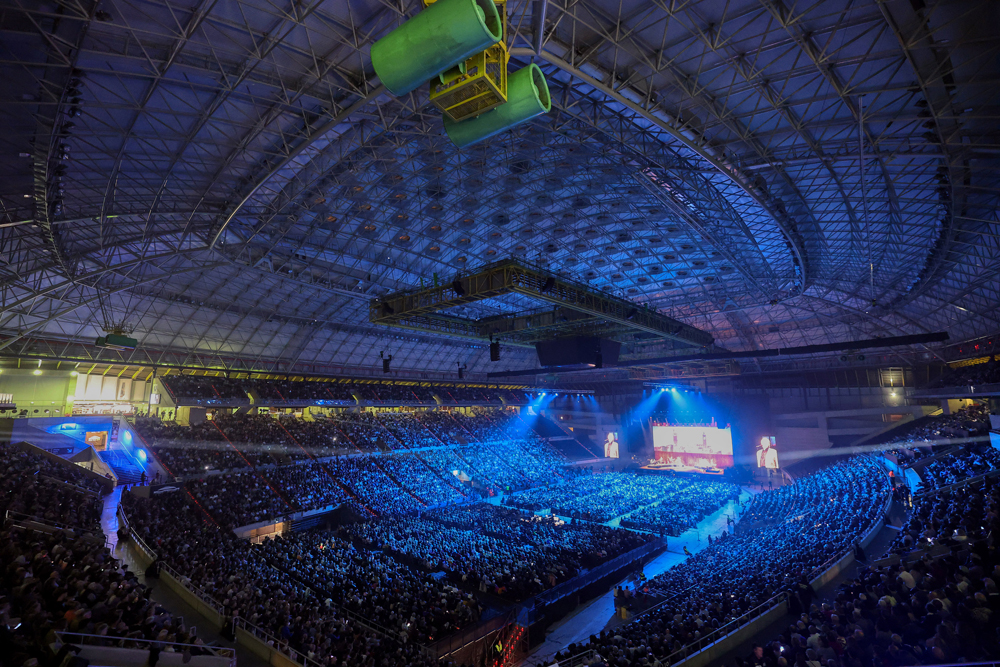
Serrat's last concert at the Palau Sant Jordi
Cuerpo

The Olympic Stadium, the Palau Sant Jordi and the Sant Jordi Club are due to play host to 140 events in 2023, receiving 1,400,000 visitors in the process, double this year’s number   

It will be a record year for the Olympic Stadium, the venue for eight concerts featuring Coldplay, Bruce Springsteen, Harry Styles and The Weekend 

This season, the Olympic Stadium will also host matches involving Futbol Club Barcelona’s first team, while its regular facilities are being remodelled   

The Olympic Ring is set for a record year in 2023. Over the course of the year, the Lluís Companys Olympic Stadium, the Palau Sant Jordi and the Sant Jordi Club will host more than 140 events with more than 1,400,000 visitors in attendance, practically double the number this year. In fact it is a decade since they achieved that figure. 

Worth particular mention is the growth in the number of concerts. In total, 116 will be held, 60% more than in 2022. What’s more, for the first time in the Olympic Stadium’s 30-year history, it will hold eight musical performances. Coldplay, will play four dates, Bruce Springsteen, two, while Harry Styles and The Weekend will both do one date each. 

Likewise, the Palau Sant Jordi and the Sant Jordi Club will host an impressive number of famous Spanish and international artists. The latter include, Robbie Williams, who will play two dates, Elton John, who will also play two, and The Who, seven years after they last visited Barcelona. Also worth special mention are Blink-182, who are taking to the stage after a 10 year absence, Bad Gyal, Lola Indigo, Maroon 5, Quevedo, Joaquin Sabina, the tour ending concert due to be played by Oques Grasses and La Pegatina, who are celebrating their 20th anniversary with a special tour.  

In addition, 2023 will see the return of classic entertainment in the form of Disney on Ice, Cirque du Soleil and Indoor Trial, as well as new events like the Barcelona Eurovision Party, coming to the Sant Jordi Club for the first time to help it grow.  

A living space open to everyone

The Olympic Ring maintains its commitment to city residents by hosting social. family and educational events. One of the most paradigmatic examples is STEAM Anella, a day of activities to spread scientific knowledge, aimed at students from different schools across Barcelona and the metropolitan area, due to take place at Palau Sant Jordi in February. 

Another event being held is Dansa Ara, a huge contemporary dance gathering aimed at lower secondary school students from across the city, which celebrates its 30th anniversary next year.  

The Lluís Companys Olympic Stadium will be home to FC Barcelona for the 2023-24 season

The cultural, sports and recreational activities scheduled at the Olympic Ring in 2023 will fit in with the matches of Futbol Club Barcelona men’s first team which, from August 2023 and thanks to the agreement between Barcelona City Council, Barcelona de Serveis Municipals (B:SM) will be played at the Olympic Stadium.

This will be done in a way that ensures Club's activities are compatible with all the other cultural, sports and civic uses of the Olympic Ring and all other facilities on Montjuïc. 

Barcelona, the setting for major international tours 

The ability to host the number of events and attendees expected in 2023 at the different facilities that make up the Olympic Ring, while accommodating FC Barcelona, is in part thanks to the investments made by B:SM in recent years, which have helped to improve the operational side of the facilities and visitor experience. 

As a result, the capacity of the Palau Sant Jordi has increased to almost 18,500, consolidating the arena’s position as home to some of the biggest events in Spain. This makes it the perfect place to host international tours and has piqued the interest of music promoters when it comes to hosting major concerts in Barcelona.  

The remodelling of the press gallery, the renovation of the outside lighting system, and the roof of the Sant Jordi Club inner courtyard are just a few of the other improvements to the Ring’s facilities.

Recently, the Olympic Ring has also launched its website (palausantjordi.barcelona and estadiolimpic.barcelona), expanding the sections that help people prepare for their visit: tips on arriving at the facilities, a more accessible contact channel and more efficient browsing. In addition, the website provides digital access for minors, a process which, besides speeding up their entrance by cutting out the need to go through two control points on their way in, also improves environmental sustainability, by reducing the amount of print-outs.  

The Olympic Ring, ready for a record 2023
Read the note
Fecha de publicación
News or press release?
Press release
Etiqueta
Imagen destacada
Imatge
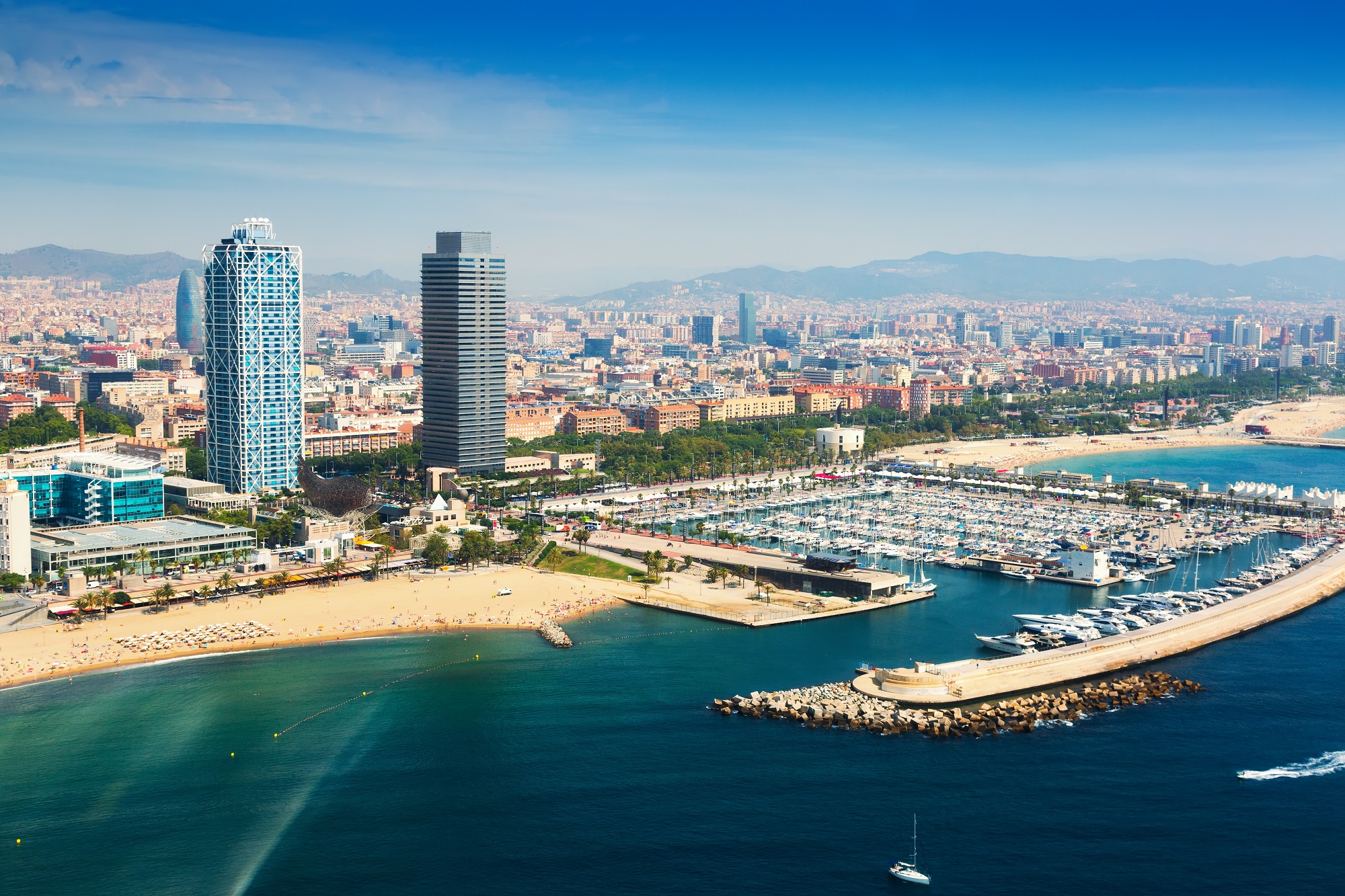
Aerial view of Barcelona's Olympic port
Cuerpo

The roadmap for the transformation of the space and new uses connected to maritime activities, the blue economy and gastronomy has now been launched, with a view to making the port more accessible to Barcelona’s residents and more integrated in the surrounding area

This confirms the commitment to making the Olympic Port the city’s first blue economy centre, playing host to educational, outreach and recreational activities connected to life at sea, with companies and entrepreneurs from other areas of the blue sectors

The plan consolidates gastronomic activities at the Moll de Gregal wharf, where the “Gastronomic Balcony”, a new model for restaurants and catering will be developed

Another step in the transformation of the Olympic Port. The City Council Government Commission has launched the Olympic Port Special Urban Development and Use Plan with a view to moving towards a city space without barriers, that is better connected, promotes the blue economy and gastronomy, and democratises access to maritime activities. The document represents the framework for the new phase of the process that the Olympic Port has been immersed in since the City Council having assumed responsibility for managing it in 2020. Since then, Barcelona de Serveis Municipals (B:SM) has led the transformation that is turning the Olympic Port into a space for city residents. 

The new special plan updates the one drawn up in 2006 and addresses issues like the Olympic Port perimeter, building regulations and the urban uses it needs. To that end, it include activities that may be undertaken in each area of the Port and establishes the measures and criteria needed to ensure proper planning of public space, the balance with the surrounding area and respect for the environment.

In short, it sets out the planning required to make the Port accessible to local residents and in harmony with the surrounding area, where economic activity linked to the sea can be performed in a renovated public space of high quality.

A dynamic Port with local residents at the centre

The plan spans an area of 180,925 m², of which 103,561 m² correspond to port infrastructure, including the Moll de Mestral, Moll de la Marina, Moll de Gregal and Moll de Xaloc wharfs and the Dic de Recer breakwater, and the other 77,363 m² to the sheltered water surface. It also provides for a built-up area of 32,700 m2.

The special plan confirms the City Council’s commitment to maritime activities, the blue economy and the restaurant trade as the central pillars of activity at the new Olympic Port. Regarding the latter, it limits gastronomic activities to the Moll de Gregal, where the Gastronomic Balcony, a new model for restaurants and catering, will be consolidated.

In the case of the blue economy, the plan encourages educational, outreach and recreational activities so city residents will return to the Olympic Port and children and adults alike will have a closer relationship with the sea. Entrepreneurs and companies dedicated to maritime activities will also be encouraged to set up in the port, as well as companies that promote innovation, research and the circular economy in the blue sectors.

Furthermore, it emphasises the improvements to make the Port a more accessible space, such as the construction of new access points to the Vila Olímpica neighbourhood and the beach, as well as the creation of public space designed especially for walking, sitting and doing sport. To that end, work is progressing well on the new Ronda Litoral access, adapting premises on the Moll de Mestral wharf and developing the Dic de Recer breakwater, while the work to renovate the Sailing Centre have been put out to tender.

The special plan also insists on the need to facilitate the presence of greenery and commit to renewable energies and waste management, in addition to measures to combat climate change and increase the commitment to sustainability. 

A use plan has been drawn up for the Olympic Port to promote the blue economy and to bring local residents closer to the sea
Read the note
Fecha de publicación
News or press release?
Press release
Imagen de cabecera
Imagen destacada
Imatge
Performance of the Song of Peace at Tibidabo
Cuerpo

On 27 December, the Tibidabo Amusement Park will be hosting a new edition of this charity concert in aid of UNICEF

Everyone that enters the park before 11 am will have free admission and will just have to donate €2 to the NGO

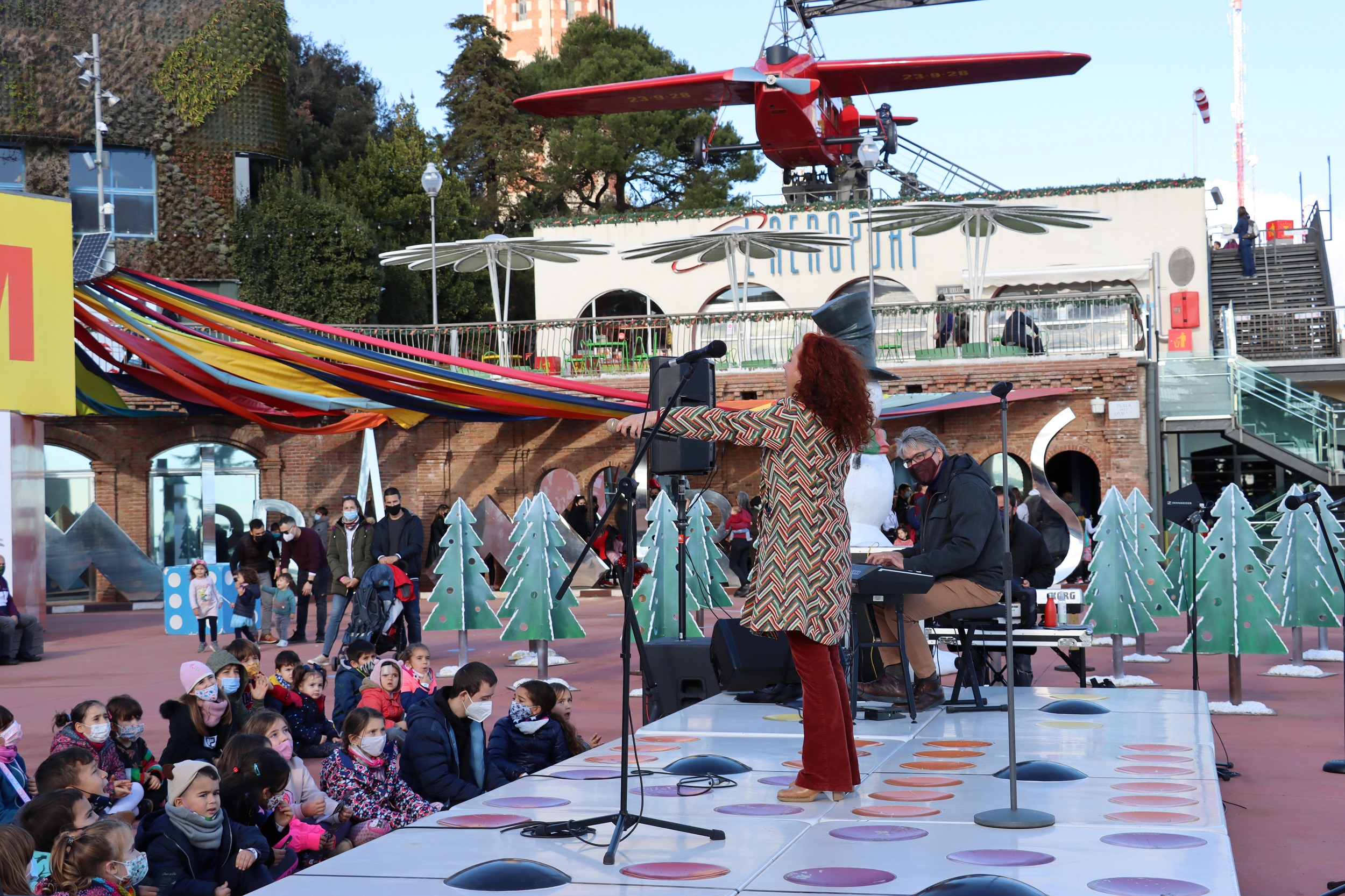
On 27 December, the Tibidabo Amusement Park will host the 25th edition of the Cançó de Pau, a solidarity singalong in favour of UNICEF, under the slogan "Tots volem la Pau, no volem més guerres" (We all want peace, we don't want any more wars). This is one of the solidarity events hosted by the park throughout the year and its aim is to promote values such as tolerance, solidarity and respect among children, as well as to call for peace around the world. 

The event will take place in the Plaça dels Somnis at 10.30 am and will include the participation, as supporters of peace, of the councillor of Sarrià - Sant Gervasi and president of Tibidabo Amusement Park, Albert Batlle; the president of UNICEF in Catalonia, Jaume Lanaspa; the actor Joan Pera; and the pastry chef Christian Escribà.   

As well as singing the Cançó de Pau, the children that take part in this solidarity event will be able to write messages in the Tibidabo Book of Peace, which will then be shared with the public.

On the occasion of this solidarity event, everyone that enters the Park before 11 am will have free admission. They will only have to donate €2, which will go to UNICEF. 

Agreement with UNICEF 

The Cançó de Pau is part of the solidarity actions hosted by Tibidabo Amusement Park throughout the year. This one, in particular, is part of the agreement that the park and UNICEF have had since 2012, which aims to promote awareness of children's rights and contribute to UNICEF's survival, education and protection programmes around the world.

Christmas at Tibidabo 

Visitors to Tibidabo Amusement Park this weekend can still enjoy the ice rink installed in Plaça dels Somnis for the Christmas period. The 200 m2 rink with a 40-person capacity is made with synthetic and sustainable gel. Access to the rink is included in the admission price for the park, and those without park entry tickets can also use it at a cost of €5. 

There are also two new shows for people to enjoy: “El Bo de Collserola” (the Bo of Collserola), which is on every day in Plaça del Jardi at 4 pm; and “Tibimarionetarium de Nadal”, with non-stop shows from 1 pm. 

What’s more, the wicked Krampus, who is only around for the Christmas season, will be at the Krüeger Hotel until 4th January.

Tibidabo is celebrating the 25th edition of Cançó de Pau (Song of Peace)
Read the note
Fecha de publicación
News or press release?
Press release
Imagen de cabecera
Imagen destacada
Imatge
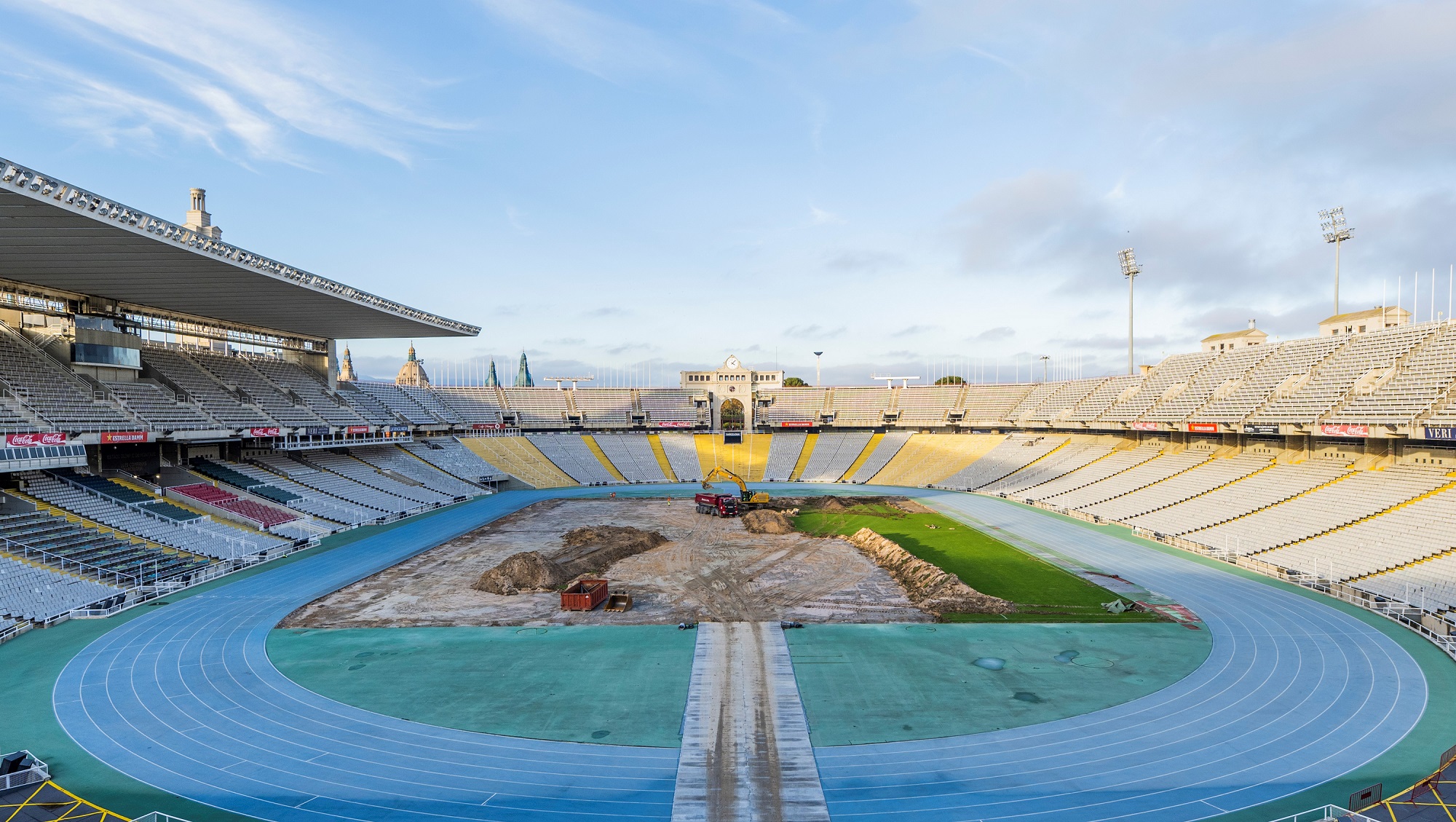
View of the works to adapt the Olympic Stadium to the needs of FC Barcelona
Cuerpo

The work that the Club is to carry out will focus on the pitch and stands as well as other auxiliary areas such as the press boxes, changing rooms and indoor parking areas

The men’s first team is expected to play at Montjuïc during the 2023-2024 season, as part of the remodelling work continues on the Spotify Camp Nou, the epicentre of Espai Barça

FC Barcelona has commenced the work to adapt the Olympic Stadium to its needs and the requirements of La Lliga and the international competitions that it takes part in. The men’s first team will be playing in the Montjuïc stadium during the 2023-2024 season, while part of the remodelling work is carried out on the Spotify Camp Nou.

The agreement between FC Barcelona and Barcelona City Council was made official this June, during a ceremony attended by the First Deputy Mary and Chair of B:SM, Jaume Collboni; the President of Barça, Joan Laporta; the Deputy Institutional President, Elena Fort; and the manager in charge of the Espai Barça, Jordi Llauradó. Under the agreement, the Club will be able to use the Stadium from August 2023 to May 2024. It will also be available for use for occasional needs or training by the women’s team who played in the Champions League quarter-finals and semi-finals this year at the Camp Nou.

Barça has commenced work on the pitch, changing the drainage, irrigation and water treatment system. It is also being adapted to the necessary sizes established by the Club. General refurbishment work will then begin on the Olympic Stadium changing rooms, press boxes and hospitality areas, and competition and TV broadcasting systems will also be installed.

Adaptation of the facility

The assigned use of the facility agreed to covers everything from the pitch and stands to other auxiliary areas, such as press boxes, changing rooms and indoor car parks.

To guarantee the general public have good access to the Olympic Stadium, Barcelona City Council and FC Barcelona have worked on a plan to boost public transport and sustainable mobility and have brought in extra maintenance and safety, to ensure as little impact as possible on the mountain. This Thursday the Barcelona City Council Government Commission approved the agreement providing for these actions.

Extra public transport 

There will be extra Funicular services and temporary shuttle buses between the main access points on public transport. Extended metro service hours are also envisaged, where necessary, to fit round match times. A bike lane and three new Bicing bike-hire stations will also be installed between Plaça Espanya and Miramar, to encourage sustainable mobility on Montjuïc.

Where needed, lighting along the main walking routes will be improved during match times and pedestrian paths will be laid between public transport points and the Stadium.

In harmony with Olympic Ring activity

The City Council, B:SM and FC Barcelona have worked to make the Club's activities compatible with all the other cultural, sports and civic uses of the Olympic Ring and all other facilities on Montjuïc. In any event, everything will be done to ensure the work does not coincide with any other event planned at the Palau Sant Jordi or on the Olympic Esplanade.

Work begins on adapting the Olympic Stadium to FC Barcelona's needs
Read the note
Fecha de publicación
News or press release?
Press release
Imagen destacada
Imatge
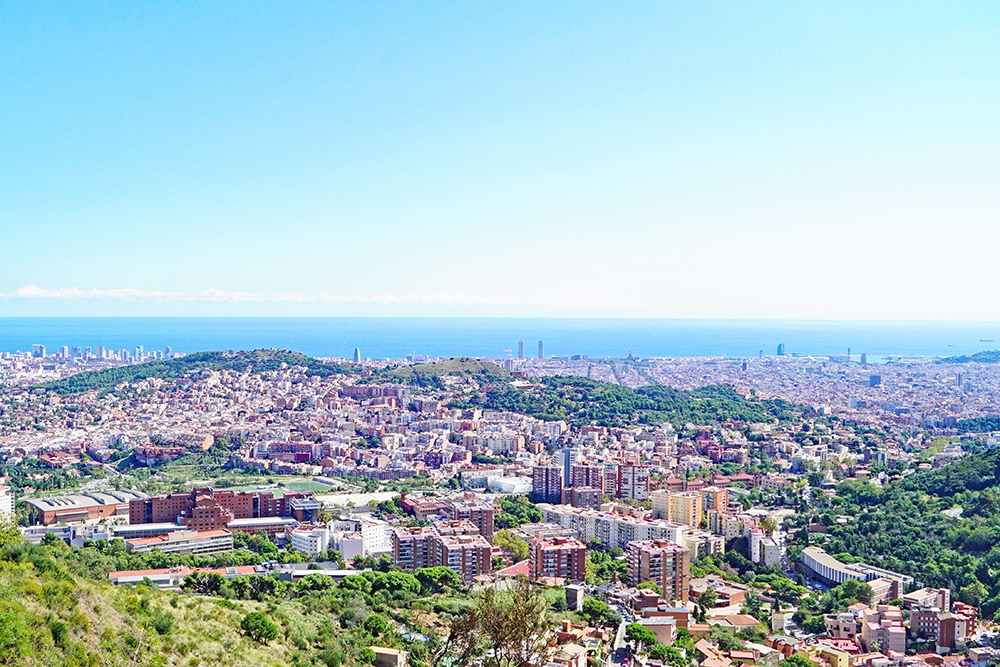
Panoramic view of Barcelona from Collserola
Cuerpo

Joining Forética means revalidating the commitment of B:SM to collective challenges such as the climate emergency, biodiversity loss and inequalities

Forética is Spain's benchmark network for sustainability and corporate social responsibility 

Barcelona de Serveis Municipals (B:SM) steps up its commitment to sustainability and the ESG strategy by becoming a member of Forética, Spain's leading network for sustainability and corporate social responsibility. An agreement that will allow B:SM to make progress in promoting the integration of social, environmental and good governance aspects into its strategy.

For B:SM, being part of Forética means revalidating, as a public company, its commitment to and leadership in collective challenges such as the climate emergency, biodiversity loss and the fight against inequality. In this sense, Forética offers a place for meeting, exchange and reflection through different working groups specialised in climate change, circular economy or cities. 

Since 2018, B:SM has been certified according to the SGE21 standard, the first European standard that allows for the implementation, auditing and certification of an ethical and socially responsible management system. More than 150 companies and organisations in Spain and Latin America have been awarded this certificate created by Forética. 

According to David Serrano, Corporate Director of ESG at B:SM, "the incorporation of B:SM to Forética is part of the strategy of alliances that organisations have to undertake to coordinate efforts and share practices in order to become organisations with a positive impact  that satisfy the expectations and requirements of their stakeholders, the only guarantee of longevity". 

In this same sense, Germán Granada, Director General of Forética, adds that "this incorporation means forming part of a network of more than 200 members in which we are working towards a triple objective: to increase business ambition in terms of sustainability; to accelerate action to address environmental, social and good governance challenges; and to strengthen alliances that allow us to face a sustainable, green and inclusive recovery".    

Forética, the leading sustainability organisation

Forética is the leading organisation in sustainability and the creator of the SGE21 standard. Made up of more than 200 members and member of the World Business Council for Sustainable Development (WBCSD) in Spain, Forética leads the Spanish Business Council for Sustainable Development. In Europe, Forética is a national partner of CSR Europe. 

B:SM steps up its commitment to sustainability by joining Forética
Read the note
Fecha de publicación
News or press release?
Press release
Cuerpo

Barcelona de Serveis Municipals (B:SM) allocates 80% of the culinary establishments planned for at the Olympic port

The diversity of the bids presented in the tender consolidates the commitment to a culinary model for all customer profiles, based on quality, diversity and a commitment to healthy, sustainable food

The culinary offer for this new era includes projects ranging from innovation to market cuisine with Mediterranean roots

Construction work on the Gastronomic Balcony will begin in January and is scheduled for completion in the summer of 2024, coinciding with the celebration of the America’s Cup 

The Olympic Port has taken another step towards the completion of its Gastronomic Balcony, the new restaurant area that will connect the city with the sea, which is due to open in the Summer of 2024, to coincide with the America's Cup. Barcelona de Serveis Municipals (B:SM) has allocated 80% of the spaces for culinary projects that will make up the Olympic Port's range of restaurants.  

The projects for this new era have been selected via a public tender, which among other criteria, has taken into account the quality and style of the cooking and produce, the design and ambience of establishment interiors and the sustainability measures put in place. A total of 15 bids were presented and they were evaluated by a jury made up of representatives from Barcelona City Council, B:SM, the Barcelona Centre for International Conventions, the Barcelona Bars and Restaurants Guild and the Alícia Foundation, among other stakeholders linked to the sector. 

In keeping with the initially established objectives, the winning bids will offer a variety of culinary styles that complement each other, aimed at appealing to all customer profiles and all occasions. Based on quality and with a commitment to sustainable food, the Olympic Port will become a privileged location with an architectural design that is open to both the sea and the city, inviting people to stroll around the port and sample the innovative food on offer, ranging from fusion to market cuisine with Mediterranean roots. 

The result of the tender is as follows: 


•    World cuisine - innovation: Grup Sagardi 
•    World cuisine- innovation: Pantea Group 
•    Blue gastronomy: El Cangrejo Loco 
•    Flexitarian food: Pantea Group 
•    Catalan cuisine: La Fonda del Port Olímpic 
•    Mediterranean cuisine: La Barca del Salamanca 
•    Seafood cuisine: La Taberna Gallega de Marcos 
•    Appetisers: Platets 
•    Daily menu: Los Huevos de Colón 

A first step towards transforming the Olympic Port's restaurants

This first tender has led to the allocation of 9 of the 11 restaurants spaces on the Gastronomic Balcony . The remaining 2 places will be allocated during the first quarter of 2023. At the same time, a new tender will be opened to determine the nature of the three gourmet establishments that will complete the Gastronomic Balcony. These establishments will act as small gastronomic shops that complement the restaurants. 

The restaurants currently operating in the Olympic Port will close on 8 January. Until the new restaurants open, the employees, who are guaranteed continued employment, will have access to Barcelona Activa’s professional guidance services and a complete 1,000-hour training plan that includes different pathways within the hospitality and catering sector. The aim is to promote the professional development of these workers and to help them to improve their knowledge in accordance with current market needs.  

The new culinary hub on the Barcelona seashore, ready for the America’s Cup

The Gastronomic Balcony will be a long promenade that will connect the city with the sea. It has a surface area of 24,000 m2, 8,000 of which will house catering establishments, located on Moll de Gregal. Work to completely renovate the quay will begin at the end of January, and is scheduled for completion in the late summer of 2024. The project has an overall budget of €15.9 million. 

The redevelopment will create an environment without barriers, favouring a dialogue between the activities of the Olympic Port, Barcelona and the Mediterranean. The new gastronomic centre will have direct access to Nova Icària Beach and three vertical axes equipped with steps and lifts that will improve the connection between all areas of the Olympic Port and the city. Furthermore, there will also be relaxation areas and viewpoints where people will be able to sit down, relax and take in the views. 

In the new restaurants, light and transparency will be key features of their interior spaces, where materials such as glass will offer visual communication with the sea and port activity. Furthermore, the establishments on the upper level will be located on a platform overhanging the sea, increasing still further the sensation of being close and open to the seashore, while the restaurants on the port level will have spacious terraces, built under a large photovoltaic pergola that will form the rooftop of the Gastronomic Balcony. It will have the capacity to generate as much energy as that used by 250 households, helping to make the Olympic Port a sustainable location.

Progress in configuring the Olympic Port's new catering model for the Gastronomic Balcony
Read the note
Fecha de publicación
News or press release?
Press release